- Top Pick: medicube PDRN Pink Peptide Serum with Salmon DNA
- Best Value: EQQUALBERRY NAD+ Peptide Boosting Cream – NAD+ 5% & 13 Peptides Anti-Aging Korean Skincare Face & Body Cream | Firming & Lifting Pink Neck Cream for Sagging Skin (1.69 fl.oz / 50ml)
- Premium Choice: EQQUALBERRY NAD+ Peptide Boosting Serum | 14 Peptide Serum for Face, Neck & Body | Vegan Collagen & Pink Serum for Anti-Aging, Firming & Lifting | Korean Skincare (1.01 oz / 30ml)

TL;DR: Korean peptide skincare leads globally in multi-peptide stacking — combining signal peptides (collagen stimulation), carrier peptides (copper delivery), and neurotransmitter-inhibiting peptides (expression line reduction) in one formula. Best results at 3%+ total peptide concentration. Avoid mixing with direct acids same session — peptide bonds hydrolyze at low pH. Layer after water-based steps, before moisturizer. Top K-beauty peptide formats: serum, ampoule, eye cream, sleeping mask.
Best Korean Peptide Skincare for Anti-Aging: Complete Buyer’s Guide
Peptides are the most scientifically credible anti-aging actives after retinoids — and Korean skincare brands have built the most sophisticated peptide delivery systems on the mass market. Where basic Western anti-aging products might include one signal peptide at trace levels, Korean peptide formulas routinely combine four to eight distinct peptide types targeting collagen synthesis, elastin integrity, and muscle-contraction reduction simultaneously. This guide breaks down peptide classes, K-beauty’s best peptide formulas, and exactly how to layer peptides in a routine for measurable results.
As an Amazon Associate we earn from qualifying purchases at no extra cost to you.


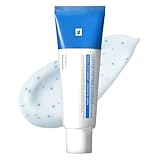


Peptide Classes in Korean Anti-Aging Skincare
Not all peptides do the same thing. K-beauty brands mixing multiple classes are targeting different collagen and elastin mechanisms in parallel — a more complete approach than single-peptide formulas.
| Peptide Class | INCI Examples | Mechanism | Target Concern |
|---|---|---|---|
| Signal Peptides | Palmitoyl Tripeptide-1, Palmitoyl Tetrapeptide-7, Acetyl Hexapeptide-8 | Stimulate fibroblasts → collagen/elastin synthesis | Fine lines, loss of firmness |
| Carrier Peptides | Copper Tripeptide-1 (GHK-Cu) | Deliver copper to skin → wound healing, remodeling | Texture, barrier repair, collagen density |
| Neurotransmitter-Inhibiting | Acetyl Hexapeptide-3 (Argireline), Leuphasyl | Reduce acetylcholine release → relax repeated muscle contractions | Expression lines (forehead, crow’s feet) |
| Enzyme-Inhibiting | Soybean Peptides, Rice Peptides | Inhibit MMPs (matrix metalloproteinases) → reduce collagen breakdown | Firmness, anti-wrinkle maintenance |
| Structural Peptides | Palmitoyl Oligopeptide | Mimic extracellular matrix proteins | Skin plumping, volume support |
Top Picks at a Glance


As an Amazon Associate we earn from qualifying purchases. Product prices and availability are accurate as of the date/time indicated.
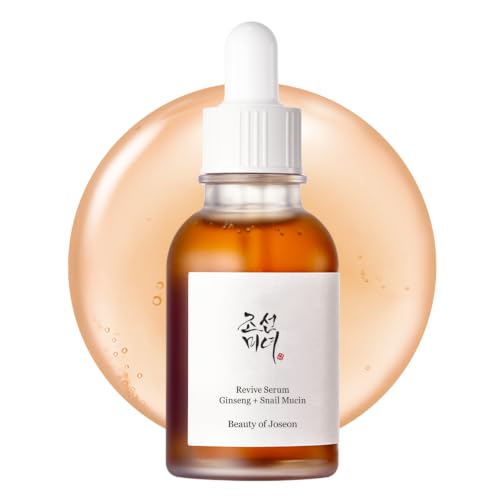
Beauty of Joseon Revive Snail Mucin Ginseng Serum


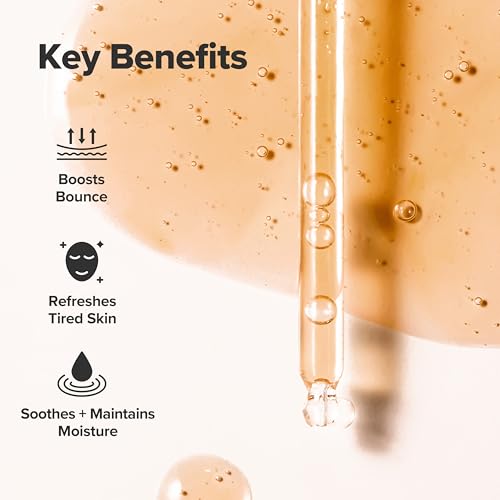


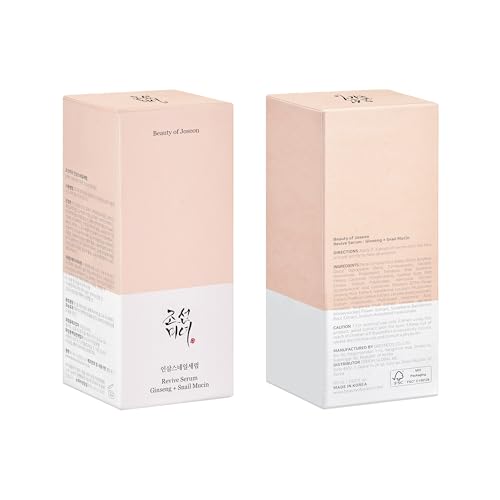
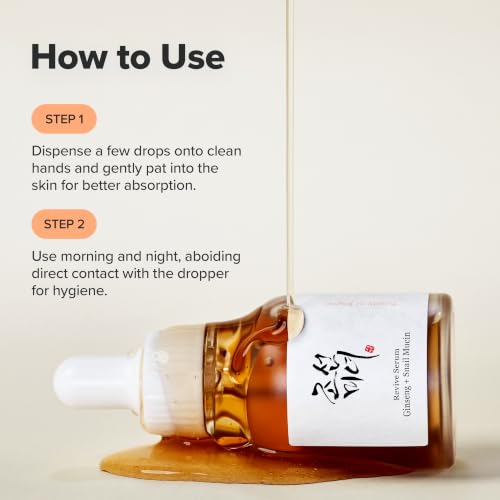

As an Amazon Associate we earn from qualifying purchases. Product prices and availability are accurate as of the date/time indicated.





As an Amazon Associate we earn from qualifying purchases. Product prices and availability are accurate as of the date/time indicated.
What Makes Korean Peptide Formulas Different
Multi-Peptide Stacking
The Korean formulation philosophy stacks 4–8 peptide types per product rather than centering one. This addresses collagen synthesis, collagen preservation, and structural support simultaneously. A single product like the COSRX Advanced Snail Peptide Eye Cream combines snail filtrate (GF-like growth factor activity), Acetyl Hexapeptide-8 (neurotransmitter inhibition), and Palmitoyl Tripeptide-5 (signal peptide) — three distinct mechanisms in one eye cream.
Fermentation-Boosted Delivery
Korean brands frequently pair peptides with fermented ingredients — Saccharomyces Ferment Filtrate, Lactobacillus Ferment Lysate — which alter the skin’s surface environment to improve peptide penetration. Fermentation byproducts include short-chain fatty acids that temporarily increase lipid bilayer permeability. This is a uniquely K-beauty formulation approach; Western peptide serums rarely combine fermentation with peptide complexes.
Packaging Integrity
Copper Tripeptide-1 (GHK-Cu) oxidizes on air exposure — its signature blue-green color fades when degraded. Korean brands targeting serious peptide users typically use airless pumps or opaque tubes. Jar packaging is a red flag for any formula containing GHK-Cu or light-sensitive peptides. Airless pump = active stays intact to last drop.
Korean Peptide Skincare by Concern
Collagen Loss / Firmness
Primary targets: Palmitoyl Tripeptide-1, Palmitoyl Tetrapeptide-7 (the “Matrixyl 3000” combination), and GHK-Cu. Look for these in positions 5–15 of the INCI (low single-digit position = too-high water dilution; mid-list = effective concentration). Pair with a Vitamin C serum to support collagen synthesis via ascorbate co-factor pathway — the learn about korean vitamin c serum best identifies the most stable L-AA formulas for this combination.
Expression Lines
Acetyl Hexapeptide-3 (Argireline) and Leuphasyl work on SNARE complex proteins — same mechanism as botulinum toxin but topical, localized, reversible. Clinical evidence for topical Argireline is real but modest (10–17% wrinkle depth reduction in 28-day trials). Maximum efficacy at 10% concentration; most formulas use 3–5%. Best applied to targeted areas: forehead, periorbital, perioral. For beginners on anti-aging, the Korean retinol beginner guide explains how to add retinol alongside peptides for complementary mechanisms.
Eye Area Anti-Aging
Eye-area skin is 40% thinner than facial skin — needs highest-gentleness, highest-concentration peptide delivery. Korean eye creams with peptide complexes are a genuine category strength. Avoid retinol in the same eye-area routine — peptide + retinol combination increases sensitivity risk without proportionally increasing efficacy. Alternate: peptides AM, low-dose retinol PM.
Peptide Layering Rules: pH and Compatibility
Peptide bonds are pH-sensitive — they hydrolyze (break down) in acidic environments. This is the most critical compatibility rule in a peptide routine:
- Never layer peptide serum immediately after AHA/BHA toner — wait minimum 20–30 minutes for skin pH to normalize to ~5.5, or use on alternate sessions
- L-Ascorbic Acid (pH 2.5–3.5) + peptides same session: apply vitamin C first, wait 30 min, then peptide serum — or use a stable vitamin C derivative (Ascorbyl Glucoside, 3-O-Ethyl Ascorbic Acid) that works at neutral pH
- Retinol + peptides: fully compatible, can layer same PM session
- Niacinamide + peptides: fully compatible, commonly combined in Korean formulas
For niacinamide combinations, the niacinamide K-beauty guide maps which formulas already include peptides. For snail mucin layering with peptides — a common K-beauty stack — the snail mucin layering routine guide covers the optimal sequence.
Age-Targeted Korean Peptide Routine
| Age Group | Primary Peptide Focus | Supporting Actives | Frequency |
|---|---|---|---|
| Late 20s (prevention) | Signal peptides (collagen maintenance) | Antioxidants, SPF | PM routine, 5–7x weekly |
| 30s (early correction) | Signal + enzyme-inhibiting peptides | Vitamin C (AM), Retinol (PM) | Daily, dedicated serum |
| 40s+ (active correction) | Full multi-peptide stack + GHK-Cu | Retinol, growth factors, ceramides | AM + PM, ampoule cycles |
Men’s routines benefit equally from peptides — the Korean skincare men’s routine guide adapts the peptide serum step into a streamlined protocol. For a complete anti-aging product picture, the learn about best korean skincare products categorizes peptide products by budget tier.
Frequently Asked Questions
Do Korean peptide serums actually work for anti-aging?
Evidence is real but requires context. Signal peptides like Palmitoyl Tripeptide-1 have peer-reviewed clinical evidence for collagen stimulation. GHK-Cu has extensive wound-healing and remodeling research. Argireline has modest but genuine expression-line evidence. Results are incremental and require consistent use over 8–12 weeks minimum — peptides are not immediate-visible actives like acids. Think of them as collagen maintenance investment, not correction tools.
Can you use Korean peptide serum with retinol?
Yes — this is one of the most synergistic combinations in anti-aging. Retinol accelerates cell turnover and increases collagen synthesis via retinoic acid receptor activation. Peptides stimulate collagen from a different pathway (fibroblast signaling). Combined in PM routine: apply peptide serum first (lighter), then retinol over or after moisturizer (buffered). See the full retinol beginner guide for introduction protocols.
What percentage of peptides should Korean peptide skincare contain?
No universal standard — peptide efficacy depends on molecular type, delivery vehicle, and skin penetration enhancers rather than raw percentage. General benchmark: look for 3+ distinct peptide types in the INCI, each appearing in positions 5–20 (not trailing below 0.01%). Concentration matters less than diversity of peptide types and vehicle quality.
Is Korean peptide skincare better than retinol for sensitive skin?
Yes, for reactive skin. Peptides have essentially zero irritation risk at effective concentrations. Retinol causes retinization (peeling, sensitivity) during a 4–8 week adaptation period, making it incompatible with sensitized or reactive skin in the short term. Peptides are an effective collagen-targeting alternative for those who can’t tolerate retinoids — with the trade-off of slower visible results.
How long does it take to see results from Korean peptide serum?
Clinically: 8–12 weeks for measurable collagen density changes; 4–6 weeks for visible plumpness/firmness improvement in most users. Argireline-type peptides show faster surface results (2–4 weeks) due to muscle-relaxation mechanism rather than structural collagen building. Set expectations accordingly — this is a long-term investment active, not an immediate-result product.
Final Verdict
Korean peptide skincare earns its premium positioning through multi-class stacking that single-peptide Western formulas rarely match. The key buying criterion: count distinct peptide INCI names — four or more across different classes (signal + carrier + neurotransmitter-inhibiting) signals a genuinely engineered formula vs. a marketing one. Pair with a quality moisturizer for delivery support and the see beauty of joseon sunscreen deep dive covers daytime protection for a peptide-forward AM routine.
Related K-Beauty Guides
- Vegamour GRO Hair Serum Review 2026: Does It Actually Work?
- Niacinamide Serum: Benefits, How to Use, and the Best…
- COSRX Snail Mucin 96 vs 100: What Is the Actual Difference?
- Best Peptide Serums for Anti-Aging 2026
- REJURAN Turnover Ampoule Review
- MEDITHERAPY Retinal Skin Booster Serum 150ml Review
- haruharu Wonder Black Rice NAD+ Serum Mist Review
Ready to decide? Our #1 pick for 2026 is the Signal Peptides.
Live price & availability on Amazon.