Last updated: October 4, 2026
- Decide These 3 Things First
- Size and Volume: How Much You Actually Need
- Ingredients and Materials: What Touches Sensitive Skin
- Formulation and Construction: Stability and Packaging
- Comfort and Performance: How It Should Feel and Function
- Price Tiers: What Your Budget Gets You
- Warranty, Returns, and Shelf Life
- Delivery and Storage Considerations
- Spec Checklist
- Red Flags
- FAQ
Shopping for a facial serum when you have sensitive skin feels like navigating a minefield. The most common mistake is chasing trends instead of tolerance — grabbing a high-strength vitamin C or retinol serum because it is popular, only to end up with stinging, redness, and a compromised skin barrier. Another frequent error is assuming that “clean,” “natural,” or “hypoallergenic” on the label guarantees it will not irritate you; those terms are not regulated for sensitivity and tell you very little about the actual formula. People also over-layer, using three to four active serums at once, which makes it impossible to know what is helping or hurting. Finally, many buyers ignore the basics: concentration levels, pH, and packaging, which matter far more for reactive skin than marketing claims. This guide cuts through the noise and focuses on what actually prevents irritation while delivering results.
Decide These 3 Things First
Before you compare bottles, narrow your search with three decisions. They will eliminate 80% of options that are not a good fit for sensitive skin.
As an Amazon Associate we earn from qualifying purchases at no extra cost to you.


1. Your primary concern: Hydration and barrier repair (dryness, tightness, flaking), calming and redness reduction (reactivity, blotchiness), or gentle anti-aging (fine lines, uneven texture without retinol). Sensitive skin usually does best when you pick one goal per serum. A hyaluronic acid or ceramide serum is ideal for hydration, while oat, centella, or peptide-based formulas are better for calming and resilience.
2. Your ingredient tolerance level: Are you highly reactive (stings with fragrance, essential oils, or alcohol), moderately sensitive (tolerates light actives but not acids), or mildly sensitive (occasional redness but tolerates niacinamide at low levels)? If you are highly reactive, you need fragrance-free, alcohol-free, and essential-oil-free formulas with minimal ingredients — typically 10 to 15 ingredients or fewer.
3. Your routine slot: Will this be a daily morning hydrator, a nightly treatment, or a twice-daily staple? Lightweight hydrating serums layer well under SPF in the morning, while richer barrier serums are often better at night. This determines texture, finish, and how it plays with moisturizer and sunscreen.
Size and Volume: How Much You Actually Need
Facial serums for sensitive skin almost always come in 0.5 fl oz (15 ml) to 1.0 fl oz (30 ml) bottles, with 1.0 fl oz being the standard. Some value sizes go up to 1.7 fl oz (50 ml) or 2.0 fl oz (60 ml), but larger is not always better because serums oxidize once opened.
Expect usage of 2 to 4 drops per application, which is roughly 0.15 to 0.25 ml. Used twice daily, a 1.0 fl oz bottle lasts 60 to 90 days. Used once daily, it lasts 90 to 120 days. Most serums have a Period After Opening (PAO) of 6 to 12 months — look for the small open-jar symbol on the packaging — and many actives like vitamin C derivatives lose potency after 3 to 6 months even if the PAO is longer.
For first-time trials on sensitive skin, a 0.5 to 1.0 fl oz bottle is the sweet spot. It gives you 4 to 8 weeks to properly patch test and assess tolerance without committing to product that may expire before you finish it. Travel or mini sizes (0.33 fl oz / 10 ml) are useful for patch testing but cost 40% to 70% more per ounce, so they are not economical long term.
Ingredients and Materials: What Touches Sensitive Skin
Think of ingredients as the materials list. For sensitive skin, less is often more, and concentration matters as much as the ingredient itself.
Look for these skin-soothing staples at sensitive-skin-friendly levels:
- Hyaluronic acid or sodium hyaluronate at 0.5% to 2% for hydration without stickiness. Multi-weight blends hydrate different layers without needing high percentages.
- Ceramides (NP, AP, EOP), cholesterol, and fatty acids to repair the barrier. Effective even at concentrations below 1% when combined.
- Niacinamide at 2% to 5% — calming and barrier-supportive. Levels above 10% can cause flushing and tingling in sensitive users.
- Oat extract, colloidal oatmeal, centella asiatica (cica), and allantoin for redness and itch relief.
- Peptides (such as palmitoyl tripeptide-1 and palmitoyl tetrapeptide-7) for gentle firmness support without the irritation of retinol. Ideal if you want anti-aging benefits while avoiding retinoids entirely.
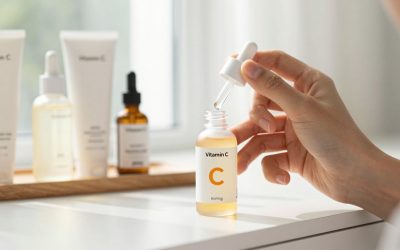
Approach with caution: Fragrance and parfum (including natural fragrance), essential oils (lavender, citrus, tea tree), denatured alcohol or alcohol denat. high on the ingredient list, and high-strength acids (glycolic acid above 5%, salicylic acid above 1%). Vitamin C in the form of L-ascorbic acid at 15% to 20% is potent but often too acidic (pH 2.5 to 3.5) for reactive skin; derivatives like sodium ascorbyl phosphate or magnesium ascorbyl phosphate at 3% to 5% at a pH of 5.5 to 6.5 are usually better tolerated.
Aim for pH between 5.0 and 6.0 for daily sensitive-skin serums, which is close to skin’s natural pH of 4.7 to 5.5. Products that do not list pH should feel non-stinging on application and not leave a tight or burning sensation within 5 to 10 minutes.
Formulation and Construction: Stability and Packaging
A serum’s construction is its delivery system and packaging. This determines whether the good ingredients stay active and uncontaminated.
Packaging: Airless pumps and opaque, amber, or dark glass dropper bottles protect light- and air-sensitive ingredients. A dropper that does not fully seal or a clear bottle that lets in light can degrade antioxidants 30% to 50% faster. Pumps are more hygienic than open droppers that touch skin, which is important when your barrier is already compromised.
Texture and base: Water-based, lightweight serums (viscosity similar to a thin gel, around 1,000 to 3,000 cps) absorb in 30 to 60 seconds and layer well. Thicker milky or oil-serum hybrids take 2 to 3 minutes to absorb and can feel occlusive. For sensitive skin, avoid heavy silicones or mineral oil high on the list if you are prone to congestion, but a small amount of squalane or glycerin (3% to 10%) helps prevent transepidermal water loss without clogging pores.
Preservation: Fragrance-free does not mean preservative-free. Safe preservation is necessary; look for phenoxyethanol, ethylhexylglycerin, or sodium benzoate systems. Avoid jars — serums in jars expose the formula to air and bacteria with every use and are a poor choice for sensitive skin.
Comfort and Performance: How It Should Feel and Function
Performance for sensitive skin is not about instant tingling — tingling is often irritation. A good sensitive-skin serum should feel like nothing: no burn, no heat, no tightness within the first 10 minutes.
Absorption: Should sink in within 1 to 2 minutes and leave skin hydrated, not sticky or pilling. If you need more than 3 to 4 drops to cover face and neck, the formula is too thin; if one drop will not spread, it is too thick for layering.
Finish: Look for a soft, slightly dewy finish that plays well under moisturizer and SPF 30+ sunscreen. It should not ball up when you apply moisturizer 60 seconds later.
Tolerance testing: Patch test on a small area behind the ear or along the jawline for 3 to 5 consecutive days, using a pea-sized amount (1 to 2 drops) once daily before full-face use. Introduce only one new serum every 14 days so you can isolate reactions. If you experience persistent redness lasting more than 60 minutes, itching, or small bumps within 24 to 48 hours, discontinue use.
Price Tiers: What Your Budget Gets You
You do not need to spend a lot to get a safe, effective serum for sensitive skin as we head into 2026, but price does reflect ingredient sourcing, packaging, and testing.
Budget ($5 to $16): This range covers excellent, no-frills hydrators and barrier serums. Expect simple formulas centered on hyaluronic acid, glycerin, ceramides, or oat, in 1.0 fl oz bottles with basic dropper packaging. Examples in the broader market include hyaluronic acid serums around $5 and ceramide or oat-based serums around $15 to under $20. You get effective hydration and calming without luxury textures or patented complexes. Ideal for daily maintenance.
Mid-range ($17 to $38): You get more elegant textures, stabilized actives (like encapsulated ceramides or buffered niacinamide at 5%), dermatologist testing, and better packaging such as airless pumps or UV-coated glass. Often fragrance-free and tested on sensitive skin panels. This tier is best if you want a treatment serum for redness or early fine lines without retinol.
Premium ($39 to $75+): Premium buys you advanced peptide blends, multi-weight hyaluronic acid complexes, clinically validated barrier lipids, and extensive sensitivity testing. You are also paying for air-tight, light-blocking packaging that extends potency to the full 12-month PAO. Beyond $75, returns diminish for sensitive skin — higher cost does not equal lower irritation.
Cost per ounce is the best comparison: Divide price by fluid ounces. A under-$20 serum at 1.0 fl oz costs under $20 per ounce, while a under-$20 serum at 1.0 fl oz costs under $20 per ounce — both more economical than a $22 serum at 0.5 fl oz ($44 per ounce).
Warranty, Returns, and Shelf Life
Serums do not have traditional warranties, but return policies and shelf life are the equivalent safeguards.
Most drugstore and mass retailers offer 30 to 90-day returns, even on opened skincare, while specialty beauty retailers often allow 30 to 60 days with a receipt. Keep your box and receipt until you have patch tested for at least two weeks. Check the store’s policy on opened items before you buy — some only allow exchange if there is a reaction.
Unopened, most serums are stable for 24 to 36 months from manufacture (check the expiration or batch code). Once opened, use within the PAO window, typically 6 to 12 months. Store at 59 to 77 degrees Fahrenheit (15 to 25 degrees Celsius), away from humidity and direct sunlight. Do not store in a steamy bathroom where temperatures regularly exceed 80 degrees; a cool, dark drawer or cabinet preserves actives longer. Refrigeration is not needed unless the brand specifically recommends it, and it can thicken some formulas.
Delivery and Storage Considerations
Serums are light (1.0 fl oz weighs about 2 to 4 ounces with packaging) and ship easily, but heat and freezing during transit can destabilize emulsions. If you order online in extreme weather — above 85 degrees or below 32 degrees Fahrenheit — try to retrieve the package within 2 to 4 hours of delivery and let it return to room temperature for 12 hours before opening. Avoid leaving it in a mailbox or hot car for more than a few hours.
No assembly is required, but proper first use matters: Cleanse, apply 2 to 3 drops to slightly damp skin (not wet), wait 60 to 90 seconds, then seal with moisturizer. In the morning, follow with sunscreen. If you use more than one serum, apply thinnest to thickest and wait 1 to 2 minutes between layers; for sensitive skin, one well-chosen serum morning and night is usually enough.
Spec Checklist
| Spec | Budget | Mid | Premium |
|---|---|---|---|
| Volume | 1.0 fl oz (30 ml) basic dropper | 1.0 fl oz (30 ml) amber glass or airless pump | 1.0 to 1.7 fl oz (30-50 ml) airless, UV-protected |
| Key Actives | Hyaluronic acid 0.5-1%, glycerin, oat, ceramides | Niacinamide 2-5%, peptides, stabilized ceramides | Multi-weight hyaluronic acid, peptide complexes, cica + ceramides |
| Fragrance / Alcohol | Fragrance-free, no essential oils | Fragrance-free, alcohol-free | Fragrance-free, alcohol-free, minimal ingredient list (10-15) |
| pH | 5.0-6.5 | 5.0-6.0, disclosed | 5.0-6.0, tested and disclosed |
| Texture / Absorption | Thin gel, absorbs in 60-90 sec | Lightweight serum, absorbs in 30-60 sec, no pilling | Silky, layers cleanly under SPF, no residue in 30 sec |
| PAO / Shelf Life | 6 months | 9-12 months | 12 months |
| Price Per Ounce | $6 – $16 per oz | $17 – $38 per oz | $39 – $75 per oz |
| Testing / Claims | Dermatologist tested | Dermatologist + sensitive skin tested | Clinically tested for sensitive skin, patch tested |
Red Flags
- Heavy fragrance or essential oils listed as parfum, fragrance, aroma, or specific oils (lavandula, citrus) — common triggers for stinging and redness.
- High active percentages marketed as better: Niacinamide at 10%+, L-ascorbic acid at 15%+, or glycolic acid at 10%+ without buffering are often too strong for reactive skin.
- Vague claims without specifics: “Hypoallergenic,” “non-toxic,” or “dermatologist approved” with no explanation of testing or ingredient concentrations to back it up.
- Clear bottles or jars for antioxidant serums — light and air exposure degrades potency quickly, and jars invite contamination.
- Alcohol denat. in the top 3 ingredients — can strip the barrier and cause tightness, especially when used twice daily.
- No PAO symbol, no expiration, and no ingredient list online — lack of transparency makes it impossible to assess safety.
- Requires refrigeration to stay stable but ships without cold packaging — suggests poor formulation stability for everyday storage.
- Promises overnight dramatic results like “erases wrinkles in 7 days” — effective sensitive-skin care improves barrier function over 2 to 4 weeks, not overnight.
FAQ
What is the safest serum ingredient to start with for very sensitive skin?
Start with hydration and barrier support, not actives. Hyaluronic acid at 0.5% to 1%, ceramides, glycerin, and oat or centella extracts have the lowest irritation potential and help restore the barrier. Use a fragrance-free, alcohol-free formula with 10 to 15 ingredients, patch test for 3 to 5 days, and introduce it once daily before moving to twice daily if no redness or itching occurs after a week.
Can I use hyaluronic acid and niacinamide together if I am sensitive?
Yes, and they pair well when concentrations are moderate. Hyaluronic acid hydrates while niacinamide at 2% to 5% calms redness and supports the barrier. Apply hyaluronic acid first on slightly damp skin, wait 60 seconds, then apply niacinamide, or choose a single serum that contains both at those levels. Avoid combining them with strong acids or high-strength vitamin C in the same routine until your skin has adjusted for at least 2 to 3 weeks.
How do I know if a serum is actually fragrance-free?
Check the full ingredient list, not just the front label. The words “fragrance,” “parfum,” “aroma,” and any essential oil names (lavender oil, citrus aurantium) indicate fragrance. “Unscented” can still mean masking fragrance was added, so look for “fragrance-free.” If you are highly sensitive, also avoid “natural fragrance,” which can be just as reactive as synthetic fragrance.
How long should I try a new serum before deciding it is not working?
Give it 4 to 6 weeks of consistent once- or twice-daily use (2 to 3 drops per application) unless you have an adverse reaction. Hydration improves in 3 to 7 days, redness and barrier comfort typically improve in 2 to 3 weeks, and texture or fine-line softening takes 6 to 8 weeks with gentle ingredients like peptides. Stop sooner if you have persistent burning, itching, or breakouts that last more than 48 hours.
Ready to decide? Our #1 pick for 2026 is the Volume.
Live price & availability on Amazon.