Last updated: October 4, 2026
The Short Answer
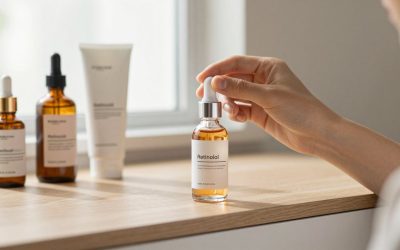
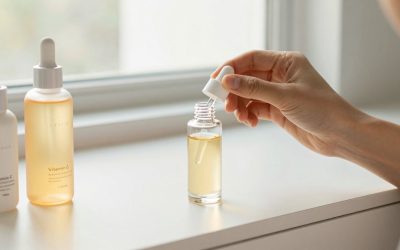
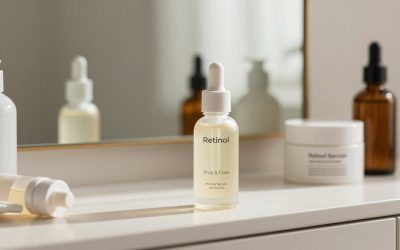
For most retinol face serums, apply a pea-sized amount—about 0.25 grams or roughly 0.25 milliliters—for your entire face. That is usually about two to three drops for a dropper serum, or one pump if the dispenser delivers a small pump.
Start with a clean, completely dry face two nights per week. Dot the serum across your forehead, cheeks, chin, and nose, then spread it into a thin, even layer. Avoid the eyelids, corners of the nose, lips, and any irritated or broken skin. If your skin remains comfortable after several weeks, gradually increase use to every other night. More product does not produce faster results; it mainly increases the chance of dryness, peeling, redness, and sensitivity.
As an Amazon Associate we earn from qualifying purchases at no extra cost to you.


For the neck, use another half-pea-sized amount. If you also apply retinol to the upper chest, add approximately one more pea-sized portion. These amounts are practical starting points, not laboratory standards. Product texture and dispenser size vary, so the goal is a very thin film rather than a visibly wet layer.
Standard Sizes
Retinol serums are commonly sold in 1-fluid-ounce bottles, with some budget formulas available in 2-fluid-ounce packages. The bottle size tells you how much product you are buying—not how much to apply at one time. A 1-ounce bottle contains approximately 29.6 milliliters; a 2-ounce bottle contains approximately 59.1 milliliters.
| Serum size | Product volume | Typical bottle dimensions | Approximate applications | Typical price range |
|---|---|---|---|---|
| Travel or sample | 0.25–0.5 fl oz (7.4–14.8 mL) | 1.0–1.4 in diameter × 2.5–3.8 in high (2.5–3.6 cm × 6.4–9.7 cm) | 30–60 face applications | $5–$12 |
| Standard | 1 fl oz (29.6 mL) | 1.1–1.5 in diameter × 3.5–5.0 in high (2.8–3.8 cm × 8.9–12.7 cm) | 100–120 face applications | $11–$21 |
| Large | 2 fl oz (59.1 mL) | 1.3–1.8 in diameter × 4.0–5.8 in high (3.3–4.6 cm × 10.2–14.7 cm) | 200–240 face applications | $10–$25 |
The physical dimensions above are typical retail-package measurements, not guaranteed dimensions for every brand. Square bottles, airless pumps, outer cartons, and dropper caps can change the footprint. Check the package if you are fitting a bottle into a medicine cabinet, drawer, travel pouch, or countertop organizer.
Examples include 1-ounce CeraVe retinol serums generally priced around $16–$21, The Ordinary Retinol 1% in Squalane at about $12 for 1 ounce, and a 2-ounce Tree of Life retinol serum around $10. Prices can change with retailer, size, promotions, and formula. A larger bottle is not automatically the better value if the product expires before you can use it.
How to Measure Your Space
- Measure the storage area. Use a ruler or tape measure to record the opening’s width, depth, and height. For a medicine cabinet shelf, measure from the shelf surface to the lowest obstruction above it. Record inches and centimeters so the measurement is useful when shopping online or in stores.
- Allow clearance around the bottle. Add at least 0.25 inch (0.6 cm) on each side for easy gripping. A tall dropper bottle may need an additional 0.5 inch (1.3 cm) above the cap so you can remove it without scraping the shelf.
- Measure the dispenser, not only the bottle. A pump or dropper can extend above the container by 0.5–1.5 inches (1.3–3.8 cm). Use the fully assembled height when checking cabinet fit.
- Choose the application amount separately. Storage measurements do not change how much retinol you use. For the face, begin with approximately 0.25 mL, or a pea-sized amount. A larger container never calls for a larger dose.
- Estimate how long the bottle will last. Divide the bottle’s milliliters by your estimated amount per use. For example, 29.6 mL divided by 0.25 mL equals about 118 face applications. Using it twice weekly would make that roughly a year, although packaging instructions and product freshness should guide actual use.
By Room or Use Case
Bathroom Counter
A standard 1-ounce bottle usually fits comfortably beside cleanser, moisturizer, and sunscreen. Reserve approximately 2 × 2 inches (5 × 5 cm) of counter space for a round bottle, or about 1.5 × 2.5 inches (3.8 × 6.4 cm) for a rectangular bottle. Keep retinol away from direct sunlight, heat, and splashing water. A closed drawer or cabinet is preferable to a bright windowsill.
Small Medicine Cabinet
Choose a slim bottle with a footprint under 1.5 inches (3.8 cm) if shelf space is limited. Measure the interior height because a 1-ounce dropper package can reach 5 inches (12.7 cm) or more. Store the bottle upright to reduce leaks and keep the cap or pump clean. If the cabinet becomes warm or humid, use a cooler, dry drawer instead.
Shared Bathroom
A 1-ounce bottle is usually easier to identify and store than a larger 2-ounce bottle. Place it in a small bin measuring approximately 3 × 4 inches (7.6 × 10.2 cm), leaving room for moisturizer and other nighttime products. Labeling the bin can prevent accidental use by other household members, particularly when several clear serums look alike.
Travel or Overnight Bag
For a short trip, a 0.25- or 0.5-ounce container can save space. A typical travel bottle measures about 1–1.4 inches wide and 2.5–3.8 inches high (2.5–3.6 cm wide and 6.4–9.7 cm high). Use a leak-resistant container intended for cosmetics, keep it in a sealed pouch, and avoid decanting into an unmarked bottle. If you are new to retinol, travel is not the best time to begin a stronger formula.
Face, Neck, and Chest
For the face alone, use one pea-sized portion. Add half a pea for the neck and another pea for the upper chest. Spread each area separately rather than applying one large puddle in a single spot. The larger surface area needs more total product, but the same thin-layer principle applies. Follow with moisturizer, and use broad-spectrum sunscreen during the day.
Common Sizing Mistakes
- Using a full dropper. A dropper may hold more than the recommended face amount. Unless the package specifically instructs otherwise, dispense only two or three drops or a pea-sized portion.
- Confusing bottle size with dose. A 2-ounce bottle does not mean you should apply twice as much. It simply contains more product.
- Applying to damp skin. Damp skin can increase spread and may make a retinoid feel more irritating. Apply to dry skin unless the product directions say otherwise.
- Starting nightly. Begin with two nonconsecutive nights per week. Increase slowly only if your skin tolerates the product without persistent burning, swelling, or significant peeling.
- Putting it too close to the eyes. Keep retinol away from eyelids and lash lines. Product can migrate after application, so a conservative buffer is useful.
- Skipping daytime protection. Retinol routines should include sunscreen. Use a separate daytime sunscreen according to its label directions.
- Ignoring the formula strength. Retinol percentages and delivery systems differ. Follow the product label, especially with high-strength formulas, and ask a dermatologist about use during pregnancy, breastfeeding, or with ongoing skin conditions.
FAQ
How much retinol serum should I apply to my face?
Start with approximately a pea-sized amount, or about 0.25 mL, for the entire face. Apply a thin, even layer rather than leaving the skin visibly coated. If the product spreads unusually easily, two or three drops may be enough.
How many drops are in a pea-sized amount?
Usually about two to three standard drops, but droppers vary considerably. Some release large drops, while others dispense small ones. Use the finished layer on your skin as the guide: it should be thin, not dripping or glossy with excess serum.
Can I use retinol on my neck?
Yes, if the product directions allow it and your skin tolerates the formula. Begin with about half a pea-sized amount for the neck, applied two nights per week. The neck can be more sensitive than the face, so reduce frequency if it becomes irritated.
How long does a 1-ounce bottle of retinol serum last?
At approximately 0.25 mL per face application, a 1-ounce, 29.6-mL bottle provides about 118 applications. Twice-weekly use could last close to a year, while nightly use could last about four months. Follow the package’s storage and discard guidance rather than keeping an opened product indefinitely.
Ready to decide? Our #1 pick for 2026 is the Travel or sample.
Live price & availability on Amazon.