Last updated: October 4, 2026
- Decide These 3 Things First
- Size: Choose the Bottle You Can Finish
- Material: Read the Ingredient List, Not Just the Front Label
- Construction: Evaluate the Bottle and Formula Design
- Comfort and Performance: Concentration Is Only One Variable
- Price Tiers: Compare Cost per Fluid Ounce
- Returns, Shelf Life, and Product Support
- Delivery and Packaging: Prevent Damage and Counterfeits
- Spec Checklist
- Red Flags
- FAQ
Buying a niacinamide serum can look simple until you compare concentration, supporting ingredients, bottle size, and claims that sound more precise than they really are. Beginners often make three mistakes: choosing the highest percentage automatically, confusing temporary skin feel with long-term results, and adding several new products at once. A 10% serum is not necessarily a better choice than a gentler 5% formula, especially if your skin is dry, reactive, or already using exfoliating acids or retinoids.
This niacinamide serum buying guide for beginners focuses on the details that affect everyday use: formula strength, texture, packaging, price, and how the product fits into a routine. The goal is not to find the most expensive bottle. It is to choose a formula you can apply consistently without unnecessary irritation or waste.
As an Amazon Associate we earn from qualifying purchases at no extra cost to you.


Decide These 3 Things First
- Your main goal: Choose whether you want help with excess shine, the look of enlarged pores, uneven tone, visible redness, or general barrier support. Niacinamide can serve several purposes, but a serum marketed for every concern may not be the best match for your routine.
- Your tolerance level: Beginners with easily irritated or dry skin may prefer a 2% to 5% formula. A 10% serum can be reasonable for oily or blemish-prone skin, but higher concentration does not guarantee faster results.
- Your existing products: Check whether your routine already contains retinol, exfoliating acids, benzoyl peroxide, or strong vitamin C. Adding multiple active products at the same time makes it difficult to identify the cause of dryness or stinging.
Size: Choose the Bottle You Can Finish
Most face serums come in a 1 fluid ounce bottle, which equals about 30 milliliters. That is the most useful size for a first purchase: large enough to evaluate over several weeks, but not so large that you are stuck with an irritating formula.
A typical application uses 2 to 4 drops, or roughly 0.25 to 0.5 milliliter depending on the dropper and how much of the face and neck you cover. Used once daily, a 30 mL bottle may last about 2 to 4 months. Applying a thick layer does not improve the formula’s effectiveness and can increase pilling under moisturizer or sunscreen.
Travel sizes of 10 to 15 mL are useful if available, but compare the unit price. A 15 mL bottle priced at $6 is effectively $12 per 30 mL, while a $10 30 mL bottle is the better value. Avoid buying a 2-ounce or larger bottle until you know your skin tolerates the product and you can use it before its recommended period after opening.
Material: Read the Ingredient List, Not Just the Front Label
For skincare, “material” means the formula itself. Niacinamide should appear near the beginning of the ingredient list if it is a primary active, but the exact percentage is more useful when the brand clearly states it on the package.
Look for supporting ingredients that fit your skin type. Humectants such as glycerin, propanediol, and hyaluronic acid help attract water. Panthenol and allantoin are commonly used to support a comfortable skin feel. Ceramides, cholesterol, and fatty acids may be useful in a moisturizer-serum hybrid intended for a dry or compromised barrier.
Be cautious with formulas containing a long list of additional actives when you are new to skincare. A niacinamide serum combined with acids, retinol, essential oils, or a high level of fragrance may be harder to tolerate. Fragrance is not automatically harmful for every user, but fragrance-free products remove one potential source of irritation.
Construction: Evaluate the Bottle and Formula Design
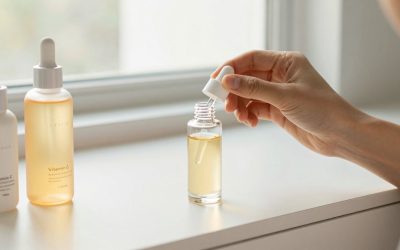
A well-designed serum should dispense a controlled amount without exposing the entire product to air and repeated contact. A standard dropper bottle is common and works well when the cap is closed promptly. An airless pump can be more hygienic and may dispense a more consistent amount, although the remaining product can be harder to see.
Pay attention to the formula’s texture. Thin, watery serums spread quickly but may run between your fingers. Gel-serums stay in place more easily and can feel more substantial. A thicker formula is not automatically more moisturizing; it may simply contain more film-forming ingredients.
Check for a clear expiration date, batch information, and directions for storage. Keep the bottle closed and away from direct sunlight, heat, and excessive humidity. Do not add water to a serum that has thickened, and do not transfer it to an unclean container.
Comfort and Performance: Concentration Is Only One Variable
Niacinamide is commonly sold in concentrations from 2% to 10%. For a beginner, 5% is often a practical middle ground: enough to make the ingredient a meaningful part of a routine without automatically selecting the strongest popular option. A 10% product may suit someone who prefers a more concentrated serum, but it can cause flushing, dryness, itching, or stinging in some users.
Patch test first by applying a small amount to an area such as the jawline or behind the ear. If there is no concerning reaction after 24 to 48 hours, apply a few drops to clean, dry skin two or three times during the first week. Increase to once daily only if your skin remains comfortable.
Give the product several weeks before judging its performance. Niacinamide is not an overnight pore eraser, and pores cannot be permanently closed by a serum. Look for gradual improvements in how oily, uneven, or uncomfortable the skin feels rather than relying on dramatic before-and-after claims. Stop using the product if you develop persistent burning, swelling, hives, or a spreading rash.
Price Tiers: Compare Cost per Fluid Ounce
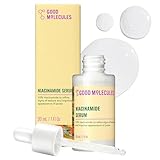
Budget niacinamide serums generally cost about $5 to $10 for 1 fluid ounce. The Ordinary Niacinamide 10% + Zinc 1% is listed around $5, while Good Molecules Niacinamide Serum 10% is around $5. These products make it inexpensive to test a straightforward 10% formula, but a low price does not indicate that the product is weak or unsafe.
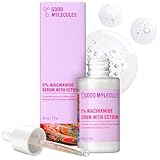
Midrange options commonly cost about $10 to $20 per 1 fluid ounce. Good Molecules 5% Niacinamide Serum with Ectoin is listed around $8, sitting near the upper end of budget pricing while offering a lower concentration and a different supporting-ingredient profile.
Premium or treatment-focused options often cost $20 to $40 or more for 1 fluid ounce. CeraVe Resurfacing Retinol Face Serum with Niacinamide is listed around $15, but it is not a plain niacinamide serum: it also contains retinol and should be evaluated as a retinol treatment. Compare the full ingredient list, not only the word “niacinamide” in the product name.
Returns, Shelf Life, and Product Support
Serums do not usually have a furniture-style warranty, so the useful protections are the retailer’s return policy, the manufacturer’s customer service, and clear batch or expiration information. Before opening, confirm whether the seller accepts returns for a changed mind or only for damaged, defective, or incorrect items.
Do not keep an opened serum indefinitely. Follow the package’s period-after-opening symbol, commonly shown as a small open jar marked 6M or 12M. That symbol indicates how long the product is intended to remain suitable after opening, not a guarantee that every bottle will look or smell identical for that entire period.
Keep your order confirmation and photograph a leaking or damaged package when it arrives. A legitimate seller should be able to identify the product, lot, and source. Be more cautious with listings that have no ingredient list, no size information, or an unusually low price compared with the brand’s normal range.
Delivery and Packaging: Prevent Damage and Counterfeits
Choose a seller that provides a sealed product, a readable label, and packaging appropriate for liquids. A dropper bottle should arrive with its cap secure and without leakage around the neck. If the box is hot, wet, crushed, or missing the safety seal shown in the product photos, contact the seller before using it.
Delivery speed matters less than storage conditions. A serum left for hours in direct sun or extreme heat may be less appealing to use even if the package is technically intact. When possible, order from the brand or an established retailer rather than an unknown marketplace seller, particularly for products containing retinol or multiple active ingredients.
Spec Checklist
| Spec | Budget | Mid | Premium |
|---|---|---|---|
| Typical price | $5–$10 | $10–$20 | $20–$40+ |
| Common size | 1 fl oz / 30 mL | 1 fl oz / 30 mL | 0.5–1 fl oz / 15–30 mL |
| Niacinamide range | 5%–10% | 2%–10% | 2%–10%, sometimes blended with other actives |
| Best for | Testing a basic formula | Targeted texture or barrier support | Complex routines or treatment combinations |
| Packaging | Dropper or simple pump | Dropper, pump, or airless bottle | Airless pump or premium glass packaging |
| Typical use | 2–4 drops, once daily | 2–4 drops, once or twice daily | Follow the active-specific directions |
Red Flags
- “Higher is always better” marketing: A 15% or 20% claim is not automatically more effective for a beginner.
- No percentage or ingredient list: You should be able to verify what you are buying before opening it.
- Unrealistic promises: Claims to permanently erase pores, cure acne, or transform skin overnight are not credible buying criteria.
- Too many new actives: A product combining niacinamide, retinol, acids, and fragrance may be difficult to troubleshoot.
- Suspiciously low marketplace pricing: Missing seals, blurry labels, or inconsistent packaging can indicate poor storage or an unreliable seller.
- Strong stinging presented as proof: Burning is irritation, not evidence that a serum is working better.
FAQ
What percentage of niacinamide should a beginner use?
A 2% to 5% formula is a sensible starting point for dry or sensitive skin, while a 10% formula may suit oilier, more tolerant skin. Start two or three times per week and increase only if your skin remains comfortable.
Can I use niacinamide every day?
Many people use it once daily, either in the morning or evening. Apply it after cleansing and before moisturizer. Wear broad-spectrum sunscreen during the day, especially if your routine also includes exfoliating ingredients or retinol.
Is a 10% niacinamide serum better than a 5% serum?
Not necessarily. A 10% serum contains more niacinamide, but concentration is only one part of the formula. A 5% product may be easier to tolerate and therefore easier to use consistently.
Can I use a niacinamide serum with retinol?
They can be used in the same routine if your skin tolerates both, but beginners should introduce one active at a time. A product such as CeraVe Resurfacing Retinol Face Serum with Niacinamide should be treated as a retinol product, not as a basic niacinamide serum.
Ready to decide? Our #1 pick for 2026 is the Typical price.
Live price & availability on Amazon.