Last updated: November 1, 2026
- ZIIP vs NuFace vs Medicube: at a glance
- NuFace Trinity vs ZIIP Halo: what is the real difference?
- ZIIP Halo, microcurrent and nanocurrent: how it works vs radiofrequency
- ZIIP Halo: is there any evidence it works long term?
- NuFace Trinity complaints: what users report most
- NuFace keeps shutting off while using: common causes
- How often should you use NuFace and the gel conductor?
- Where Medicube Age-R fits in
- Who should skip microcurrent devices?
- Which device should you choose?
- Frequently Asked Questions
The short answer: all three devices deliver low-level electrical current through the skin, but they differ in how they package it. NuFace Trinity is the simpler, manual, gel-based option; ZIIP Halo is app-controlled and markets “nanocurrent”; Medicube’s Age-R range is a broader line of at-home devices with features that vary by model. None of them is proven to replace professional treatments, and independent long-term evidence is limited for all three.
This guide compares ZIIP vs NuFace vs Medicube using only widely documented information. We have not run a lab test on any of them, so treat this as a research-based buying guide rather than a hands-on verdict. Check each brand’s current product page for specs and pricing, since both change.
ZIIP vs NuFace vs Medicube: at a glance
| Feature | NuFace Trinity | ZIIP Halo | Medicube Age-R line |
|---|---|---|---|
| Type of current | Microcurrent | Marketed as nanocurrent | Varies by model; some models include microcurrent or EMS-style modes |
| Conductive gel needed | Yes (NuFace gel or compatible product) | Yes (ZIIP’s own gels) | Check the specific model’s instructions |
| App control | No | Yes | Varies by model |
| Adjustable programs | Intensity levels; attachments sold separately | Multiple waveforms and programs via app | Varies by model |
| Style | Handheld, two-ball head | Handheld, rechargeable | Handheld, multi-function on some models |
If a cell says “varies,” it is because Medicube sells several Age-R devices and we do not want to attribute one model’s features to another. Read the listing for the exact device you are considering.
NuFace Trinity vs ZIIP Halo: what is the real difference?
When people search “nu face trinity v ziip halo,” they are usually weighing simplicity against customization.
NuFace Trinity
The Trinity is a manual, handheld microcurrent device with two conductive spheres. You apply a conductive gel, glide the device across the face in set directions, and choose an intensity level. It has no app. Its attachments (for example, the eye and lip attachment or the wrinkle-reducer add-on) are sold separately and clip on, which makes the platform modular but can add to the total cost.
ZIIP Halo
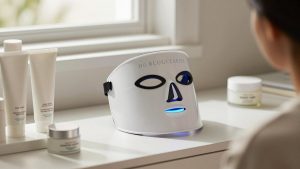
The ZIIP Halo is also handheld and uses conductive gels, but it is controlled through a companion app with preset programs and different waveforms. The brand positions this as more customizable than a fixed-intensity device. The trade-off is that you are tied to a phone, and the brand’s gels are an ongoing purchase.
Which suits which person?
- You want minimal fuss: a manual device with a short routine is easier to stick with.
- You like guided routines and tweaking settings: an app-driven device may keep you more engaged.
- You want one device for several jobs: look closely at the Medicube Age-R model descriptions before assuming it matches either of the other two.
ZIIP Halo, microcurrent and nanocurrent: how it works vs radiofrequency
Microcurrent devices send very low-level electrical current, measured in millionths of an amp, through conductive gel into the skin. The general idea behind the category is that this current stimulates facial muscles and skin cells. “Nanocurrent” is ZIIP’s term for an even lower amplitude, which the brand says is gentler and more targeted. It is a marketing category more than an established medical one, so we would not treat it as proven to be superior.
Radiofrequency (RF) is a different technology. RF devices deliver energy that heats tissue in the deeper layers of the skin, and the claimed benefit is firmer-looking skin from that heat. Microcurrent does not rely on heating. In practice:
- Microcurrent / nanocurrent: low electrical current, usually short sessions, typically needs a conductive gel, generally not felt as heat.
- Radiofrequency: heat-based, you usually feel warmth, and professional versions are stronger than at-home ones.
Some at-home devices combine modes, which is why checking the actual feature list matters.
ZIIP Halo: is there any evidence it works long term?
This is the question we would want answered before spending money, and the honest answer is: not much independent evidence exists that we can point to. The wider picture for at-home microcurrent looks like this:
- Published studies on microcurrent for facial appearance tend to be small and short, and some are funded by manufacturers.
- Effects people describe, such as a temporary lifted or more “awake” look, are generally reported as short-lived and tied to continued use.
- We are not aware of independent, long-term, controlled trials that show lasting wrinkle or sagging reduction from ZIIP Halo specifically.
That does not mean the devices do nothing. It means the claims are modest at best when judged by independent research, and before-and-after photos on brand sites are not a substitute for trials. A reasonable expectation is a subtle, temporary change in firmness or contour, not a replacement for sunscreen, retinoids, or in-office procedures. If you are curious about the broader category, our roundup of microcurrent sculpting devices covers more options.
NuFace Trinity complaints: what users report most
Reading across retailer reviews and forums, the recurring NuFace Trinity complaints are fairly consistent:
- Cost of the ecosystem. The device, gel, and attachments add up over time.
- Gel dependence. You need a conductive gel for every session, and running low or using too little is a common reason for weak or uneven results.
- Subtle results. Some people expect dramatic change and are disappointed by the modest, temporary effect.
- Consistency required. The routine asks for regular sessions, which many people drop after a few weeks.
- Occasional device faults. A minority of users report devices that stop working or cut out. If yours seems defective, contact NuFace support or the retailer about the warranty.
These are patterns in user feedback, not measurements we made ourselves. If you are comparing the Trinity with smaller options, see our FOREO Bear vs NuFace Mini comparison.
NuFace keeps shutting off while using: common causes
If your NuFace keeps shutting off mid-session, the cause is often one of these ordinary issues rather than a broken device:
- Not enough gel. Microcurrent devices rely on good conductivity. When the gel dries or is applied thinly, contact is poor and the device may stop or flash a warning.
- Losing skin contact. Lifting both spheres off the skin or gliding too fast can interrupt the circuit.
- Auto shut-off timer. Many NuFace models are designed to power down after a short session. Check your manual for the exact timing.
- Low battery. A weak charge can cause erratic behavior. Charge fully and try again.
- Dirty or damaged spheres. Wipe them clean per the manual and look for visible damage.
Try a generous layer of gel, slower glides, and a full charge first. If it still cuts out, it is worth contacting the manufacturer, because we cannot diagnose a specific unit from here.
How often should you use NuFace and the gel conductor?
Follow the schedule in your own device’s manual, because it varies by model and the brand updates its guidance. In general, microcurrent brands recommend an initial period of fairly frequent sessions (several days a week) followed by a lower maintenance schedule. Sessions are short, typically a few minutes per area.
On the gel conductor specifically:
- Apply to clean skin, and cover the whole area you are about to treat so the device never glides over dry patches.
- Reapply if the gel starts to absorb or the device feels like it is dragging.
- Use a gel designed for microcurrent. Regular moisturizers and oils do not conduct the same way.
- Rinse the gel off afterward, then continue with your normal moisturizer and sunscreen in the morning.
A conductive gel product, such as NuFace’s leave-on gel primer, is an example of what the category uses. Compatibility notes on the packaging are worth reading before you mix brands.
Where Medicube Age-R fits in
Medicube’s Age-R devices are part of a Korean at-home beauty tech line that includes several different tools, so “Medicube Age-R” is not one single product. Some models focus on different treatment modes, so make sure the listing explicitly names microcurrent if that is what you want. Our direct Medicube Age-R vs FOREO Bear 2 comparison breaks down that matchup in more detail.
Who should skip microcurrent devices?
Manufacturers commonly list the same cautions: people with a pacemaker or other implanted electronic device, people who are pregnant, those with epilepsy, and those with metal implants in the face are usually told not to use them. Active breakouts, open wounds, or skin infections in the treatment area are also reasons to wait. This is not medical advice. If you have a medical condition or are unsure, ask your doctor or a dermatologist before starting.
Which device should you choose?
- Pick NuFace Trinity if you want a straightforward, manual routine from an established brand and do not need an app.
- Pick ZIIP Halo if you want programmable settings and are comfortable with an app and a recurring gel purchase.
- Look at Medicube Age-R if you want a multi-function device and have confirmed the exact model includes the modes you want.
- Skip all three if your budget is tight. Sunscreen and a well-chosen retinoid have far stronger evidence behind them.
If you want to see the Trinity itself, search for it on Amazon and compare current pricing and bundles. For more options, browse our devices buying guide.
Frequently Asked Questions
What is the difference between ZIIP, NuFace and Medicube?
NuFace Trinity is a manual microcurrent device used with conductive gel. ZIIP Halo is app-controlled and markets nanocurrent with programmable waveforms. Medicube’s Age-R range includes several devices with different features, so the exact model matters.
Does ZIIP Halo work long term?
We could not find independent long-term trials showing lasting results from ZIIP Halo. Microcurrent research in general is small and short, and users typically describe temporary effects that depend on continued use. Set modest expectations.
What are the most common NuFace Trinity complaints?
Users most often mention the ongoing cost of gel and attachments, subtle results, and the need for consistent use. A smaller number report devices that stop working, in which case the manufacturer’s support and warranty are the right next step.
Why does my NuFace keep shutting off while I use it?
Common reasons are too little gel, lifting off the skin, an automatic session timer, or a low battery. Add more gel, glide slowly, and charge fully. If it keeps happening, contact NuFace support.
How often should I use NuFace and the gel conductor?
Follow your model’s manual, which typically suggests more frequent sessions at first and fewer for maintenance. Apply enough conductive gel to cover the entire treatment area each time, and reapply if it dries.
This article is for general information only and is not medical advice. Talk to a doctor or dermatologist before using electrical devices if you have a medical condition, implants, or are pregnant.