Last updated: October 4, 2026
Quick answer: Our top pick in 2026 is the Basic gentle facial cleanser — our #1 rated choice. See the full ranked comparison, alternatives and buying advice below.
The Short Answer
Yes—cleansing balm is worth it for sunscreen if you wear water-resistant, sweat-resistant, tinted, or layered SPF and want a more reliable first cleanse. The one condition is that you still need to rinse thoroughly and, for many skin types, follow with a gentle water-based cleanser.
A cleansing balm is not automatically better than every other cleanser. It is a type of oil-based cleanser designed to dissolve sunscreen, makeup, excess sebum, and other oil-soluble residue before you wash your face. For uncomplicated daily sunscreen on normal or dry skin, a cleansing oil, micellar water, or even a thorough gentle cleanser may work just as well for less money.
As an Amazon Associate we earn from qualifying purchases at no extra cost to you.

The real question is not whether a balm is luxurious. It is whether your current routine leaves behind a filmy feeling, clogged pores, makeup residue, or irritation from repeated scrubbing. If it does, a balm can be a practical upgrade rather than another attractive jar on the bathroom counter.
What You Actually Get
Cleansing balms are usually solid or semi-solid at room temperature. You scoop out a small amount, warm it between your fingers, and massage it over dry skin. The balm melts into an oil, loosening sunscreen and other oil-based products. When you add water, many formulas turn milky—a process called emulsification—so they can be rinsed away more easily.
The product is generally used as the first step of a double cleanse:
- Massage the balm onto dry face and dry hands for about 30 to 60 seconds.
- Add a little lukewarm water and continue massaging until the texture turns milky.
- Rinse thoroughly.
- Use a gentle water-based cleanser if your skin feels coated or if you wore heavy sunscreen, makeup, or water-resistant products.
You do not need a large scoop. A pea- to nickel-sized amount is often enough for the face, depending on the formula and how much product you are removing. Keep water out of the jar when possible, use clean, dry hands or the included spatula, and close the lid after every use.
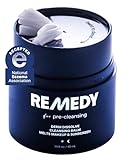
Two relevant options illustrate the typical price range. Beauty of Joseon Radiance Cleansing Balm Makeup & Sunscreen Remover is listed for under $20, while REMEDY for Pre-Cleansing, Derm Dissolve Cleansing Balm, Melts Makeup & SPF is listed for under $20. At roughly $18, both sit in the accessible midrange for a dedicated cleansing balm. Your cost per use will depend more on how generously you scoop than on the initial price.
Pros
- It dissolves stubborn SPF efficiently. Water-resistant and mineral sunscreens can cling to skin, especially around the nose, hairline, and jaw. An oil-based balm helps loosen that film without aggressive rubbing.
- It can reduce cleansing friction. The cushiony texture gives your fingers more slip, which may be more comfortable than repeatedly scrubbing with a foaming cleanser or washcloth.
- It removes makeup and sunscreen together. If you wear foundation, concealer, waterproof eye makeup, or lip products, one first cleanse can handle several layers at once.
- It is often comfortable for dry or mature skin. A balm can feel less stripping than using a strong foaming cleanser twice. This does not make every balm hydrating, but the oil-rich texture can be appealing when skin feels tight after washing.
- A small amount usually spreads well. Most formulas melt quickly, so you do not need a handful of product. That makes a jar last longer when you use a modest scoop.
- It is useful even without makeup. Daily SPF, especially reapplication over the course of a day, can be enough reason to use a first cleanse at night.
Cons
- It adds a step. If your ideal routine takes under two minutes, a balm may feel unnecessary. You have to scoop, massage, emulsify, rinse, and possibly cleanse again.
- Some formulas leave residue. Poorly emulsifying balms can leave a waxy or oily film. That can be unpleasant on oily skin and may interfere with the feel of products applied afterward.
- It can irritate sensitive eyes. Fragrance, essential oils, and vigorous rubbing may cause stinging. Keep the product out of the eyes unless the label specifically supports eye-makeup removal.
- It may be a poor match for some breakout-prone users. The balm itself is not automatically pore-clogging, but rich ingredients, incomplete rinsing, or an overly heavy second cleanse can contribute to congestion for some people.
- Jars are less convenient than pumps or wipes. A jar can be messy near a sink, and water contamination is a hygiene concern. A spatula helps, but it is another small item to clean.
- It costs more than basic cleanser. An approximately $18 balm may be reasonable, but a simple cleanser or drugstore micellar water often costs less upfront and may be sufficient for lighter sunscreen.
Who Should Buy It
Buy a cleansing balm if you apply sunscreen every day and notice that your current cleanser does not fully remove it. It is especially useful if you use water-resistant SPF, tinted sunscreen, multiple layers of sunscreen, makeup, or reapply during outdoor activities.
It is also a good choice if cleansing leaves you scrubbing, if your skin feels tight after using a stronger cleanser, or if you prefer a massage-friendly texture. Dry, normal, and combination skin types often appreciate the reduced drag. People who wear makeup but dislike disposable wipes may also find a balm more effective and less wasteful.
When comparing products, look for clear directions, easy emulsification, and a texture you can rinse without repeated washing. If you have sensitive skin, a fragrance-free formula is a sensible starting point. Expect most dedicated balms to cost about $15 to $30, although premium options can cost more. The cheapest jar is not necessarily the best value if you need a large scoop to remove SPF or if it makes you wash your face several times.
Who Should Skip It
Skip it if your current cleanser removes your sunscreen comfortably and completely. There is no requirement to double cleanse simply because a product is marketed for SPF removal. If your face feels clean without tightness, residue, or visible makeup left behind, adding a balm may only increase cost and complexity.
You may also prefer another format if you dislike jars, have very oily skin that feels coated by balm, or frequently develop eye irritation from cleansing products. People with highly reactive skin should patch-test a new formula and introduce it on a low-stakes evening rather than using it immediately after a professional treatment or on already irritated skin.
Cheaper Alternatives
| Option | Cost | Trade-off |
|---|---|---|
| Basic gentle facial cleanser | $6–$15 | Lowest cost and simplest routine, but may require a longer massage or a second wash for water-resistant SPF. |
| Micellar water | $5–$14 | Convenient and lightweight, but cotton pads can create friction and some formulas leave residue unless rinsed. |
| Cleansing oil | $8–$20 | Often spreads quickly and comes in a pump, but can feel messier and may be less travel-friendly than a solid balm. |
| Petrolatum-based ointment for small areas | $4–$10 | Inexpensive for loosening stubborn eye or lip makeup, but too heavy and impractical for removing sunscreen from the whole face. |
| Reusable soft cloth with cleanser | $5–$15 | Reduces disposable waste, but pressure from the cloth can irritate skin if you scrub instead of lightly wiping. |
A cheaper alternative makes the most sense when you wear a light, non-water-resistant sunscreen and do not use makeup. For heavy outdoor SPF, the key is not the word “balm” on the label; it is using a product that dissolves the sunscreen without forcing you to scrub.
FAQ
Is cleansing balm enough to remove sunscreen?
Sometimes, but not always. A well-emulsifying balm can remove much of the sunscreen on its own, especially if you rinse carefully. A second gentle cleanser is worthwhile when you wear water-resistant SPF, makeup, or several layers, or when your skin still feels slick after rinsing.
Can cleansing balm cause breakouts?
It can be a problem for some individuals, but breakouts are not inevitable. The formula, your skin, how thoroughly you rinse, and whether you follow with a suitable cleanser all matter. Start by using a small amount, emulsify fully, and stop if you notice persistent congestion or irritation.
Should you use cleansing balm every night?
Use it on nights when you need it. Daily sunscreen and makeup can justify nightly use, while a day spent indoors with minimal product may not. If your skin becomes dry, tight, or irritated, reduce the frequency or switch to a gentler, simpler cleanser.
Is an $18 cleansing balm worth the money in 2026?
It is worth it when it replaces scrubbing, removes sunscreen reliably, and makes your routine more comfortable. The Beauty of Joseon option for under $20 and the REMEDY option for under $20 are reasonable examples of the category’s typical price point. If a basic cleanser already does the job, keep the money and skip the balm.
Ready to decide? Our #1 pick for 2026 is the Basic gentle facial cleanser.
Live price & availability on Amazon.