Last updated: October 4, 2026
Learning how to use sunscreen stick over makeup helps you refresh protection without wiping away foundation, blush, or concealer. Done poorly, however, a stick can drag pigment across the face, leave uncovered strips around the nose and hairline, or create a heavy, shiny layer that makes makeup separate. The key is to apply it in thin, deliberate sections, use light pressure, and treat it as a reapplication tool—not a substitute for a thorough first layer of sunscreen underneath your makeup.
This 2026 guide explains how to reapply a broad-spectrum SPF 30 or higher sunscreen stick over a finished face while keeping your base intact.
As an Amazon Associate we earn from qualifying purchases at no extra cost to you.


Quick answer: Our top pick in 2026 is the Broad-spectrum sunscreen stick, SPF 30 or higher — our #1 rated choice. See the full ranked comparison, alternatives and buying advice below.
What You Need
| Item | Why | Optional? |
|---|---|---|
| Broad-spectrum sunscreen stick, SPF 30 or higher | Provides a portable layer for reapplication on exposed skin. | No |
| Makeup sponge or clean fingertips | Presses down displaced makeup around the nose, mouth, and cheeks. | Yes |
| Blotting paper or a single-ply tissue | Removes excess oil before application, especially over a matte or powder finish. | Yes |
| Small mirror | Helps you inspect easily missed areas, including the temples, ears, and hairline. | Yes |
| Clean cotton swab | Corrects product buildup in the creases beside the nose or at the lash line. | Yes |
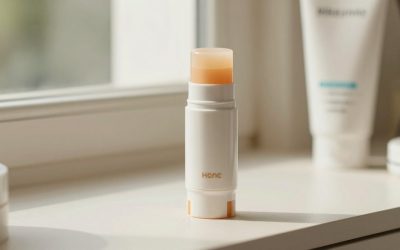
Two useful options illustrate the main finish differences. Abib Airy Sunstick Protection Bar SPF50+ Broad Spectrum is a semi-matte 0.81-ounce (23-gram) stick listed at about $20, making it a reasonable choice for oily or combination skin. Abib Quick Sunstick Protection Bar SPF50+ Broad Spectrum is a glowy 0.77-ounce (22-gram) option listed at about $15 and is positioned for dry or sensitive skin. Prices can change, so think of these as roughly $16 to $19 examples rather than fixed totals. Always check the label for directions, warnings, and the product’s stated water-resistance period.
Step-by-Step
Start with sunscreen underneath your makeup (5 to 10 minutes)
For your first application of the day, use a broad-spectrum sunscreen lotion, cream, or fluid on clean skin before foundation. Apply enough to cover the face, ears, neck, and any exposed chest area. A commonly used face-only measuring guide is two finger-length strips of sunscreen, but your product’s label takes priority. Let it settle for about 5 to 10 minutes before makeup so the sunscreen film is less likely to move.
A stick is convenient for touchups, but it is difficult to measure a complete first application evenly. Starting with a liquid or cream sunscreen also gives you more reliable coverage beneath makeup.
Wash and dry your hands (20 seconds)
Clean hands prevent oil, dirt, and makeup residue from transferring to the stick or your face. If washing is not possible, use hand sanitizer and allow it to dry completely before touching your skin. Twist the stick up only about 0.25 to 0.5 inch at a time. This limits breakage and keeps the exposed surface cleaner.
Blot excess oil without rubbing (30 seconds)
Press blotting paper or a single-ply tissue gently over the forehead, nose, upper lip, and chin. Do not swipe. Removing a thin layer of oil helps the sunscreen glide rather than skid across your foundation, and it reduces the chance of a slick finish. If your skin is dry or your makeup is already comfortable, skip this step.
Divide the face into small sections (30 seconds)
Work in sections no larger than about 2 inches by 2 inches: one cheek, the other cheek, the forehead, the nose, the chin, and then the perimeter of the face. Smaller sections make it easier to overlap coverage and notice missed spots. Avoid treating the whole face as one continuous swipe, which can pull makeup unevenly.
Glide on a thin, even layer (2 to 3 minutes)
Use light pressure and short, controlled passes. For each section, make at least two passes in one direction and two more at a crosswise angle, unless the package gives different instructions. Overlap each neighboring section slightly. Do not press hard enough to flatten cream blush, lift foundation, or stretch the skin.
On the cheeks and forehead, straight passes are usually easiest. Around the nose, use shorter strokes. Move the stick carefully along the bridge and sides of the nose, across the upper lip, and over the chin. Keep it away from the eyes and waterline. For the under-eye area, apply only to the surrounding orbital bone if the label permits and you do not experience stinging.
Pat, rather than rub, any disturbed makeup (30 to 60 seconds)
If the stick shifts pigment, use a clean makeup sponge or fingertip to tap the area back into place. A pressing motion blends edges; rubbing creates bald patches. You can add a small amount of concealer afterward, but avoid layering powder immediately if the sunscreen still feels wet. Give the surface a minute to settle first.
Cover the often-missed areas (1 to 2 minutes)
Apply sunscreen to the temples, hairline, ears, front and sides of the neck, and any exposed chest. If you wear a part in your hair, protect the visible scalp with a sunscreen product intended for that area or use a hat; do not force a face stick through thick hair. Sunglasses and a wide-brimmed hat add useful physical protection but do not replace sunscreen.
Clean the stick and check the finish (1 minute)
Wipe the outer rim with a clean tissue if makeup has transferred to it, then close the cap securely. Look in bright light for shiny clumps, uncovered strips, or product collecting in creases. A semi-matte stick may suit an oily T-zone, while a glowy formula can be more comfortable on dry areas. You can use a tissue to press down excess shine, but do not wipe away the sunscreen layer.
Mistakes to Avoid
- Using one quick swipe: A single pass may leave gaps and does not guarantee the labeled SPF on the skin. Build deliberate, overlapping passes instead.
- Rubbing the stick back and forth aggressively: Excess pressure can move foundation and irritate skin. Let the product glide.
- Applying only to the center of the face: The hairline, ears, temples, neck, and upper chest are easy to miss.
- Skipping the first sunscreen layer: Touchup sticks are best for reapplication. They are not an easy way to measure a complete morning application.
- Applying over visibly dirty or sweaty skin: Blot first when possible. If you have heavy sweat, salt, or dust on your face, rinse or cleanse before reapplying.
- Sharing the stick: A face stick contacts skin directly, so keep it personal.
- Ignoring sensitivity: Stop if you develop burning, swelling, hives, or persistent redness. Do not apply over broken or actively irritated skin unless a medical professional says it is appropriate.
How Often
Reapply at least every two hours when you are outdoors, and sooner after swimming, sweating, toweling off, or wiping your face. Water-resistant sunscreen is not waterproof; the label specifies whether protection lasts 40 or 80 minutes during swimming or sweating. If you remain indoors away from windows and direct sunlight, you may not need the same schedule, but reapply before heading outside.
For a long outdoor day, use a stick as one part of a broader routine: initial sunscreen, protective clothing, sunglasses, shade, and repeat applications. Reapply the face, neck, ears, and other exposed areas rather than concentrating only on spots where makeup looks faded.
When to Call a Pro or Replace
Ask a dermatologist or other qualified medical professional for advice if sunscreen repeatedly causes a rash, swelling, blistering, severe itching, or eye symptoms. Professional guidance is also worthwhile if you have photosensitivity, a history of skin cancer, a condition treated with photosensitizing medication, or difficulty protecting a scar or healing procedure site.
Replace the stick if its smell, color, texture, or finish changes; if it separates, becomes gritty, or develops visible contamination; or if the package is damaged. Follow the expiration date or period-after-opening symbol. A typical open-product symbol may show a number such as 12M, meaning 12 months after opening, but the package’s specific instruction controls. Do not leave the stick in a hot car or direct sun, where heat can soften the formula and compromise usability.
FAQ
Can I apply sunscreen stick over powder?
Yes, but use very light pressure and short passes. A semi-matte stick generally moves less powder than a wet, glossy formula, although any stick can disturb makeup. Press a sponge over lifted areas instead of rubbing them back and forth.
How much sunscreen stick should I use over makeup?
There is no universal number of swipes that guarantees the labeled SPF because stick formulas, swipe thickness, skin texture, and application pressure vary. Cover every exposed area with several slow, overlapping passes, and follow the product label. If the finish becomes uncomfortably thick, use a lotion or spray designed for reapplication on large exposed areas instead of relying on one quick pass.
Can I use sunscreen stick around my eyes?
Keep it away from the eyelids, lash line, and waterline unless the label specifically allows that use. Apply carefully to the cheekbone and outer eye area, then stop if your eyes water or sting. Rinse promptly if product gets into the eye.
Should I use a glowy or semi-matte sunscreen stick?
Choose based on both skin type and makeup finish. A semi-matte option may feel more compatible with oily or combination skin and powdered makeup. A glowy option can reduce the look of dryness on dry skin, but it may add shine to an oily T-zone. You can blot selected areas after application without wiping the sunscreen away.
Ready to decide? Our #1 pick for 2026 is the Broad-spectrum sunscreen stick, SPF 30 or higher.
Live price & availability on Amazon.