Last updated: October 4, 2026
Choosing sunscreen water resistance sounds simple until you are standing in a store comparing “sport,” “active,” “beach,” and “daily” formulas. The most common mistake is treating water resistance as a permanent shield. No sunscreen is waterproof, and even an 80-minute claim does not mean one application lasts all day. Swimming, sweating, towel drying, rubbing clothing, and applying too little product can all reduce protection.
A second mistake is assuming a higher SPF automatically lasts longer in water. SPF measures protection from sunburn under test conditions; it does not tell you how well a formula stays on wet skin. The label’s water-resistance time—usually 40 or 80 minutes—is the number to compare. For 2026, the smartest approach is to match that time to your activity, then check the formula, package size, application amount, and reapplication instructions.
As an Amazon Associate we earn from qualifying purchases at no extra cost to you.


Decide These 3 Things First
- How long will you be wet or sweating? Choose 40 minutes for short pool sessions or casual outdoor use, and 80 minutes for longer swimming, running, hiking, or sports. Reapply immediately after towel drying.
- Where will you use it? A face-friendly daily lotion may feel better for commuting, while a sport lotion, stick, or spray may be more practical for shoulders, legs, and arms. Sensitive or acne-prone skin may need a fragrance-free or mineral option.
- Will you apply enough? Adults generally need about 1 ounce for exposed body skin—roughly a shot-glass amount—and about two finger-lengths of lotion for the face, neck, and ears. A sunscreen that feels pleasant enough to apply generously can protect better than a stronger formula used sparingly.
Size and Format
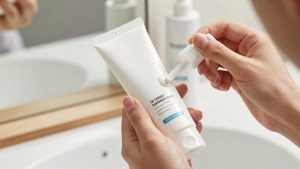
Package size affects both value and whether you actually have enough sunscreen for a trip. A 3-fluid-ounce bottle is convenient for a carry-on and usually covers several face-and-neck applications, but it may last only a few full-body uses. A 7- to 8-ounce bottle is more practical for a family, pool bag, or repeated body application.
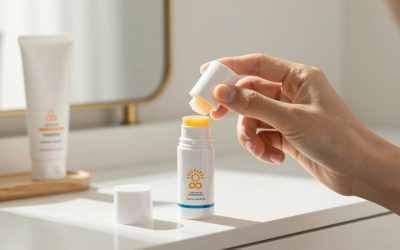
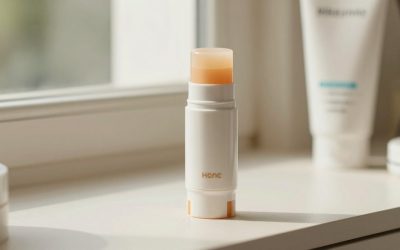
Consider the format as carefully as the volume. Lotions are usually easiest to measure and spread evenly. Sticks are useful around the nose, ears, lips, and hairline, but they can encourage under-application on larger areas. Sprays can be quick for arms and legs, but they should be sprayed generously, rubbed in, and never inhaled or applied near a flame. Aerosol mist can also drift away in wind, making it harder to judge coverage.
For a weekend away, one 3-ounce bottle may be adequate for one person using it mainly on the face and exposed areas. For a beach day with repeated full-body applications, plan on considerably more—often 4 to 6 ounces per adult, depending on clothing and activity.
Material: Formula and Skin Compatibility
In sunscreen, “material” means the active filters and the rest of the formula. Chemical filters absorb ultraviolet radiation, while mineral filters such as zinc oxide sit on the skin and scatter or reflect it. Both types can offer broad-spectrum protection when properly formulated and labeled.
Look for broad spectrum protection and SPF 30 or higher. SPF 50 is a sensible choice for extended outdoor exposure, fair or photosensitive skin, and activities where application may be imperfect. Higher SPF does not eliminate the need to reapply or provide a longer water-resistance window.
Fragrance, alcohol, and certain emollients may bother sensitive skin, although tolerance varies. If you are prone to stinging around the eyes, choose a face-specific product and test it before a long outdoor event. Mineral formulas can leave a cast, especially at high protection levels, while some newer lotions spread more easily. Do not judge water resistance from texture alone; use the labeled 40- or 80-minute claim.
Construction: Read the Label, Not the Front-of-Bottle Marketing
The most important construction detail is the water-resistance statement. In the United States, sunscreen labels generally identify protection during swimming or sweating for either 40 minutes or 80 minutes. “Waterproof,” “sweatproof,” and similar claims should not be treated as proof of all-day durability.
Check the directions for when to apply and when to reapply. Most products recommend applying 15 minutes before sun exposure, then reapplying at least every two hours and immediately after swimming, sweating, or towel drying. An 80-minute product still needs a fresh application after the stated time, even if it appears to remain on the skin.
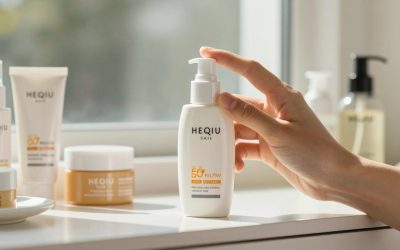
Also inspect the active-ingredient panel, SPF level, broad-spectrum statement, expiration date, and lot information. A pump, squeeze tube, or flip cap can affect usability. A secure cap matters in a beach bag; a pump may be easier for repeated body application but can clog if exposed to sand.
Comfort and Performance
The best sunscreen is one you will use in the correct amount. Heavy, sticky, strongly scented, or slow-drying formulas often lead people to apply a thin layer or skip reapplication. For running or swimming, look for a formula described for sport or active use and labeled for 40 or 80 minutes of water resistance.
Pay attention to eye comfort, rubbing, and clothing transfer. No sunscreen should be assumed to stay put after vigorous towel drying. If you sweat heavily, bring the bottle with you rather than leaving it in a hot car or on a sunny deck. Heat can degrade a product over time, and direct sunlight can make the container extremely hot.
Examples illustrate the range of choices. Neutrogena Hydro Boost Water Gel Sunscreen SPF 50 in a 3-fluid-ounce package is positioned as a lighter daily-style option. Hawaiian Tropic Everyday Active SPF 50 in an 8-ounce bottle and Coppertone SPORT SPF 50 in a 7-ounce bottle emphasize larger body-use quantities. EltaMD UV Sport SPF 50, listed as water and sweat resistant for 80 minutes, sits at a higher price point and is marketed toward active use. Always verify the current package label because formulas, sizes, and claims can change.
Price Tiers
Price is usually driven by brand, formula, packaging, and specialty positioning—not by a guarantee that one sunscreen protects better than another. Budget products commonly cost about $7 to $15 for 6 to 8 ounces or $10 to $18 for a smaller face-oriented bottle. Midrange products often fall between $15 and $28, especially for fragrance-free, sensitive-skin, or cosmetically elegant formulas. Premium products can cost $28 to $45 or more for roughly 2 to 4 ounces.
The useful comparison is cost per ounce. A under-$20, 3-ounce bottle costs about $4.16 per ounce, while an under-$10, 7-ounce bottle costs about $1.27 per ounce. The less expensive option may be the better body-sunscreen value, but only if its texture encourages adequate application and its water-resistance time fits your activity.
Warranty, Returns, and Expiration
Sunscreen usually does not come with a meaningful product warranty. Instead, inspect the expiration date, seal, package condition, and retailer return policy. Avoid bottles that are leaking, swollen, separated, or missing a readable expiration date. If the product has no expiration date, the manufacturer may expect it to remain stable for a limited period from production; follow the label’s storage instructions and replace old sunscreen rather than guessing.
Keep sunscreen at room temperature when possible. Do not leave it in a hot vehicle, on a dashboard, or in direct sun for hours. If the color, smell, or consistency changes, discard it even if the printed date has not passed.
Delivery and Storage
When ordering online, check the bottle size, quantity, seller, and expiration information. A multipack can be economical, but not if you receive more product than you can use before expiration. For travel, a 3.4-ounce or smaller container is generally the practical carry-on size, but confirm current airline requirements before packing.
Place sunscreen in a leak-resistant bag, particularly if it will share space with clothing or electronics. On arrival, store it in a cool cabinet rather than a bathroom windowsill or a vehicle. Delivery delays in extreme heat are another reason to buy from a retailer with clear inventory and return policies.
Spec Checklist
| Spec | Budget | Mid | Premium |
|---|---|---|---|
| Typical price | $7–$15 | $15–$28 | $28–$45+ |
| Common package size | 6–8 fl oz | 3–8 fl oz | 2–4 fl oz |
| SPF | 30–50 | 30–50 | 30–50+ |
| Water-resistance claim | 40 or 80 minutes | 40 or 80 minutes | Often 40 or 80 minutes; verify the label |
| Best use | Everyday body coverage | Face, sensitive skin, or active use | Specialized face or sport routines |
| Format | Lotion or spray | Lotion, stick, or spray | Face lotion, stick, or specialty lotion |
Red Flags
- “Waterproof” or “sweatproof” language used without a clear 40- or 80-minute claim.
- No broad-spectrum statement or no visible SPF number.
- A price that seems unusually low because the package is only 1 to 2 ounces.
- A formula with a strong odor, separation, leakage, or an unreadable expiration date.
- Instructions that do not explain reapplication after swimming, sweating, or towel drying.
- Spray use around flames, enclosed spaces, children’s faces, or windy conditions.
- Marketing that implies SPF 50 lasts longer in water than SPF 30 without providing a water-resistance time.
FAQ
Is 80-minute water resistance better than 40-minute water resistance?
It is better suited to longer swimming or sweating sessions, but it is not permanent protection. Reapply after the stated time, after towel drying, and at least every two hours while outdoors.
Does SPF 50 stay on longer than SPF 30?
No. SPF describes the level of sunburn protection under testing conditions. It does not establish how long the sunscreen remains water resistant. Compare the label’s 40- or 80-minute claim instead.
How much sunscreen should one adult use?
Use about 1 ounce for exposed body skin, roughly enough to fill a shot glass. For the face, neck, and ears, use about two finger-lengths of lotion. Apply 15 minutes before going outside.
Should I buy a sport sunscreen for everyday use?
You can, provided the formula feels comfortable and does not irritate your skin. Sport formulas may be useful for commuting, gardening, or exercise, but the most important factors remain broad-spectrum SPF 30 or higher, adequate application, and following the water-resistance and reapplication directions.
Ready to decide? Our #1 pick for 2026 is the Typical price.
Live price & availability on Amazon.