Last updated: October 4, 2026
- Decide These 3 Things First
- Size: Match the Bottle to the Area You Cover
- Material: Read the Active Ingredients and Base
- Construction: Packaging Determines How Much You Actually Use
- Comfort and Performance: The Best Finish Is the One You Reapply
- Price Tiers: Compare Cost per Ounce, Not Just Sticker Price
- Warranty and Returns: Sunscreen Usually Has a Shelf-Life Policy
- Delivery and Storage: Protect the Formula Before It Reaches Your Skin
- Spec Checklist
- Red Flags
- FAQ
Choosing sunscreen for deeper skin tones should not mean accepting a white cast, a chalky finish, or a formula that makes your skin look gray. Yet shoppers often make three avoidable mistakes: buying the highest SPF without checking texture, assuming every “invisible” sunscreen works equally well on every undertone, and treating face and body products as interchangeable. A sunscreen buying guide for darker skin should focus on daily wear, broad-spectrum protection, finish, and whether you will actually apply enough.
The best sunscreen is the one you can use generously and reapply consistently. Darker skin still needs protection from ultraviolet radiation, including UVA rays that contribute to hyperpigmentation and uneven tone. Sunscreen can also help prevent dark marks from lingering after acne, irritation, or cosmetic procedures. The choices below are organized around practical shopping decisions rather than marketing language.
As an Amazon Associate we earn from qualifying purchases at no extra cost to you.



Decide These 3 Things First
- Where will you use it? A face sunscreen needs a finish that layers under makeup and does not sting the eyes. A body sunscreen should spread quickly over larger areas and come in a size that makes regular application affordable.
- What finish can you tolerate? Mineral formulas containing zinc oxide or titanium dioxide can leave a visible cast, especially at higher concentrations. Chemical or hybrid formulas often blend more easily, but they may feel more fluid or cause eye irritation for some users.
- How much protection do you need? SPF 30 is a reasonable daily minimum for many routines, while SPF 50 or higher can be useful for prolonged outdoor exposure, intense sun, or people managing hyperpigmentation. Look for “broad spectrum” on the label, not SPF alone.
Size: Match the Bottle to the Area You Cover
Size affects both convenience and whether you apply enough. A 1.5- to 2-ounce face sunscreen is portable and practical for daily use, but it will disappear quickly if used on the face, ears, neck, and hands. For the face and neck, a commonly used measuring shortcut is about two finger lengths of product per application. For the entire body, use approximately one shot-glass amount, or about 1 ounce, when wearing a swimsuit or similarly exposed clothing.
Choose a 1.5- to 2-ounce tube for a purse, desk, or travel bag. A 3- to 6-ounce bottle is more suitable for repeated face-and-body use. The La Roche-Posay Anthelios Melt-In Milk SPF 100, listed at 3 ounces and under $30, sits between a face product and a large body lotion. Black Girl Sunscreen Original SPF 30 comes in a 2-fluid-ounce package and is listed for under $10, making it a comparatively accessible option for everyday use.
Check the expiration date and the period-after-opening symbol if one is printed on the package. Do not stock up on more sunscreen than you can use before expiration, especially when buying several small tubes.
Material: Read the Active Ingredients and Base
In sunscreen, “material” means the active filters and the moisturizing or oil-controlling base around them. Zinc oxide and titanium dioxide are mineral filters. Avobenzone, octocrylene, octisalate, homosalate, and newer filters used in some markets are examples of chemical filters. Hybrid formulas combine both approaches.
For darker skin, the key issue is not that one filter category is automatically better. It is whether the finished formula leaves a cast, pills, irritates your skin, or feels too greasy to wear at the labeled amount. Tinted mineral formulas can reduce a pale or gray appearance, but a single tint may not match every deep or neutral undertone. A sheer chemical or hybrid formula may blend more cleanly, though the only reliable test is applying it to your own skin.
Look for supportive ingredients based on your skin type. Glycerin, hyaluronic acid, and squalane can help dry skin feel comfortable. Silica, starches, and oil-absorbing powders may suit oily skin. Fragrance and essential oils are not inherently unsafe, but they can be irritating if your skin is reactive. If you use retinoids, exfoliating acids, or prescription treatments, a bland, fragrance-free option may be easier to tolerate.
Construction: Packaging Determines How Much You Actually Use
A sunscreen package should protect the formula from contamination, leaks, and unnecessary heat. A squeeze tube is easy to carry and lets you control a small amount for the face. A pump bottle can be convenient for the body, but check whether the pump dispenses enough product without repeated pressing. An aerosol can may cover large areas quickly, but it is harder to judge coverage and should not be sprayed directly onto the face.
Examine the cap and opening. A wide opening can release too much thin lotion, while a narrow nozzle may clog if the formula separates. For travel, choose a cap that snaps shut firmly and place the bottle in a sealed bag. Never leave sunscreen in a hot car or in direct sun; high heat can affect texture and stability.
Shake fluid formulas before use if the label instructs you to do so. Separation, an unusual odor, a changed color, or a permanently grainy texture is a reason to replace the product rather than trying to remix it.
Comfort and Performance: The Best Finish Is the One You Reapply
“Invisible” is not a universal finish. On deeper skin, a sunscreen may technically disappear after rubbing in but still look shiny, feel tacky, or leave a faint lavender or gray film. Test a small amount along the jawline and wait 10 to 15 minutes. Check the finish in indoor light and daylight before committing to a full-size bottle.
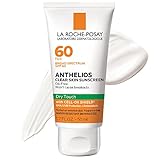
For oily or combination skin, consider an oil-free or matte-leaning face formula. La Roche-Posay Anthelios Clear Skin Oil Free Face Sunscreen SPF 60 is listed at 1.7 ounces and under $30, and its positioning makes it a candidate for shoppers who dislike a heavy finish. For dry skin, a moisturizing formula may reduce the need for a separate morning cream. Anua Zero-Cast Moisturizing Sunscreen SPF 50 is listed at 1.69 ounces and $18 and is aimed at shoppers prioritizing a moisturizing, low-cast feel.
Water resistance matters for swimming, sweating, and outdoor work, but it is not permanent waterproofing. If a product is labeled water-resistant, the label will typically specify a duration such as 40 or 80 minutes. Reapply after swimming, toweling off, or heavy sweating, even if the original application was recent. Reapply at least every two hours during continued outdoor exposure, following the product label.
Price Tiers: Compare Cost per Ounce, Not Just Sticker Price
At the budget level, expect to spend approximately $8 to $15 for 2 to 4 ounces. Black Girl Sunscreen Original SPF 30 is listed for under $10 for 2 ounces, or about $5 per ounce. This tier can be a practical choice when you need enough product for frequent body application.
Midrange face sunscreens generally cost about $15 to $25 for 1.5 to 2 ounces. Anua’s listed $18 price works out to roughly $10 per ounce, while the under-$30 La Roche-Posay face sunscreen is about $10 per ounce. The premium is often tied to finish, packaging, cosmetic elegance, or specialized skin-type claims—not automatically stronger protection.
Premium or high-SPF body products commonly run $25 to $35 for 3 to 6 ounces. The listed under $30 price for La Roche-Posay Anthelios Melt-In Milk SPF 100 equals about $9 per ounce. Compare volume carefully: a $20 face tube may cost more per ounce than a $27 body bottle, but it may be better suited to makeup and sensitive facial skin.
Warranty and Returns: Sunscreen Usually Has a Shelf-Life Policy
Sunscreen is not furniture, so it rarely comes with a conventional warranty. Instead, review the retailer’s return policy, expiration-date policy, and damaged-item procedure. A retailer may accept an unopened product but refuse a used cosmetic or personal-care item. If you develop a rash or burning sensation, stop using the product and contact a medical professional as appropriate rather than relying on a return window.
Buy from a retailer that shows a clear expiration date or provides a reasonably long remaining shelf life. Keep the receipt until you have tested the texture, finish, and tolerance for several days. When buying multipacks, verify that every bottle has matching labeling and intact seals.
Delivery and Storage: Protect the Formula Before It Reaches Your Skin
Standard delivery is usually sufficient when the weather is moderate, but heat-sensitive personal-care products can sit in delivery trucks or outdoor mailboxes. During hot weather, choose a retailer with reliable shipping and bring the package indoors promptly. Avoid products that arrive leaking, swollen, unsealed, or unusually hot.
Store sunscreen at room temperature, away from direct sunlight and heaters. A bathroom cabinet is generally preferable to a sunny windowsill, while a car glove compartment is not a good long-term location. For air travel, a 1.7- or 2-ounce tube fits common liquid-carry-on limits, but confirm current airline requirements before departure.
Spec Checklist
| Spec | Budget | Mid | Premium |
|---|---|---|---|
| Typical price | $8–$15 | $15–$25 | $25–$35 |
| Typical size | 2–4 oz | 1.5–2 oz | 3–6 oz |
| Best use | Face and body basics | Daily face wear | Face-and-body routines or specialized finishes |
| SPF range to consider | 30–50 | 30–60 | 50–100 |
| Cost-per-ounce target | About $3–$7 | About $9–$14 | About $7–$12 |
| Packaging priority | Leak-resistant cap | Controlled tube or pump | Large, easy-dispense bottle |
Red Flags
- “Dark-skin friendly” with no finish details: Look for information about cast, tint, undertone, and whether the formula is tested on a range of skin tones.
- SPF without broad-spectrum labeling: SPF primarily communicates UVB protection. Broad-spectrum labeling matters for UVA coverage.
- Unclear expiration information: Skip products with missing, damaged, or suspicious labeling.
- A strong fragrance or stinging sensation: Either can signal poor compatibility, particularly around the eyes or on compromised skin.
- Promises of permanent or waterproof protection: Sunscreen must be reapplied. “Water-resistant” is time-limited, not permanent.
- A bargain that seems too good to be true: Check the seller, seal, size, and expiration date before buying.
FAQ
Do people with darker skin need sunscreen every day?
Yes. Melanin provides some natural protection, but it does not block all UVA or UVB exposure. Daily broad-spectrum sunscreen can also help reduce worsening of visible dark marks and uneven tone.
What SPF is best for darker skin?
SPF 30 is a practical baseline for daily use. SPF 50 or higher may be preferable for long outdoor periods, intense sunlight, or anyone trying to limit pigmentation changes. Higher SPF does not mean you can apply less or skip reapplication.
How can I avoid a white or gray cast?
Try a sheer chemical or hybrid formula, or choose a tinted mineral sunscreen with an undertone close to your skin. Apply it in thin sections, allow each section to settle, and test it in daylight. If the finish remains gray after several minutes, choose another formula.
Can I use body sunscreen on my face?
Sometimes, but body formulas may be heavier, more fragranced, or more likely to sting the eyes. Use a face-labeled product when you need makeup compatibility, a lighter finish, or a formula designed for oily or sensitive facial skin. For 2026, the most useful upgrade is not simply a higher SPF—it is a product you can apply generously and reapply without hesitation.
Ready to decide? Our #1 pick for 2026 is the Typical price.
Live price & availability on Amazon.