Last updated: October 4, 2026
The Short Answer
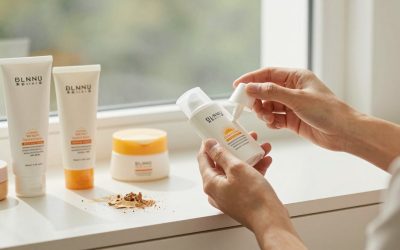
For most adult faces, the practical target is about 1/4 teaspoon (1.2 mL) of sunscreen for the face alone, or about 1/2 teaspoon (2.5 mL) for the face, ears, and neck. The trouble is that a “pump” is not a universal measurement. One dispenser may release 0.15 mL, while another gives 0.50 mL or more.
As a working guide, expect to use two to four full pumps of a facial sunscreen when each pump delivers 0.3 to 0.6 mL. If your product has a small treatment-style pump, four to eight pumps may be needed. A single pump is usually not enough for an adult face unless the package specifically states that one pump dispenses approximately 1.2 mL.
As an Amazon Associate we earn from qualifying purchases at no extra cost to you.



The familiar two-finger method can help when a bottle has no reliable pump guidance: dispense two full, straight lines of sunscreen along the length of your index and middle fingers, then apply that amount to the face and neck. For a face-only application, use roughly half that quantity. In 2026, pump bottles, airless dispensers, tubes, and sprays remain common, so measuring the first few applications is the easiest way to learn what your particular package delivers.
Standard Sizes
Sunscreen pumps vary by bottle design, formula thickness, and whether the dispenser is a standard lotion pump, narrow airless pump, or foaming-style actuator. The table below gives useful real-world dispensing ranges rather than treating every pump as identical.
| Dispenser type | Typical output per full pump | Approximate dollop size | Pumps for face only (1.2 mL) | Pumps for face, ears, and neck (2.5 mL) |
|---|---|---|---|---|
| Small airless facial pump | 0.15–0.25 mL | 0.01–0.02 fl oz | 5–8 pumps | 10–17 pumps |
| Standard facial lotion pump | 0.30–0.50 mL | 0.02–0.03 fl oz | 3–4 pumps | 5–8 pumps |
| Large lotion pump | 0.60–1.00 mL | 0.04–0.07 fl oz | 1–2 pumps | 3–4 pumps |
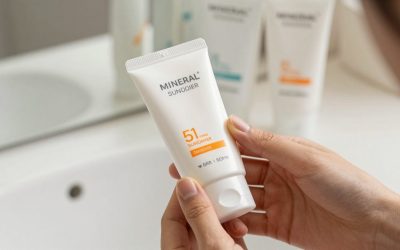
| Squeeze tube opening | Varies by pressure | Two finger-length strips for face and neck | About 1/4 teaspoon total | About 1/2 teaspoon total |
| Continuous spray | Varies by nozzle and spray time | Not reliably measured by “one spray” | Spray into hands, then apply 1.2 mL | Spray into hands, then apply 2.5 mL |
For reference, 1/4 teaspoon equals about 1.23 mL, and 1/2 teaspoon equals about 2.46 mL. One U.S. fluid ounce contains about 29.6 mL. That means a 3.7-ounce bottle contains roughly 109 mL, while a 4-fluid-ounce spray contains about 118 mL.
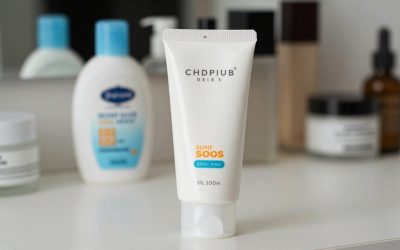
An EltaMD UV Clear Untinted SPF 46 bottle in the 3.7-ounce size, listed around $76, has enough product for approximately 88 face-only applications at 1.2 mL each before allowing for product left in the container. At a retail price around $0.86 per application, using too little may seem economical, but it also means you are not applying the amount used for standard SPF testing. A 1.69-ounce facial lotion bottle contains about 50 mL; one bottle can provide about 40 face-only applications at the same 1.2 mL target.
How to Measure Your Space
“Space” matters in two ways: the skin area you need to cover and the amount of countertop, bag, or cabinet room the package requires. Start by measuring the sunscreen output, not by guessing from the height of the pump.
- Choose the coverage area. Decide whether you are protecting the face only, face and ears, or face, ears, and neck. For most adults, use 1.2 mL for face only and 2.5 mL for face, ears, and neck.
- Use a measuring spoon. Place a clean 1/4-teaspoon spoon on a stable surface. Pump sunscreen into it slowly, counting full presses until it is level. Do not compress the product or overfill the spoon.
- Calculate your pump count. If four pumps fill the 1/4-teaspoon spoon, four pumps is your face-only amount. Double that count for face, ears, and neck.
- Check the pump stroke. Press the actuator all the way down each time. Partial presses produce inconsistent amounts and make the count unreliable.
- Account for priming. A new airless bottle or pump may sputter for the first one to five presses. Do not count those uneven initial pumps as your normal dose.
- Measure storage clearance. For a vanity drawer or travel pouch, measure the bottle’s widest point and add at least 1/2 inch (1.3 cm) around it for easy removal. Keep sunscreen away from hot cars, sunny windowsills, and steamy shower ledges.
By Room or Use Case
Bathroom Vanity and Daily Skin-Care Routine
A pump bottle is especially convenient beside a sink because it allows one-handed dispensing without leaving product under a cap. Keep a 1/4-teaspoon measuring spoon nearby for the first week, then rely on your established pump count. For a standard 0.3 to 0.5 mL facial pump, three or four full presses generally suit face-only coverage.
If you apply moisturizer, serum, and sunscreen in the same routine, sunscreen should be the final skin-care layer before makeup. Give liquid products a brief moment to settle, but do not reduce the sunscreen dose just because the formula feels rich or leaves a visible cast.
Desk, Car, and On-the-Go Reapplication
For a desk drawer, compact 1-ounce to 1.7-ounce facial bottles are easy to store, but small airless pumps often dispense only 0.15 to 0.25 mL. That can mean five to eight pumps for the face. A small bottle is portable, not necessarily lower-dose.
Do not leave sunscreen in a hot vehicle for extended periods. Heat can make formulas runnier, cause separation, or affect the packaging. Keep it in a bag or drawer when possible, and replace a leaking, separated, or unusually scented product.
Beach, Pool, and Outdoor Sports
Sprays are convenient for body coverage but are harder to measure accurately for the face. A KINeSYS Fragrance Free SPF 30 Clear Sunscreen Spray in a 4-fluid-ounce size, often priced around $30, is better sprayed into clean hands first and then spread over the face. Avoid spraying directly toward the face, eyes, nose, or mouth.
For outdoor activity, apply sunscreen before going outside and reapply at least every two hours, as well as after swimming, toweling off, or heavy sweating. A 4-ounce bottle can disappear quickly when it is used correctly on multiple people, so carry a separate face sunscreen if you want a more controlled pump dose.
Dry Skin and Morning Moisturizer-Sunscreen Products
Moisturizing facial lotions with SPF can be useful for low-exposure daily routines, but their smaller containers make pump counting important. A Dove Men+Care Hydrating Face Lotion Sunscreen SPF 15 two-pack includes 1.69-ounce bottles and may sell around $15. At 50 mL per bottle, a face-only dose of 1.2 mL uses roughly 1/40 of the container each day.
Because lotion formulas can feel substantial, users often stop after one small pump. Measure the pump output once instead. If the product cannot provide a practical full-coverage amount without excessive pumping, consider a tube or larger pump bottle for daily use.
Common Sizing Mistakes
- Assuming one pump equals one application. Pump volume is packaging-specific, not an SPF standard.
- Counting partial pumps. A half-pressed pump can deliver far less than half the expected amount, especially with thick mineral formulas.
- Using a pea-size amount. A pea-size dollop is commonly too little for the face, even when the product spreads easily.
- Forgetting the ears, hairline, and under-jaw area. These are often exposed and easy to miss.
- Relying on direct facial spray. Wind, uneven coverage, and inhalation risk make hand application more controlled.
- Buying only by bottle size. Compare usable volume, dispenser output, and intended use. A 4-ounce spray bundle priced around $25 may be a good value for body use, while a precision pump may be easier for daily facial coverage.
FAQ
How many pumps of sunscreen should I use on my face?
Use enough full pumps to reach about 1.2 mL, or 1/4 teaspoon, for the face alone. That is commonly three to four pumps from a standard facial lotion pump, five to eight pumps from a small airless pump, or one to two pumps from a large pump.
Is two pumps of sunscreen enough for the face?
It can be, but only if each full pump delivers about 0.6 mL. For many facial sunscreen bottles, two pumps provide less than the 1.2 mL face-only target. Measure your dispenser with a 1/4-teaspoon spoon once to know for sure.
How much sunscreen do I need for my face and neck?
Use approximately 2.5 mL, or 1/2 teaspoon, for the face, ears, and neck. With a 0.3 mL pump, that works out to about eight full pumps. With a 0.5 mL pump, use about five pumps.
Does a sunscreen spray count as a pump application?
No. Spray nozzles do not provide a consistent dose per press. For facial use, spray the product into your hands, use enough to equal the intended coverage amount, and apply evenly. This gives better control than spraying directly onto the face.
Ready to decide? Our #1 pick for 2026 is the Small airless facial pump.
Live price & availability on Amazon.