Last updated: October 6, 2026
⚡ Key Takeaways
- Retinol belongs to the retinoid family, a group of vitamin A derivatives prized for their effect on skin renewal.
- Knowing the spectrum helps you choose a beginner-friendly option.
- The single biggest mistake beginners make is using too much, too often, too soon.
- If you experience severe burning, swelling, or persistent peeling, scale back frequency and add more moisturizer.
Few ingredients have earned as much respect from dermatologists as retinol—and few have caused as much accidental peeling and redness from overenthusiastic first-timers. If you’re exploring retinol for beginners, the most important thing to understand is that more is not better, and slower is faster. Retinol is a powerful vitamin A derivative that boosts cell turnover, smooths texture, fades dark spots, and softens fine lines over time. But it demands a gradual, patient approach. This guide explains what retinol does, how to start without irritation, what to expect in the first weeks, and how to fit it safely into your routine.

Cocokind Beginner Retinol Gel 0.1%, 1 Fl Oz
Included for 'Retinol for Beginners: How to Start Without Irritation' because the listing specifies 1 Fl Oz, details this guide uses to compare options.
View on Amazon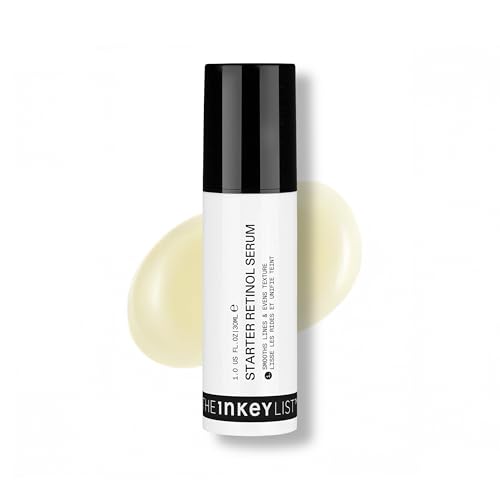
The INKEY List Starter Dual Retinol Serum 1 fl oz
Included for 'Retinol for Beginners: How to Start Without Irritation' as a relevant option in this category; details come from the product listing.
View on Amazon
FRANKLY Retinol 0.1% Cream, 1.01 fl oz - Korean Beginner Retinol
Included for 'Retinol for Beginners: How to Start Without Irritation' because the listing specifies 1.01 fl oz and Korean Beginner Retinol, details this guide uses to compare options.
View on Amazon
Anua Retinol Serum for Smooth & Renewed Texture, 1.01 fl oz
Included for 'Retinol for Beginners: How to Start Without Irritation' because the listing specifies 1.01 fl oz, details this guide uses to compare options.
View on Amazon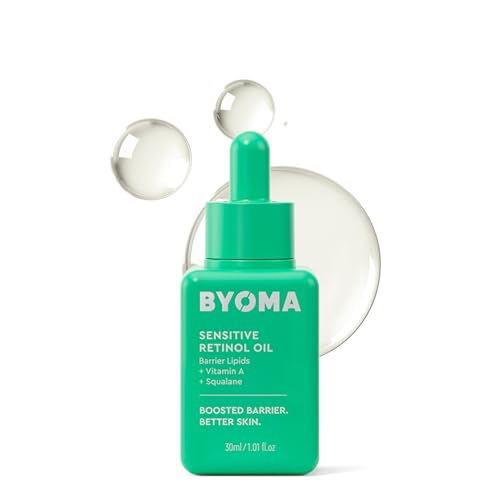
BYOMA Sensitive Retinol Oil, Face Oil for Retinol Beginners (30ml)
Included for 'Retinol for Beginners: How to Start Without Irritation' because the listing specifies Face Oil for Retinol Beginners (30ml), details this guide uses to compare options.
View on Amazon
SKINTIFIC Beginner Retinol Serum with 0.1% Retinol & Zinc PCA, 20ml
Included for 'Retinol for Beginners: How to Start Without Irritation' because the listing specifies 20ml, details this guide uses to compare options.
View on Amazon
innisfree Retinol Cica Korean Serum with Salicylic Acid
Included for 'Retinol for Beginners: How to Start Without Irritation' as a relevant option in this category; details come from the product listing.
View on Amazon
VT COSMETICS CICA Reti-A Daily Mask 30 Sheets
Included for 'Retinol for Beginners: How to Start Without Irritation' as a relevant option in this category; details come from the product listing.
View on AmazonRelated: best Korean skincare sets.
What Retinol Actually Does
Retinol belongs to the retinoid family, a group of vitamin A derivatives prized for their effect on skin renewal. By encouraging skin cells to turn over faster and supporting collagen production, retinol can:
- Smooth rough texture and refine the look of pores
- Soften fine lines and early signs of aging
- Fade dark spots and post-acne marks
- Help prevent clogged pores and breakouts
These benefits are well-documented, but they take time—usually 12 weeks or more of consistent use. Retinol is a marathon ingredient, not a quick fix.
Understanding Retinoid Strength
Not all retinoids are equal. Knowing the spectrum helps you choose a beginner-friendly option.
| Type | Strength | Best for |
|---|---|---|
| Retinyl esters (e.g., retinyl palmitate) | Gentlest | Very sensitive skin, true beginners |
| Retinol | Moderate (OTC) | Most beginners, start at 0.25–0.5% |
| Retinaldehyde | Stronger OTC | Those who tolerate retinol well |
| Adapalene | Prescription-strength, now OTC | Acne-prone skin |
| Tretinoin | Prescription | Experienced users, dermatologist-guided |
As a beginner, start low—a retinol around 0.25% to 0.5% is a sensible entry point.
How to Start Without Irritation
The single biggest mistake beginners make is using too much, too often, too soon. Follow this gradual schedule instead:
- Week 1–2: Apply a pea-sized amount once or twice a week at night.
- Week 3–4: If your skin tolerates it, increase to every other night.
- Week 5+: Build up to nightly use only if your skin stays comfortable.
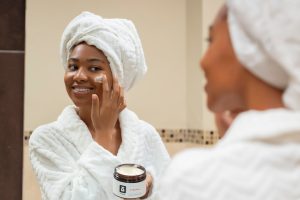
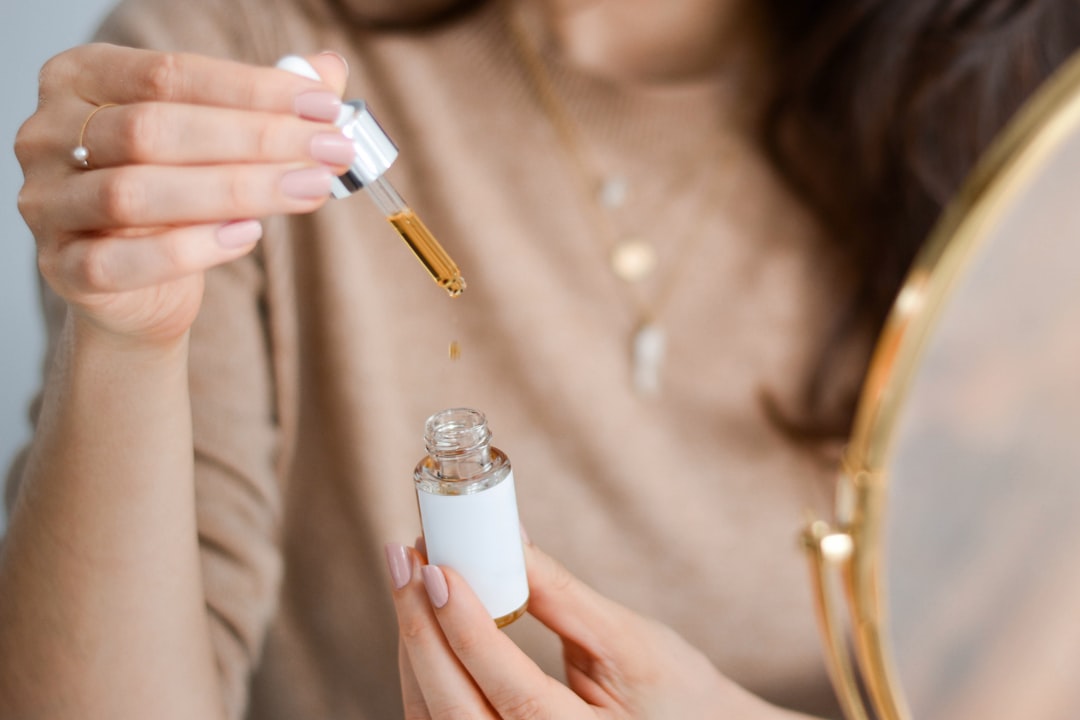
A pea-sized amount is enough for your whole face. Apply it to clean, dry skin—damp skin can increase absorption and irritation.
The “Sandwich” Method for Sensitive Skin
If your skin is reactive, try buffering: apply a layer of moisturizer, then your retinol, then more moisturizer. This “sandwich” technique dilutes the retinol’s contact slightly and reduces irritation while you build tolerance. A gentle, fragrance-free cream works best for this—see our best gentle face moisturizer for sensitive skin picks.
What to Expect: The Adjustment Period
In the first few weeks, mild dryness, flaking, or slight redness is common as your skin adjusts—this is sometimes called “retinization.” Some people also experience an initial breakout as cell turnover speeds up. This usually settles within four to six weeks. If you experience severe burning, swelling, or persistent peeling, scale back frequency and add more moisturizer. There’s no prize for pushing through painful irritation; gentleness builds long-term tolerance.
Sunscreen Is Mandatory With Retinol
Retinol makes your skin more sensitive to UV light, and sun exposure can undo its benefits. Daily broad-spectrum SPF 30 or higher isn’t optional—it’s part of the package. Apply it every morning, even on cloudy days. Mineral sunscreens are gentle on retinol-sensitized skin; browse our best mineral sunscreen for adults guide for comfortable options. Because retinol is a nighttime ingredient and sunscreen a daytime one, they form a natural anti-aging partnership.
What Not to Mix With Retinol
Layering retinol with other strong actives can overwhelm your barrier. As a beginner, avoid using it in the same routine as:
- AHAs/BHAs: Exfoliating acids plus retinol is often too much. Alternate them on different nights.
- Benzoyl peroxide: Can deactivate some retinols and increase dryness when used together.
- High-strength vitamin C: Better used in the morning, separate from your nighttime retinol.
Pair retinol instead with calming, hydrating ingredients like hyaluronic acid, niacinamide, and ceramides, which support your barrier. A nourishing night cream—such as an anti-wrinkle moisturizer for sensitive skin—complements retinol nicely.
A Simple Beginner Retinol Routine
Here’s how to fit it all together:
- AM: Cleanser → Moisturizer → Sunscreen
- PM (retinol nights): Cleanser → Pea-sized retinol → Moisturizer
- PM (off nights): Cleanser → Hydrating serum → Moisturizer
On nights you’re not using retinol, focus on hydration and barrier repair. A rich, soothing cream like a K-beauty moisturizer for sensitive skin helps keep your skin resilient between retinol applications.
Who Should Be Cautious With Retinol
Retinol is well-tolerated by most people, but a few situations call for extra care or a conversation with your doctor first:
- Pregnancy and breastfeeding: Retinoids are generally not recommended during pregnancy or while nursing. Many people switch to gentler alternatives like bakuchiol or azelaic acid during this time—check with your healthcare provider.
- Very sensitive or compromised skin: If your barrier is already irritated, repair it before introducing retinol.
- Active eczema or rosacea: Retinol can aggravate these conditions; seek dermatologist guidance.
- Heavy sun exposure: If you can’t commit to daily sunscreen, retinol isn’t the right choice yet.
When in doubt, a board-certified dermatologist can recommend the right strength and form for your situation.
Retinol Alternatives Worth Knowing
If retinol proves too irritating, or you simply prefer a gentler path, you have options that offer similar benefits with less risk of irritation:
- Bakuchiol: A plant-derived ingredient often described as a natural retinol alternative, gentle enough for sensitive skin and pregnancy-friendly (still confirm with your provider).
- Azelaic acid: Helps with texture, redness, and breakouts, and is generally well tolerated.
- Peptides: Support collagen with virtually no irritation, making them a soothing complement.
These can be used on their own or alongside a low-frequency retinol routine to ease your skin into actives gradually.
Staying Consistent Over the Long Haul
The people who get the best results from retinol aren’t the ones who use the strongest formula—they’re the ones who stick with it. Because retinol works through steady, cumulative cell renewal, the benefits build over months and years of consistent use. Set realistic expectations, keep your routine simple enough that you’ll actually maintain it, and don’t let a brief adjustment period scare you off. If life gets in the way and you fall off for a while, you can simply restart at a lower frequency and rebuild tolerance. Slow, steady, and sustainable always beats fast and harsh.
Top-Rated Picks


| Product | Brand | Rating | Reviews | Price |
|---|---|---|---|---|
| CeraVe Moisturizing Cream, Body and Face Moisturizer … | CeraVe | ★ 4.7 | 144.3k | under $20 |
| Bio-Oil Skincare Body Oil Serum for Scars and Stretch… | Bio-Oil | ★ 4.6 | 178.2k | under $30 |
| THAYERS Alcohol-Free, Hydrating Cucumber Witch Hazel … | — | ★ 4.7 | 134.6k | under $20 |
| THAYERS Alcohol-Free, Hydrating, Unscented Witch Haze… | — | ★ 4.7 | 134.6k | under $20 |
| THAYERS Alcohol-Free Rose Petal Witch Hazel Facial To… | — | ★ 4.7 | 134.6k | under $20 |
Frequently Asked Questions
How often should a beginner use retinol?
Start with once or twice a week at night, then slowly increase to every other night and eventually nightly as your skin tolerates it. Rushing the frequency is the most common cause of irritation.
Should I apply retinol to wet or dry skin?
Dry skin. Applying retinol to clean, fully dry skin reduces irritation, since damp skin can increase absorption and make the product more potent than a beginner’s skin is ready for.
Is purging from retinol normal?
Yes, an initial breakout can happen as retinol speeds up cell turnover and brings underlying congestion to the surface faster. It typically settles within four to six weeks. If it worsens or persists much longer, scale back.
Can I use retinol and vitamin C together?
It’s best to separate them—vitamin C in the morning and retinol at night. Using both at once can increase irritation, and splitting them lets each ingredient work under ideal conditions.
How long until I see results from retinol?
Be patient. Texture and tone often improve within 8 to 12 weeks, while fine lines and deeper concerns can take several months of consistent use. Retinol rewards persistence more than intensity.
Signs You’re Using Too Much
Because retinol works so gradually, it’s easy to assume that piling it on will speed things up—but the opposite is true. Watch for these signs that you’ve overdone it: persistent flaking and peeling that doesn’t settle, ongoing redness, a stinging or burning sensation, unusual dryness, or increased sensitivity to other products you normally tolerate. If you notice these, scale back immediately. Drop to using retinol less frequently, increase your moisturizer, and give your barrier a few days to recover before resuming at a gentler pace. Healthy retinol use should feel like a mild adjustment, not an ordeal. The most successful long-term users keep things comfortable, knowing that slow and steady progress beats aggressive use that forces them to stop entirely.
Final Thoughts
Retinol is one of the most effective ingredients you can add to your routine, but it demands a slow, gentle introduction. Start low and infrequent, build up gradually, never skip sunscreen, and prioritize hydration to keep your barrier happy. Patch-test before your first full application. If you have very sensitive skin, are pregnant or breastfeeding, or aren’t sure where to start, consult a board-certified dermatologist for personalized guidance.
- ▸ Amazon Music Unlimited — free trial
- ▸ Start an Audible Premium Plus free trial