Last updated: October 4, 2026
- What Each Material Is Actually Doing on Your Skin
- Hydrocolloid vs Microneedle: Side-by-Side Comparison
- Cost Per Use: Why Microneedle Patches Cost More
- Wear Time and Sting Level: What to Expect
- Decision Matrix: Match the Patch to the Spot
- Common Mistakes That Waste a Patch
- Can You Use Both Types?
- When to See a Professional
Hydrocolloid patches work best on open, draining, or whiteheaded pimples sitting near the surface, while microneedle patches work best on closed, deep, or underground bumps that haven’t broken through yet. The right pick comes down to what your spot is actually doing, not which one you’ve seen more often on shelves.
What Each Material Is Actually Doing on Your Skin
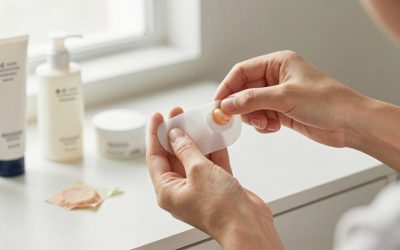
Hydrocolloid patches are a sticky gel wafer, originally developed for wound care, that pulls moisture out of a pimple through absorption. Once a spot has come to a head or is already weeping fluid, the hydrocolloid layer draws that fluid into itself and swells slightly, which is why patches look cloudy or puffy after a few hours. It’s a surface-level job: the material never crosses the skin barrier, it just sits on top and acts like a sponge with an adhesive border.
Microneedle patches work on a different principle. They’re embedded with tiny needles, usually 200 to 600 microns long, made from dissolving hyaluronic acid combined with actives like salicylic acid, niacinamide, or centella asiatica extract. Those needles penetrate the very top layers of skin and dissolve over several hours, releasing ingredients below the surface where a closed comedone or cystic bump actually lives. There’s no fluid to absorb yet in these cases, so a hydrocolloid patch has nothing to pull from.
Hydrocolloid vs Microneedle: Side-by-Side Comparison
| Factor | Hydrocolloid Patch | Microneedle Patch |
|---|---|---|
| Best for | Whiteheads, open or popped pimples, draining spots | Closed bumps, cystic or underground pimples, early-stage breakouts |
| Mechanism | Absorbs surface fluid and pus | Delivers actives below the skin barrier via dissolving needles |
| Typical needle/material depth | Surface contact only | 200–600 microns |
| Recommended wear time | 6–12 hours, or overnight | 4–8 hours, often overnight |
| Sting on application | None to minimal | Mild tingling or stinging for 1–5 minutes is common |
| Visible effect | Patch turns white/cloudy as it fills with fluid | Patch flattens as needles dissolve; little to no fluid visible |
| Typical price per patch | $0.15–$0.40 | $0.80–$2.00 |
| Reusable on same spot | No, discard once cloudy or after wear time | No, single use, discard after needles dissolve |
Cost Per Use: Why Microneedle Patches Cost More
Hydrocolloid patches are cheap to manufacture, which is why a box of 24 to 36 patches typically runs $5 to $10, landing around $0.15 to $0.40 per patch. Microneedle patches involve a more complex molding process to form hundreds of microscopic needles per patch and load them with active ingredients, so a box of 8 to 12 patches often costs $10 to $18, pushing per-patch cost to $0.80 to $2.00.
If you break out often, that gap adds up. Someone using 3 hydrocolloid patches a week spends roughly $0.45 to $1.20 weekly. The same frequency with microneedle patches runs $2.40 to under $10 weekly. Neither is expensive in isolation, but if you’re treating multiple spots at once, hydrocolloid is the more sustainable default, reserving microneedle patches for the stubborn bumps that actually need deeper reach.
Wear Time and Sting Level: What to Expect
- Hydrocolloid: Apply to clean, dry skin and leave for 6 to 12 hours or overnight. No sensation on application. Replace once it turns opaque white, which signals it’s saturated and no longer absorbing.
- Microneedle: Apply to clean, dry skin for 4 to 8 hours, usually overnight. Expect a mild sting or tingle in the first few minutes as the needles penetrate. This is generally normal and brief, but if stinging is sharp, prolonged, or paired with burning, remove the patch and avoid using microneedle patches on broken or actively inflamed skin.
Microneedle patches shouldn’t be applied to open wounds or spots that are already draining, since the needles are designed to penetrate intact skin, not sit on a wet surface. That’s the clearest line between the two categories: hydrocolloid wants moisture to absorb, microneedle wants dry, closed skin to penetrate.
Decision Matrix: Match the Patch to the Spot
| Your Situation | Best Choice | Why |
|---|---|---|
| Whitehead with a visible yellow/white tip | Hydrocolloid | Fluid is ready to be drawn out; absorption is the right job |
| Deep, red, closed bump with no head | Microneedle | Nothing to absorb yet; actives need to reach below the surface |
| Popped or picked-at pimple, open skin | Hydrocolloid | Protects the area and absorbs residual fluid; microneedles shouldn’t go on broken skin |
| Cystic bump that’s painful to touch | Microneedle, or see a dermatologist if recurring | Needs ingredient delivery below the surface; persistent cysts may need professional treatment |
| Budget-conscious, frequent breakouts | Hydrocolloid | Lower cost per patch makes frequent use more sustainable |
| Occasional spot, want deeper treatment | Microneedle | Higher price per patch is less of a factor at low frequency |
Common Mistakes That Waste a Patch
- Using hydrocolloid on a spot with nothing to absorb. If there’s no fluid or head, the patch just sits there doing little beyond covering the area, and you’re better off switching to microneedle or waiting.
- Applying microneedle patches to wet or oily skin. The needles need a dry, clean surface to penetrate properly. Oil or moisture on the skin can stop the needles from dissolving as intended.
- Peeling a microneedle patch off too early. If removed before the needles have fully dissolved (check the box for guidance, often 6+ hours), you lose most of the ingredient delivery.
- Reapplying a cloudy hydrocolloid patch. Once it’s saturated and turned white, it’s no longer absorbing. A fresh patch works better than leaving a full one on longer.
- Stacking both patch types on the same spot at once. Layering doesn’t speed things up and can irritate the skin further. Pick one based on what stage the spot is at.
Can You Use Both Types?
Yes, but not simultaneously on the same spot. A practical routine is to start a deep, closed bump with a microneedle patch overnight, then switch to hydrocolloid once it comes to a head and starts producing fluid. Many people end up keeping both types on hand for exactly this reason: one for early-stage bumps, one for the follow-up stage once a spot opens up.
When to See a Professional
Pimple patches of either type are meant for occasional, surface-level blemishes. If you’re dealing with frequent cystic acne, widespread breakouts, or spots that leave lasting marks, a dermatologist can offer treatment options that address the underlying cause rather than managing one blemish at a time.