Last updated: October 1, 2026
Most hydrocolloid pimple patches should stay on for 6 to 8 hours, which is why overnight wear works best, while microneedle patches are designed for a shorter 2-hour window before they stop delivering active ingredients. The exact timing depends on the patch type, how saturated it gets, and whether your skin starts reacting to the adhesive.
Timing by patch type
Not all patches work the same way, so the “how long” answer changes depending on what the patch is actually doing to the pimple.

COSRX Acne Pimple Patches Absorbing Hydrocolloid Spot, 3 Size (48 Count)
Included for 'How Long to Leave a Pimple Patch On (And When to Swap It)' because the listing specifies 3 Size (48 Count), details this guide uses to compare options.
View on Amazon
COSRX Clear Fit Invisible Master Patch, Ultra-Thin Spot Cover (18 Counts)
Included for 'How Long to Leave a Pimple Patch On (And When to Swap It)' because the listing specifies Ultra-Thin Spot Cover (18 Counts), details this guide uses to compare options.
View on Amazon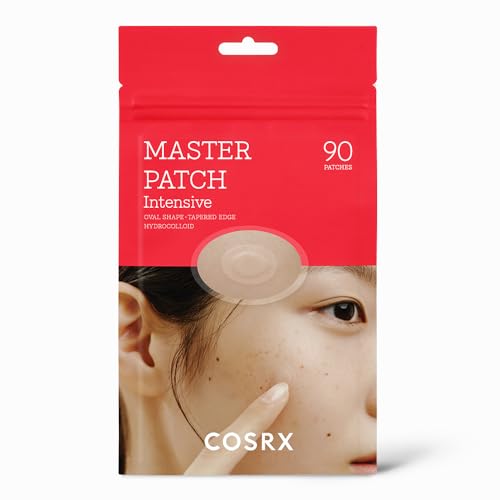
COSRX Master Patch Intensive, Oval-Shaped Pimple Patches (90 Counts)
Included for 'How Long to Leave a Pimple Patch On (And When to Swap It)' because the listing specifies Oval-Shaped Pimple Patches (90 Counts), details this guide uses to compare options.
View on Amazon
COSRX AC Collection Acne Patch, Centella Blemish Care (26 Count)
Included for 'How Long to Leave a Pimple Patch On (And When to Swap It)' because the listing specifies Centella Blemish Care (26 Count), details this guide uses to compare options.
View on Amazon| Patch type | Recommended wear time | Why | Spent cue |
|---|---|---|---|
| Hydrocolloid (standard) | 6 to 8 hours, often overnight | Needs time to absorb fluid and keep the area protected | Patch turns opaque white/cloudy and lifts at edges |
| Hydrocolloid + salicylic/tea tree | 6 to 10 hours | Longer contact helps actives penetrate while fluid drains | Center turns white, adhesive feels tacky but intact |
| Microneedle (hydrating serum core) | 2 hours | Microneedles dissolve and release serum quickly; longer wear adds little | Needles fully dissolved, patch feels flat and dry |
| Thin/invisible daytime patch | 4 to 6 hours | Thinner adhesive layer loses grip faster under makeup or movement | Edges curl, patch slides when touched |
The white-dome saturation cue
Hydrocolloid patches work by pulling fluid, oil, and pus out of a blemish. As they do this, the clear or lightly tinted patch turns a cloudy or solid white in the center. That white dome is the visual signal the patch has absorbed as much as it can.
- If the patch is fully white and puffy after 6 to 8 hours, it has done its job. Remove it and swap in a fresh one if the spot still needs coverage.
- If the patch still looks clear or only slightly cloudy after 6 hours, there wasn’t much fluid to draw out. It’s fine to leave it on until the adhesive starts failing rather than removing it early.
- A patch that’s white within 1 to 2 hours on a cystic or very inflamed pimple is normal. Deep, fluid-filled blemishes saturate patches faster than small surface bumps.
Microneedle patches don’t follow this rule
Microneedle patches aren’t drawing fluid out, they’re pushing a hydrating or soothing serum in through dissolving microneedles. There’s no white-dome cue to watch for. Instead, the signal is textural: after about 2 hours, the needles have fully dissolved and the patch feels flat rather than slightly grainy. Wearing it longer than 2 hours doesn’t meaningfully increase absorption since the serum payload is already delivered.
Why adhesion drops off after 12 hours
Hydrocolloid adhesive is designed for a window of roughly 6 to 10 hours of good contact. Past 12 hours, a few things start working against the patch:
- Moisture buildup loosens the bond. The same fluid absorption that makes the patch effective also softens the adhesive layer underneath, so grip weakens as the patch fills up.
- Skin oils migrate under the edges. Natural sebum production continues under the patch, and after half a day it starts undermining the adhesive border, which is why edges curl first.
- Sweat and friction from pillows or clothing accelerate lifting. Overnight wear already pushes close to the upper end of the patch’s design life, so a patch left on through a full day and into a second night is almost always past its useful adhesion window, even if it still looks stuck on.
A patch that’s curling, bunching, or sliding around is no longer sealing the area, which means it’s also no longer protecting the blemish from bacteria or picking. At that point it’s cosmetic rather than functional, so it’s better to replace it even if the center hasn’t fully turned white.
Should you apply a second patch right after removing the first?
It depends on what you see when you take the first one off.
- Skin looks dry, slightly red, or has visible texture from the adhesive: wait. Let the skin breathe for 20 to 30 minutes before applying a new patch. Putting a fresh patch directly on irritated skin traps that irritation under another adhesive layer.
- Skin looks normal and the blemish is still raised or has visible fluid: a second patch is reasonable. Clean the area lightly first (a quick wipe with water or a gentle toner) so the new patch adheres to clean skin rather than old patch residue.
- You’ve already run two consecutive patches (12+ hours total) with no real improvement: stop stacking patches on the same spot. This is where maceration becomes a risk.
When back-to-back patches cause maceration
Maceration is what happens when skin stays wet and occluded for too long: it turns soft, pale, and wrinkled, similar to skin after a long bath. Hydrocolloid patches create a moist, sealed environment on purpose, which is useful for 6 to 10 hours but becomes counterproductive if you immediately layer a second or third patch on the exact same spot without a break.
Signs the skin is macerating rather than healing:
- The skin under and around the patch looks white, soft, or waterlogged rather than just the patch center
- The area feels unusually tender or fragile when the patch is removed
- The blemish looks the same size or slightly larger instead of flatter
If you notice these signs, skip patches on that spot for a few hours, let the skin fully dry out, and consider that continuous occlusion may not be what that particular blemish needs. Deep cystic breakouts especially don’t always respond to hydrocolloid; they may need a different approach altogether, and a dermatologist can advise on options like spot treatments or in-office drainage if a bump isn’t resolving after several days.
Quick reference: how long to leave it on
| Situation | What to do |
|---|---|
| Standard hydrocolloid, overnight use | Apply before bed, remove after 6 to 8 hours or when fully white |
| Hydrocolloid still clear/not saturated after 8 hours | Fine to leave on up to 10 to 12 hours total, then replace |
| Microneedle patch | Remove at 2 hours regardless of appearance |
| Patch edges curling or sliding | Remove early and replace, even before the time window ends |
| Considering a second patch on the same spot | Clean skin, apply only if no dryness/redness is present |
| Skin looks pale, soft, or waterlogged | Stop patching that spot, let it air out for several hours |
FAQ
Can I leave a pimple patch on for 24 hours?
Technically it may stay stuck for that long, but the adhesive and absorption capacity are designed for roughly 6 to 10 hours. Past 12 hours you’re mostly keeping an exhausted patch in place rather than getting additional benefit, and the risk of skin maceration goes up.
What if the patch falls off before the recommended time?
That usually means the skin was oily, sweaty, or the area had too much movement (like a jawline or chin spot rubbing against a pillow). Clean and dry the skin fully before reapplying, since a patch won’t adhere well over residual oil.
Does a bigger white dome mean it worked better?
A larger white area generally means the patch absorbed more fluid, which can correlate with reduced swelling, but it’s not a guarantee the blemish is fully resolved. Flatter, less inflamed skin after removal is the better indicator of progress than the size of the white dome alone.