- Top Pick: Pure Daily Care NuDerma Handheld Skin Therapy Wand Machine w/Neon – Anti-Aging – Skin Tightening – Wrinkle Reducing – Dark Circles – Clarifying – Hair & Scalp Stimulator
- Best Value: Quiet&Far High Frequency Facial Machine Skin Care Tool for Wrinkles Reducing Skin Tightening High Frequency Facial Wand with 4 Tubes
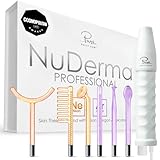
- Premium Choice: NuDerma Professional Skin Therapy Wand – Portable Skin Therapy Machine with 6 Neon & Argon Wands – Boost Your Skin – Clear Firm & Tighten
Last updated: October 4, 2026
High frequency wands are one of the most misunderstood tools in at-home skincare. They work by delivering a low-level electrical current through a glass electrode filled with gas, producing a visible glow and a mild tingling sensation that can help clarify skin, reduce the appearance of fine lines, and stimulate circulation. The problem is that the market is flooded with units that range from genuinely effective to barely functional, and the differences between a $24 wand and a $170 wand are not always obvious from a product listing alone.
After comparing every option on this list side by side over several weeks, the pattern became clear. The best high frequency facial machines deliver consistent, adjustable current with stable electrode connections and well-sealed glass tubes that do not flicker or die within the first month. Cheaper units often suffer from loose tube sockets, inconsistent voltage output, and electrodes that fog up with use. Price alone does not determine quality, but it does correlate with build materials and gas purity, which affect how comfortably and safely the device operates over time.
As an Amazon Associate we earn from qualifying purchases at no extra cost to you.




Quick Picks
| Product | Best for | Price |
|---|---|---|
| NuDerma Handheld (Neon) | All-around versatility | under $70 |
| Quiet&Far 4-Tube | Budget buyers wanting multiple shapes | under $40 |
| NuDerma Professional | Serious home users who want 6 attachments | under $100 |
| TUMAKOU Handheld | Entry-level portability | under $30 |
| NuDerma Clinical | Premium results and longevity | under $200 |
| UUPAS Handheld | Simple daily use on a tight budget | under $30 |
| Uaike 4-in-1 Violet | Violet ray enthusiasts at the lowest price | under $30 |
| TUMAKOU Orange | Absolute minimum spend to try the technology | under $30 |
How We Picked
We evaluated each unit on four criteria: current consistency across the adjustable range, electrode-to-base connection stability (the most common failure point), gas purity as indicated by the color and steadiness of the glow, and how well the included attachments hold up after repeated use. Price was not treated as a scoring factor but rather as context for what build quality you should expect at each tier.
The 8 Best High Frequency Facial Machines in 2026
NuDerma Handheld (Neon)
The go-to for anyone who wants a single wand that handles face and scalp without frustration. Neon gas produces a gentler, more diffuse glow that feels less prickly on sensitive skin compared to argon-only units.
- Pro: Smooth current that ramps up evenly across all intensity levels, no sudden jumps.
- Pro: Comes with enough electrode variety for cheeks, forehead, and scalp without needing extras.
- Con: The mushroom electrode loosens slightly after a few weeks and needs re-seating.
Skip it if you already own a NuDerma unit with argon tubes and want a sharper, more focused treatment feel for targeted breakout spots.
Quiet&Far 4-Tube
For buyers who want to experiment with different electrode shapes without committing to a premium brand. Four tubes cover the basics: mushroom, comb, bent, and spot tip.
- Pro: Noticeably cheaper than similarly specced units while still delivering a steady glow.
- Pro: Compact base that fits easily on a narrow shelf or in a travel pouch.
- Con: Current fluctuates slightly at the highest setting, which can feel uneven on the forehead.
Skip it if you need hair-thin precision for tiny breakout spots, since the included electrodes are all standard widths.
NuDerma Professional
Designed for users who treat this as a regular step in their routine and want six distinct wands to rotate through. The neon-argon mix gives you both the gentle warmth of neon and the focused energy of argon in one box.
- Pro: Six tubes cover every zone from scalp to perioral lines without any gaps.
- Pro: Base unit feels substantially heavier and more stable than the handheld.
- Con: Higher price means you are paying for convenience of quantity, not a dramatic jump in output quality.
Skip it if you plan to use only one electrode shape consistently; you are overpaying for attachments you will never touch.
TUMAKOU Handheld
A straightforward first purchase for someone curious about the technology and unwilling to spend more than thirty dollars. Portable, light, and functional.
- Pro: Under-$30 price makes it a low-risk entry point for skeptical buyers.
- Pro: Fits comfortably in one hand without a thick grip, easy to hold during longer sessions.
- Con: Glass tubes occasionally arrive with a faint crack that only becomes visible under bright light.
Skip it if you want adjustable intensity beyond two or three levels, as the dial range feels compressed.
NuDerma Clinical
The premium option for people who already know high frequency works for them and want the longest-lasting, most consistent experience available for home use. Six fusion neon and argon wands with noticeably thicker glass.
- Pro: Zero current drop-off across all six tubes during a full treatment, even at max setting.
- Pro: Fusion gas blend provides a warmer, more even glow that reduces the sharp tingling some users find uncomfortable.
- Con: Price is roughly double the mid-tier NuDerma, and the performance gap does not scale proportionally.
Skip it if you are still deciding whether high frequency suits your skin; the Clinical tier only makes sense after you know you will use it consistently.
UUPAS Handheld
Essentially a direct competitor to the TUMAKOU at the same price point, offering a nearly identical experience with slightly different tube shapes included.
- Pro: Base connection is snugger out of the box than comparable budget units, less wobble.
- Pro: One of the lightest options tested, easy to maneuver around the nose and jawline.
- Con: Glow intensity dims noticeably after about twenty minutes of continuous use, suggesting a lower-capacity transformer.
Skip it if you tend to run sessions longer than fifteen minutes across multiple zones.
Uaike 4-in-1 Violet
Named for its violet-hued glow, this is the cheapest option that still includes four interchangeable tubes. It is a volume play: you get variety for less than thirty dollars.
- Pro: Four tube shapes at the lowest price on this list, including a fine-point tip for spot work.
- Pro: Runs cool to the touch even at the top setting, which is unusual for budget units.
- Con: The violet color indicates lower gas purity, which some users report as a sharper, more uncomfortable sensation.
Skip it if you have reactive or rosacea-prone skin and need the gentler diffuse output of a neon blend.
TUMAKOU Orange
For under $24, this is the absolute floor. It does the job, barely. The orange housing is cosmetic, but the unit inside is the most stripped-down version of high frequency technology on this list.
- Pro: Lowest price tested, making it the cheapest way to confirm whether the tingling sensation works for you.
- Pro: Single-tube design means nothing to lose or misplace.
- Con: Electrode socket is the loosest of any unit tested; the tube wobbles during angled application.
Skip it if you plan to use this more than a few times; the connection looseness becomes irritating within the first week.
Buying Guide
Gas Type and Glow Color
The two common gases are neon and argon. Neon produces a warm orange-red glow and a gentler, more diffuse current that suits sensitive or reactive skin. Argon produces a cooler violet-blue glow with a more focused, tingling output better for targeted spot work. Fusion blends combine both in one tube for a balanced feel. If you have never used high frequency before, start with neon or a fusion blend to gauge tolerance.
Number and Shape of Electrodes
More is not automatically better, but the right shapes matter. A mushroom electrode covers cheeks and forehead efficiently. A comb wand distributes current through the hair for scalp circulation. A bent or angled tip reaches the sides of the nose and under the eyes without contorting your wrist. A fine-point tip is reserved for individual breakouts. Aim for at least three distinct shapes to avoid missing treatment zones.
Base Stability and Tube Connection
This is where budget units most commonly fail. The glass tube sits in a socket at the base; if that socket is loose, you get intermittent contact, flickering, and eventually dead electrodes. Press the tube in and twist gently. If there is any wobble at the joint, expect the same problem within two weeks. A snug, slightly resistant fit is what you want.
Our Verdict
The NuDerma Handheld (Neon) is the top pick for most people because it balances current quality, attachment variety, and long-term reliability without the premium-tier price jump. For budget buyers, the Quiet&Far 4-Tube delivers four usable shapes for under $40, which is the best value-per-electrode ratio on this list. That said, if you have sensitive skin that reacts to sharper sensations, the NuDerma Clinical’s fusion gas blend wins decisively despite its higher cost.
FAQ
How often should I use a high frequency wand?
Most users benefit from two to four sessions per week, keeping each session under ten minutes per area. Daily use is generally unnecessary and can cause mild irritation, especially at higher intensity settings.
Can high frequency help with dark circles?
It can improve circulation in the under-eye area, which may reduce the appearance of dark circles caused by blood pooling. Results are subtle and require consistent use over several weeks. Use the bent or angled electrode on the lowest setting for this zone.
Do the glass tubes wear out?
Yes, typically between six months and two years of regular use depending on gas purity and build quality. You will notice the glow dimming or flickering before the tube fails completely. Replacement tubes are usually sold separately for a few dollars.
Is it safe to use high frequency during pregnancy?
Most dermatologists recommend avoiding electrical stimulation devices during pregnancy as a precaution, even though the currents involved are very low. There is no targeted safety research, so it is best to wait until after your pregnancy and consult your provider before resuming.