- Top Pick: 10 Pack Premium Washcloths, Highly Absorbent and Super Soft Face Towels
- Best Value: Amazon Basics Highly Absorbent Cotton Washcloths for Face, Soft, Machine Washable, Fade Resistant, 12 x 12 in, Black, 12-Pack
- Premium Choice: PRITECH Silicone Face Scrubber, Rechargeable Facial Cleansing Brush with Heat Massage End, Vibrating Exfoliator Scrubber for Deep Cleaning, Waterproof Face Brush for Women and Men (Green)
Last updated: October 4, 2026
Choosing between a washcloth and a silicone cleansing brush is less about finding a universally “better” cleaner and more about deciding what you want from a small daily-use tool. The real choice is between a soft, multipurpose textile that costs very little and a purpose-built, reusable device that adds texture, vibration, and sometimes heat to your routine.
That distinction matters in 2026, especially when bathroom storage, laundry habits, skin sensitivity, and long-term cost all compete for attention. A washcloth can clean your face, wipe a countertop, dry a child’s hands, or stand in for a dish towel in a pinch. A silicone cleansing brush takes up a similar amount of space but is designed primarily for facial cleansing. Here is how the two compare for different homes and routines.
As an Amazon Associate we earn from qualifying purchases at no extra cost to you.


Quick Verdict
Choose a washcloth if you want the lowest upfront cost, maximum versatility, easy replacement, and a gentle tool that requires no charging. It is the better fit for families, rentals, guest bathrooms, and anyone who already runs frequent laundry loads.
Choose a silicone cleansing brush if you want a dedicated facial-cleaning tool that dries quickly, is easy to rinse, and can provide light exfoliation or massage. It is a stronger choice for a minimalist bathroom, a personal skincare routine, or anyone who dislikes damp fabric sitting near the sink.
Neither option automatically cleans better for every person. Pressure, cleanser, frequency of use, and cleaning habits matter more than the material alone.
Side by Side
| Factor | Washcloth | Silicone Cleansing Brush |
|---|---|---|
| Comfort | Soft and familiar; texture varies by cotton weave and condition | Smooth, flexible silicone nubs; may feel stimulating or too intense |
| Durability | Often lasts months to several years with regular laundering | Silicone body can last years; rechargeable battery is the main aging component |
| Price range | About $0.60–$4 per cloth, or roughly $7–$25 per multipack | About $10–$60 for rechargeable consumer models |
| Maintenance | Must be washed and fully dried after use | Rinse and dry after use; recharge periodically |
| Space needed | About 12 x 12 inches folded; more storage for a clean rotation | Usually about 3–5 inches across, plus charging space or a cable |
| Look | Traditional, soft-goods appearance; available in many colors | More modern and gadget-like; often sold in bright colors |
| Resale | None in practical terms; used textiles are generally not resold | Limited resale value after use, particularly once the battery has aged |
| Best for | Families, multipurpose cleaning, sensitive routines, and low budgets | Dedicated facial care, quick sink cleanup, and compact personal storage |
| Power required | None | Rechargeable battery; charging frequency varies by model and use |
Where Washcloth Wins
It is the more versatile household purchase. A washcloth can remove cleanser, wipe makeup, dry a face, clean a child’s hands, polish a bathroom fixture, or handle small spills. That flexibility is difficult for a facial brush to match. Keeping a stack of 10 or 12 cloths in a linen closet gives you a clean option without requiring anyone to remember a charging schedule.
It has a gentler learning curve. Most people already know how a washcloth feels and how much pressure to use. For facial cleansing, wet the cloth with warm water, apply cleanser to your skin or the cloth, and use light circular motions. Avoid scrubbing hard, especially around the eyes or on irritated skin. A soft cotton cloth can provide mild physical exfoliation without the concentrated sensation of silicone bristles or raised nubs.
The entry cost is exceptionally low. A 10 Pack Premium Washcloths, Highly Absorbent and Super Soft Face Towels is listed for under $10, while Amazon Basics Highly Absorbent Cotton Washcloths in a 12-pack are listed at $10. Those prices make it easy to create a rotation of clean cloths for less than the cost of many rechargeable gadgets.
It works better for shared households. Each person can have a designated color, or cloths can be washed after individual use. That is more practical than sharing one facial brush. The tradeoff is laundry: cloths should not remain damp in a heap, since moisture can create stale odors and encourage buildup. Hang them open or place them in a ventilated hamper until washing.
Washcloths do have drawbacks. They can feel rougher as fibers wear, collect product residue, and take longer to dry in a humid bathroom. You also need several cloths if you want a fresh one every day. For a household with limited laundry access, that ongoing rotation may be less convenient than a rinseable silicone tool.
Where Silicone Cleansing Brush Wins
It is purpose-built for facial cleansing. Silicone cleansing brushes use flexible raised surfaces to spread cleanser and massage the skin. The surface does not absorb water, oil, or cleanser in the same way fabric does, so it can be rinsed directly after use. That makes it appealing to people who dislike storing wet textiles beside the sink.
It dries quickly and takes little storage space. A small brush can sit upright on a shelf or in a drawer, while a household using washcloths may need a basket or cabinet section for clean and used cloths. A brush is also convenient in a small apartment bathroom where every shelf and hook matters.
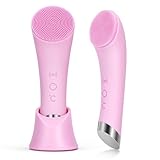
It can add vibration or warmth. Some rechargeable models combine silicone contact points with vibration and a heat-massage end. The PRITECH Silicone Face Scrubber in green and the pink PRITECH Facial Cleansing Brush are both listed for under $10. Their rechargeable format means you should plan for charging space, even though the device itself is compact. Models with vibration may be useful for people who enjoy a more noticeable cleansing ritual, but stronger sensation is not the same as deeper or safer cleaning.
Use a silicone brush lightly and follow the manufacturer’s cleaning and charging instructions. Do not press harder to compensate for a busy or waterproof marketing claim. If your skin becomes tight, stings, flakes, or turns persistently red, reduce frequency or stop using the tool. People with very reactive skin, active irritation, or a skin condition may prefer a clean hand or very soft washcloth and should ask a healthcare professional about exfoliation.
Cost Over 5 Years
The five-year cost depends more on replacement habits than on the first purchase. A under-$10 pack of washcloths works out to about $1.40 per year if it remains usable for five years. In practice, many households buy replacements sooner because cloths stain, thin out, or get diverted to general cleaning. Replacing a $7–$10 pack once a year would total approximately $35–$50 over five years.
For a larger rotation, assume two $10 packs per year. That brings the five-year total to about $100, before laundry costs. Those packs may still serve other household purposes, so their value is not limited to facial cleansing.
A silicone brush priced around $10–$60 has a lower ongoing water-and-laundry burden but may eventually need replacement when the rechargeable battery no longer holds a useful charge. If you buy a under-$10 model and replace it once during five years, the device cost is about $20. A $40 brush replaced once would total about $80. Add a small amount for electricity, but do not expect charging to be a major part of the budget; convenience and battery lifespan matter more.
For pure purchase price, silicone can be surprisingly competitive. For multipurpose value, washcloths generally offer more utility per dollar. The deciding cost is whether you already do laundry regularly and whether you will actually use the brush consistently.
Which One for Your Home
Small apartment
Choose a silicone cleansing brush if you have limited linen storage and want to avoid a growing pile of damp cloths. Its compact footprint suits a narrow vanity, but reserve a dry, visible spot for it rather than leaving it in a closed toiletry bag. Choose washcloths instead if you already have laundry space and want one product for face, hands, and quick cleaning.
Family with kids or pets
Washcloths are the clear practical winner. They handle bath time, messy faces, muddy paws, spills, and small cleaning jobs. Buy several colors or assign each family member a color to reduce mix-ups. A facial brush can remain a personal adult item, but it is not a substitute for the flexible supply of washable cloths a busy household needs.
Rental
Either option works, but washcloths are easier to replace if they are lost, stained, or accidentally repurposed. They require no outlet, charging base, or special storage. A silicone brush is useful for a renter who wants a small personal-care upgrade that can move easily between bathrooms, provided it is kept dry and the charger is stored safely.
Long-term home
Consider using both. Keep a durable rotation of washcloths for general household use and add a silicone brush for the person who wants a dedicated facial routine. A permanent bathroom setup can accommodate a ventilated cloth hook, a laundry hamper, and a small charging location. This combination avoids asking one tool to do two very different jobs.
FAQ
Is a washcloth or silicone cleansing brush more hygienic?
Neither is automatically more hygienic. A washcloth must be washed and dried thoroughly between uses, while a silicone brush should be rinsed clean and allowed to dry. A brush may be easier to maintain at the sink, but neglecting its grooves or charging area can still create buildup.
Can a silicone cleansing brush replace exfoliation?
It can provide light physical exfoliation, but it is not necessary for clean skin and should not be used aggressively. If you use chemical exfoliants, retinoids, or treatments that increase sensitivity, avoid combining them with vigorous brushing without professional guidance.
How often should I replace a washcloth?
Replace one when it stays rough after washing, develops a persistent odor, loses its shape, or shows thinning and holes. With regular laundering and complete drying, a quality cloth may last months or years, but high-use family cloths may need replacement sooner.
Is a rechargeable facial brush worth it?
It is worth considering if you enjoy a dedicated skincare ritual, want quick rinsing, and will use the device consistently. It is less compelling if you need a multipurpose household item, dislike charging, or have easily irritated skin. For many buyers, the best answer is a modest washcloth rotation first, followed by a brush only if its added sensation and convenience solve a real problem.
Ready to decide? Our #1 pick for 2026 is the Comfort.
Live price & availability on Amazon.