Last updated: October 4, 2026
- Understanding Wavelengths: Red Versus Near-Infrared
- Evaluating Irradiance and Power Density
- Determining the Right Size and Coverage Area
- Treatment Distance and Protocol Consistency
- Build Quality, Heat Management, and Safety
- Common Buying Mistakes to Avoid
- When It Makes Sense to Spend More
- Related Guides
- FAQ
The market for at-home skincare devices has evolved dramatically, and by 2026, red light therapy panels have firmly established themselves as a staple in advanced home-care routines. Once restricted to high-end dermatologists’ offices and specialized wellness spas, these powerful light-emitting diode systems are now widely available for daily personal use. However, shopping for a panel can quickly become overwhelming due to the sheer volume of technical jargon, exaggerated marketing promises, and massive price discrepancies found across online retailers.
Choosing the right panel is not just about picking the sleekest design or falling for the highest price tag; it requires a fundamental understanding of how light interacts with skin tissue. Whether your primary goal is smoothing fine lines, fading hyperpigmentation, supporting muscle recovery, or improving overall skin texture, making an informed choice ensures you do not waste money on underpowered equipment. This guide cuts through the marketing noise to highlight the exact specifications, sizing rules, and performance factors that genuinely matter when investing in your long-term skin health.
As an Amazon Associate we earn from qualifying purchases at no extra cost to you.
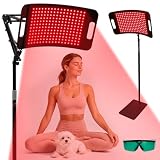
Understanding Wavelengths: Red Versus Near-Infrared
The single most critical factor in selecting a red light therapy panel is the specific wavelength of light it emits, measured in nanometers. Clinical research consistently points to two primary therapeutic ranges that deliver biological benefits: visible red light and invisible near-infrared light. Visible red light typically operates within a specific lower band, designed to target the superficial layers of the skin. This wavelength is primarily responsible for stimulating cellular energy production, encouraging collagen and elastin synthesis, and improving overall skin tone and surface clarity.
On the other hand, near-infrared light operates at a higher wavelength and penetrates much deeper beneath the dermal layer. It reaches down into subcutaneous tissue, muscles, and joints, making it ideal for deep cellular repair, reducing inflammation, and accelerating post-workout recovery. When evaluating panels, look for devices that offer a dual-chip configuration or a balanced mix of both wavelengths. Panels that rely solely on cosmetic red light miss out on the deeper systemic benefits, while panels without visible red light are less effective for surface-level anti-aging concerns.
Evaluating Irradiance and Power Density
Irradiance refers to the intensity of the light energy delivered to your skin per square centimeter, usually measured in milliwatts per square centimeter. Many budget-friendly panels look impressive online yet fail to deliver sufficient therapeutic power once you step back to a standard treatment distance. If a panel has low irradiance, you will have to stand agonizingly close to the device for extended periods to achieve any meaningful cellular stimulation, drastically reducing the convenience of your routine.
However, higher is not always better when it comes to power output. Excessively aggressive irradiance without proper cooling mechanisms can cause thermal stress or discomfort during use. Look for reputable manufacturers that publish independent third-party lab test reports confirming their irradiance output at standard distances, such as six inches or twelve inches away from the panel. A balanced, steady power output ensures your cells absorb the right amount of photons without overheating the surrounding tissue.
Determining the Right Size and Coverage Area
Panels come in a massive variety of form factors, ranging from small handheld gadgets and targeted tabletop units to massive, full-body vertical towers that hang over doors or mount on walls. Your choice should depend entirely on your treatment objectives. If you only want to address facial wrinkles, sun spots, and minor acne flare-ups, a small, targeted tabletop panel is usually more than sufficient and easily stores away in a closet or bathroom vanity when not in use.
Conversely, if you want to treat your entire face, neck, chest, and back simultaneously—or if you plan to incorporate muscle recovery for your torso and limbs—you will need a medium to large modular panel. Many advanced systems allow you to daisy-chain multiple panels together as your needs expand over time. Buying a panel that is too small for your goals will lead to frustration, uneven treatments, and ultimately a second purchase down the road.
Treatment Distance and Protocol Consistency
Even the most expensive, high-irradiance panel will yield disappointing results if used incorrectly. Light dispersal follows standard optical physics, meaning intensity drops off sharply the further you move away from the source. Most clinical protocols and manufacturer guidelines recommend positioning yourself a specific distance from the panel—frequently between six and twelve inches—for sessions lasting roughly ten to twenty minutes.
Consistency is far more important than marathon single sessions. Using a well-calibrated panel for a short duration four to five times a week produces vastly superior cumulative results compared to sitting in front of a massive device for an hour once every fortnight. When choosing a panel, consider how easily it fits into your daily lifestyle. If setting up a heavy stand or hanging a massive unit feels like a chore, you are much less likely to maintain the strict routine required to see visible, lasting improvements in your skin.
Build Quality, Heat Management, and Safety
Because these devices use powerful LED arrays that generate substantial electrical current, build quality and thermal management are paramount for home safety. Cheaply constructed plastic housings often trap internal heat, which drastically shortens the lifespan of the diodes and can lead to flickering or total device failure. Look for heavy-duty aluminum housing or robust metal frames that act as passive heat sinks, drawing thermal energy away from the internal circuit boards.
Additionally, verify that the electronics feature built-in flicker-free drivers and proper electrical safety certifications. High-frequency flickering, even if invisible to the naked eye, can cause eye strain or headaches during longer sessions. Checking for independent safety testing marks ensures the device has been vetted for electrical stability, optical safety, and long-term durability in a residential environment.
Common Buying Mistakes to Avoid
First-time buyers often fall into several predictable traps when shopping for home equipment. One major mistake is buying a panel based solely on the total number of individual LEDs rather than evaluating the actual chip wattage and optical lens design. A panel with thousands of microscopic, low-power diodes will often underperform compared to a unit with fewer, high-output dual-chip LEDs fitted with optical lenses that focus the beam forward.
Another frequent error is ignoring the electromagnetic field output of the device. While most modern high-end panels are engineered to have near-zero emissions at close range, poorly shielded budget models can emit elevated magnetic fields. Always check whether the manufacturer tests and verifies low emission compliance, especially if you plan to sit directly against the panel for extended facial treatments.
When It Makes Sense to Spend More
Budget panels can be a great entry point, but there are distinct scenarios where investing in a premium, professional-grade home system is genuinely worth the extra cost. If you are looking for medical-grade build quality that will last for a decade or more, modular expansion capabilities, precise digital timers, and guaranteed wavelength accuracy backed by scientific testing, paying a higher price tag is a smart long-term investment.
Premium brands also tend to offer superior customer support, comprehensive warranties, and replacement parts if a component fails out of warranty. If red light therapy is going to be a permanent, foundational pillar of your anti-aging and wellness routine, spending more upfront buys you peace of mind, better performance consistency, and safer daily operation.
Related Guides
To build a comprehensive at-home care routine, you can also explore our expert roundups, including the best red light therapy panels and our guide to the top-rated home IPL devices for smooth skin maintenance.
FAQ
How often should I use a red light therapy panel on my face?
For most skin concerns, consistency yields the best outcomes. Experts typically recommend using your panel three to five times per week for about ten to fifteen minutes per session, allowing your skin adequate rest days in between.
Can I use a red light panel immediately after applying active skincare products?
It is generally best to use your panel on clean, dry bare skin to ensure nothing blocks the light photons from penetrating the dermal layers. Applying your serums, retinoids, or moisturizers immediately after the treatment session helps lock in hydration and maximizes absorption.
Will red light therapy help with stubborn hyperpigmentation and dark spots?
While red and near-infrared light primarily target cellular energy, collagen synthesis, and overall inflammation reduction, they can indirectly help fade hyperpigmentation by accelerating cellular turnover and healing sun-damaged tissue. For best results on stubborn spots, they are often paired with targeted topical ingredients.
Are home red light panels safe for my eyes during treatments?
High-output panels produce very bright light that can cause temporary eye strain or discomfort if you stare directly into the active diodes. Most manufacturers include protective blackout goggles or glasses with their systems, and it is always wise to keep your eyes closed during facial sessions.