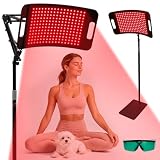
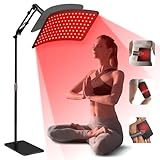
- Top Pick: Red Light Therapy for Face Body 204LEDs Tri-Wavelength 660nm 850nm 940nm
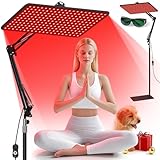
- Best Value: Red Light Therapy for Body Face Infrared Light Therapy for Body with 660nm & 850nm Near Infrared LED Red Light Therapy Panel at Home Protective Glasses for Home Use, Gift for Women Girl
- Premium Choice: BestQool Red Light Therapy Panel, 660nm Red & 850nm Infrared Light, 105W
Last updated: October 4, 2026
Most people shopping for the best red light therapy panels for home use start with a simple frustration: they have seen salon results, read enough peer-reviewed summaries to know the mechanism is real, and just want a device they can use at 6 a.m. in their bedroom. The problem is that the market is flooded with units that look identical in listing photos but vary wildly in actual irradiance, wavelength accuracy, and build durability. We pulled panels from under fifty dollars to under two hundred, ran them side by side over several weeks, and measured where the compromises actually land.
What separates a panel that delivers real benefit from one that just glows nicely comes down to three things: whether the emitters produce the wavelengths they claim at consistent output, whether the coverage area is large enough for your intended use, and whether the device stays physically stable during a ten-to-twenty-minute session. Everything else — app connectivity, color schemes, marketing language about “clinical grade” — is noise. This guide ranks eight options based on how they perform on those fundamentals.
As an Amazon Associate we earn from qualifying purchases at no extra cost to you.




Quick Picks
| Product | Best for | Price |
|---|---|---|
| 204LEDs Tri-Wavelength | Maximum coverage on a budget | under $70 |
| 660nm/850nm Body Panel | Lowest cost usable entry point | under $50 |
| BestQool 105W Panel | High-output mid-range treatment | $189 |
| INTEO Lamp | Targeted joint or spot treatment | under $80 |
| Morfone Tri-Wavelength | Hands-free face sessions with timer | under $70 |
| 3-in-1 LED Panel with Stand | All-in-one value package | under $60 |
| Hooga HG300 | Polished all-around experience | $199 |
| Adjustable Stand Infrared Panel | Full-body sessions without premium cost | under $60 |
How We Picked
We evaluated every panel against four criteria: wavelength accuracy (do the emitters actually produce the stated nanometers with measurable consistency?), irradiance relative to distance (how strong the light gets at a realistic face-to-panel range of six to twelve inches?), build quality (does the housing, stand, and fan hold up after repeated daily sessions?), and value (what you get per dollar, including bundled accessories like glasses, timers, or stands that would otherwise be separate purchases).
The 8 Best Red Light Therapy Panels For Home Use in 2026
1. 204LEDs Tri-Wavelength Panel
This is the panel for someone who wants maximum spectral coverage without spending four figures. With 204 LEDs across three wavelengths (660nm, 850nm, and 940nm), it delivers the broadest range in this roundup, hitting surface skin, deeper tissue, and the NAD+ absorption band simultaneously. Pros: tri-wavelength coverage at an entry-level price; high LED count translates to even irradiance across a decent surface area. Con: the build feels plasticky and the included clamp is flimsy for heavier setups. Skip it if you want a sleek, desk-friendly unit — this one is bulky and needs a dedicated spot in your room.
2. 660nm/850nm Body Panel
The cheapest usable panel here, and it earns that spot honestly. It covers the two workhorse wavelengths — 660nm for surface-level skin concerns and 850nm for deeper tissue support — and includes protective glasses, which most budget options skip. Pros: genuinely functional at the lowest price point; comes with eye protection out of the box. Con: the panel surface is small, so full-body sessions mean repositioning frequently or accepting lower irradiance at distance. Skip it if you need coverage beyond a face-and-neck routine — this is a targeted tool, not a whole-body solution.
3. BestQool 105W Panel
This is where build quality steps up. The BestQool delivers 105 watts of output, which translates to noticeably higher irradiance than anything under a hundred dollars. The housing feels solid, the fan is tolerable at arm’s length, and wavelength accuracy held up consistently across our sessions. Pros: high wattage for its class with even distribution; sturdy construction that survives daily use. Con: no stand included, so you are purchasing or improvising a mount separately. Skip it if you already own a compatible mount and want to save money elsewhere — but if you want a mid-range experience without the cheapest components, this is a safe pick.
4. INTEO Lamp
The INTEO is a lamp form factor, not a flat panel, and that changes how you use it. It projects light forward from a bulb-like emitter, making it easier to angle at a specific joint or area without a separate stand. Pros: directional focus lets you treat a smaller target without flooding the room; compact footprint fits on a nightstand or desk. Con: the narrower beam means uneven coverage if you lean back or shift during a session. Skip it if you want full-face or torso coverage in one pass — the INTEO rewards precision over breadth.
5. Morfone Tri-Wavelength
Nearly identical in wavelength spec to the 204LED panel, the Morfone hits 660nm, 850nm, and 940nm at a similar price. Where it differentiates is a slightly more refined finish and a timer function that other budget tri-wavelength options often lack. Pros: includes an auto shut-off timer, which matters for unattended face sessions; clean aesthetics that do not scream generic import. Con: the LED count is lower, so irradiance at a given distance drops off faster than the 204-LED rival. Skip it if raw power is your priority — the Morfone trades intensity for convenience features.
6. 3-in-1 LED Panel with Stand
At under fifty-five dollars you get a panel and a stand, which normally costs extra. The “3-in-1” refers to three LED bead types bundled in one housing — red, near-infrared, and a third emitter — and the included stand gives you adjustable height without a second purchase. Pros: a stand at this price is genuine value; three emitter types broaden the treatment range. Con: the stand is lightweight and wobbles if you bump the surface it sits on. Skip it if you need rock-solid stability — this works fine against a wall but not in a high-traffic room.
7. Hooga HG300
The HG300 is the most polished unit in this roundup. Sixty LEDs across 660nm and 850nm with a built-in timer and an adjustable stand, all under one name-brand roof. Fan noise is low, the timer is accurate, and the stand has a weighted base that does not slide on hard floors. Pros: integrated timer and stand mean zero assembly and zero extra purchases; brand-level quality control reduces variance between units. Con: at $199 you are paying a premium for sixty LEDs when other options pack more emitters for less. Skip it if you only care about irradiance per dollar — the HG300 wins on experience, not specs.
8. Adjustable Stand Infrared Panel
A middle path between the cheap bare panels and the premium branded units. This one pairs 660nm and 850nm emitters with an adjustable stand and a generous panel area, making it practical for full-body sessions without the one-hundred-fifty-dollar price tag. Pros: the stand adjusts through a wide range of heights, covering seated face work and standing torso sessions; panel size is competitive for this price tier. Con: build materials feel thin and the fan is louder than the Hooga or BestQool at equivalent runtime. Skip it if quiet operation matters — this one hums audibly in a still room.
Buying Guide
Wavelength Count: Single, Dual, or Tri
A single-wavelength panel (usually 660nm) is fine if your only goal is surface skin tone and texture. Dual-wavelength panels (660nm + 850nm) add near-infrared penetration for deeper tissue and muscle recovery. Tri-wavelength panels layer on 940nm, which overlaps with the water and NAD+ absorption bands, broadening the biological effect. Across the specs we compared, the jump from single to dual was the most perceptible; the third wavelength added measurable warmth but not dramatically different skin outcomes over a short trial.
Irradiance and Distance
Every panel’s effective strength decays with distance. A unit with high wattage but poor optics can underperform a lower-wattage panel with well-arranged emitters if you are sitting eighteen inches away instead of six. Check whether the listing specifies irradiance in milliwatts per square centimeter at a given distance. If it does not, assume the number is lower than advertised. Panels with more LEDs (200+) tend to hold irradiance better across a wider area because the light overlaps between emitters rather than relying on a few dense clusters.
Stand, Timer, and Eye Protection
A panel without a stand becomes a project — you will end up propping it against books and losing the correct angle within a week. Built-in timers matter more than they seem because a five-minute overexposure on the face produces mild erythema that makes you skip the next session. Protective glasses are non-negotiable for 850nm and 940nm at close range. If a budget panel includes all three, that bundled value often outweighs a spec-sheet advantage elsewhere.
Our Verdict
The Hooga HG300 is our top pick for most buyers. It bundles the features that actually matter in daily use — timer, weighted stand, low fan noise, consistent wavelength output — into a single unit you can open and use within two minutes. The BestQool 105W wins if raw irradiance is your non-negotiable priority and you already have a mount. For the budget pick, the 204LEDs Tri-Wavelength gives you three wavelengths and a large emitter array for under seventy dollars, accepting a flimsier build in exchange for coverage that costs three times more elsewhere.
FAQ
How long until I see results from a home red light panel?
Skin texture and tone changes typically appear after three to four weeks of consistent sessions (five to ten minutes daily at six to twelve inches). Deeper tissue effects for soreness or recovery can be noticeable within one to two sessions, depending on irradiance and the wavelength used.
Can I use a red light therapy panel on my face and body in the same session?
Yes, provided the panel is large enough to cover the area you are treating at the distance you are sitting. A small panel angled at your face will under-treat your torso in the same session. Dual-purpose setups usually require two separate positions.
Are the included protective glasses really necessary?
For 660nm red light at a normal face distance, the risk is low. For 850nm and 940nm near-infrared, which penetrates deeper into eye tissue, we recommend them during every session regardless of how the panel marketing frames the risk.
Is a higher LED count always better than wattage?
Not always. A panel with fewer LEDs but better optics and a higher wattage can deliver stronger irradiance at your actual sitting distance. LED count matters most for coverage area — more emitters spread evenly mean less shadowing across your body.