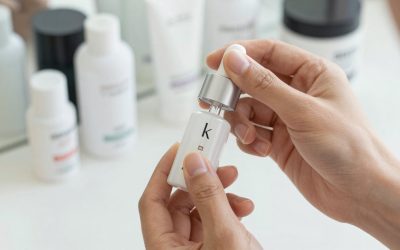
- Top Pick: NIDA Peptide Propolis Renewal Serum | Peptide Complex, Propolis Extract, Adenosine | Youthful Look, Wrinkles, Fine Lines, Pore & Sebum Care | 1.69 fl.oz., 50ml
- Best Value: Beauty of Joseon Glow Serum Propolis and Niacinamide Hydrating Facial Soothing Moisturizer for Uneven Skin Tone Korean Skin Care 30ml 1 fl.oz
- Premium Choice: COSRX Honey Glow Kit, Propolis Toner, Serum & Cream, Travel Size Set
TL;DR
Korean propolis skincare uses bee-derived flavonoids and phenolic acids to calm inflammation, suppress acne bacteria, and reinforce the barrier — all without the irritation risk of conventional actives. The best Korean propolis products pair propolis extract with fermentation-derived humectants for simultaneous repair and hydration. Top picks below, ranked by propolis concentration and formulation logic.
As an Amazon Associate we earn from qualifying purchases at no extra cost to you.




Best Korean Propolis Skincare Products: An INCI-Backed Guide
Propolis has been used therapeutically for over 2,000 years, but Korean formulators are doing something Western brands rarely attempt: concentrating it at meaningful percentages and pairing it with complementary actives that enhance bioavailability. The result is a category of products that punches well above its price class — particularly for acne-prone, sensitive, and post-procedure skin.
This guide covers the chemistry behind Korean propolis skincare, how to read propolis on an INCI list, which ASINs are worth buying, and the five questions buyers most often get wrong.
Top picks at a glance


As an Amazon Associate we earn from qualifying purchases. Product prices and availability are accurate as of the date/time indicated.




As an Amazon Associate we earn from qualifying purchases. Product prices and availability are accurate as of the date/time indicated.


As an Amazon Associate we earn from qualifying purchases. Product prices and availability are accurate as of the date/time indicated.
What makes propolis effective in skincare
Raw propolis is a resinous mixture bees synthesize from tree saps, beeswax, and their own enzymatic secretions. It contains over 300 identified compounds — the most relevant for skin being flavonoids (quercetin, kaempferol, chrysin), phenolic acids (caffeic acid, ferulic acid), and terpenoids.
The antibacterial mechanism is well-documented: propolis disrupts bacterial cell membranes and inhibits quorum sensing in Cutibacterium acnes. The anti-inflammatory pathway runs through COX-2 inhibition, reducing prostaglandin synthesis — the same mechanism as NSAIDs, but topically and without systemic risk. For barrier function, ferulic acid’s antioxidant contribution is comparable to vitamin C and E at lower concentrations.
Korean brands typically use one of two extraction methods: ethanol extraction (higher flavonoid yield, more potent, slightly drying unless balanced) or water extraction (gentler, better for sensitive skin, lower active concentration). INCI labels rarely specify which — check the product positioning or look for the presence of glycerin and butylene glycol as counterbalancers in ethanol-extracted products.
How to read propolis on an INCI list
Propolis appears as Propolis Extract or Cera Propolis (the raw resin form). Position on the INCI list matters: above the 1% threshold line (typically above preservatives like phenoxyethanol), the concentration is meaningful. Below it, propolis is likely a marketing ingredient.
The gold standard for Korean propolis products is Propolis Extract listed in the top 5 ingredients — that signals 30%+ concentration in most serums and essences. Some brands, including COSRX, explicitly label the percentage on their packaging. If a product doesn’t disclose percentage and propolis appears 8th or lower on the list, you’re paying for branding.
Related reading: niacinamide Korean skincare products covers another high-transparency ingredient category where concentration disclosure is the norm.
INCI comparison: top Korean propolis formulas
| Product | Propolis form on INCI | Estimated concentration | Supporting actives | Best for |
|---|---|---|---|---|
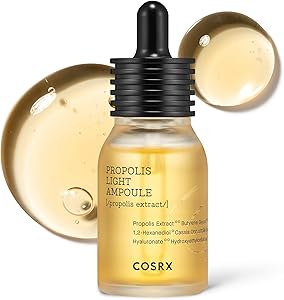
| COSRX Full Fit Propolis Light Ampoule | Black Bee Propolis Extract (2nd) | ~83% | Niacinamide, panthenol | Acne-prone, oily |
| COSRX Full Fit Propolis Synergy Toner | Black Bee Propolis Extract (1st) | ~72% | Honey extract, sodium hyaluronate | Dry, dehydrated |
| Benton Aloe Propolis Soothing Gel | Propolis Extract (5th) | ~15–20% | Aloe vera, allantoin | Sensitive, redness |
| Missha Bee Pollen Renew Ampoule | Bee Pollen Extract + Propolis (4th/5th) | ~25% | Adenosine, peptide complex | Anti-aging, mature |
Layering Korean propolis into your routine
Propolis extracts — especially ethanol-based ones — sit best after water-based toning and before heavier serums or moisturizers. The typical sequence for acne-prone skin: cleanser → low-pH toner → propolis ampoule → niacinamide serum → gel moisturizer → SPF.
Do not layer propolis directly with AHA or BHA in the same step — the pH conflict between propolis’s natural acidity (~4.5–5.0) and exfoliating acids can cause pilling and reduces the residence time of both actives. Use exfoliants at night; propolis AM and PM. For the correct exfoliation approach in a Korean routine, see our guide to Korean BHA/AHA exfoliating toner and Korean PHA exfoliant alternatives.
One underused pairing: propolis + snail mucin. The mucin’s glycoprotein matrix enhances propolis penetration while adding wound-healing glycolic acid derivatives. See the full protocol in our snail mucin layering routine guide.
Frequently asked questions
Is Korean propolis skincare safe for rosacea-prone skin?
Yes — propolis’s COX-2 inhibiting properties make it one of the few actives that reduces rosacea-associated flushing rather than aggravating it. The key is selecting a water-extracted propolis product free from fragrance and essential oils. Benton Aloe Propolis Soothing Gel is the most conservative entry point. Ethanol-extracted products like COSRX Full Fit Ampoule should be patch-tested first, as the alcohol content can be a trigger for some rosacea subtypes. See also: Korean cica skincare for sensitive skin as a complementary calming layer.
Can you use propolis if you are allergic to bee products?
Propolis allergy (contact dermatitis) affects roughly 1–2% of the population and is distinct from bee venom allergy. If you react to honey, beeswax, or royal jelly topically, test propolis on your inner forearm for 48 hours before facial use. Propolis allergy presents as localized eczematous reaction — not anaphylaxis — but can be persistent and difficult to resolve. Those with confirmed propolis contact allergy should use centella asiatica (cica) or fermented ingredient-based products instead.
What percentage of propolis is clinically effective?
Published studies show antibacterial efficacy at 3–5% propolis concentration in aqueous solution. Anti-inflammatory effects are observed at similar concentrations. However, topical skin products need higher formulated concentrations to account for dilution in the vehicle, limited skin penetration, and instability — which is why effective Korean propolis serums typically run 30–80%+ propolis extract in the ingredient list. Products listing propolis below 5th position likely contain less than 5% — functional for mild benefits, insufficient for acne or barrier repair applications.
Does propolis help with post-inflammatory hyperpigmentation?
Indirectly, yes. Propolis does not inhibit tyrosinase the way niacinamide or vitamin C does — it is not a primary brightening agent. Its value in PIH is upstream: by suppressing the inflammatory cascade that triggers excess melanin production in the first place, consistent propolis use reduces the severity of new dark spots that form after breakouts. For active hyperpigmentation, pair propolis with a dedicated brightening agent. See our best Korean vitamin C serum guide for compatible brightening layering options.
How does Korean propolis differ from Western propolis products?
The primary difference is concentration and formulation intent. Western propolis products — mostly found in natural/organic skincare — use propolis as a secondary or tertiary ingredient, often present below 5%. Korean brands built entire product lines around propolis as the hero, with COSRX’s Full Fit range being the most cited example of a propolis-first formulation philosophy. Korean products also tend to use fermentation to enhance propolis bioavailability — a technique Western brands rarely apply to bee-derived ingredients. The second difference is packaging: most Korean propolis serums use opaque or amber glass to prevent UV degradation of unstable flavonoids, while Western products often use clear plastic.
Bottom line
Korean propolis skincare earns its place in a routine through chemistry, not marketing — but only when you select products where propolis appears in the top 3–5 INCI ingredients. For acne-prone skin, COSRX Full Fit Propolis Light Ampoule remains the benchmark. For sensitive skin, water-extracted gel formats like Benton are more appropriate. Layer after toner, before heavier serums, and avoid same-step application with low-pH exfoliants.
For more K-beauty routine building, see our guides on best Korean skincare products 2026 and the Korean double cleansing method for foundation-layer context.
Related K-Beauty Guides
- Skincare Routine for Beginners: The Complete Step-by-Step Guide
- Best Sunscreen Reapplication Sprays: On-the-Go UV Protection Refresh
- Best Face Steamers for Skincare: Deep Cleanse and Hydrate Your Skin
- Best Derma Rollers for Microneedling: Stimulate Collagen at Home
- Best Face Massage Rollers: Sculpt, Depuff, and Boost Glow
- Best Jade Rollers for Face: Cooling, Depuffing, and Skin-Boosting Benefits
- Best Gua Sha Face Tools: Ancient Ritual for Modern Skin Benefits