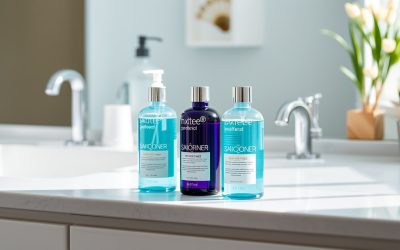
- Top Pick: SOME BY MI AHA BHA PHA 30 Days Miracle Toner – 5.07oz, 150ml – Korean Refining Face Toner for All Skin Types – Daily Pore Care & Oil Control with 2% Niacinamide – Korean Skin Care
- Best Value: Korean AHA BHA PHA Exfoliant Cleansing Foam Face Wash w/ Centella, Tea Tree & Green Tea, Gentle Low pH Pore Minimizer Cleaner Cleanser for Sensitive & Acne-Prone Skin, Non-Stripping & Fragrance 5 Oz
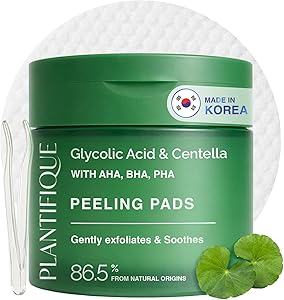
- Premium Choice: medicube Toner Pads Zero Pore Pad Mild 2.0 for Gentle Exfoliating
TL;DR
Korean PHA exfoliants use large-molecule polyhydroxy acids — primarily gluconolactone and lactobionic acid — that exfoliate at the skin surface without penetrating the dermis, making them the only chemical exfoliant class suited for rosacea, eczema-prone, and post-procedure skin. PHA also humectant-binds water as it exfoliates — a property AHA and BHA do not share. The best Korean PHA formulas pair 1–3% gluconolactone with ceramides or panthenol for simultaneous exfoliation and barrier repair.
As an Amazon Associate we earn from qualifying purchases at no extra cost to you.


Korean PHA Exfoliant Guide: Gentle Chemical Exfoliation for Sensitive Skin
Polyhydroxy acids are the third generation of chemical exfoliants. AHA (first generation) penetrates to the dermis — effective but irritating. BHA (second generation) is lipid-soluble — effective for pores but harsh for sensitive skin. PHA stays at the stratum corneum surface, exfoliating dead cells without disrupting the tight junctions and lipid bilayers beneath. That makes it the rare exfoliant that improves texture without compromising barrier function.
Korean brands have led PHA adoption in mass-market skincare. While Western brands treated PHA as a niche ingredient, Korean formulators integrated it into toners, pads, and essences at accessible price points — often combining it with fermented actives and prebiotics that work synergistically with PHA’s skin microbiome-preserving properties.
Top picks at a glance

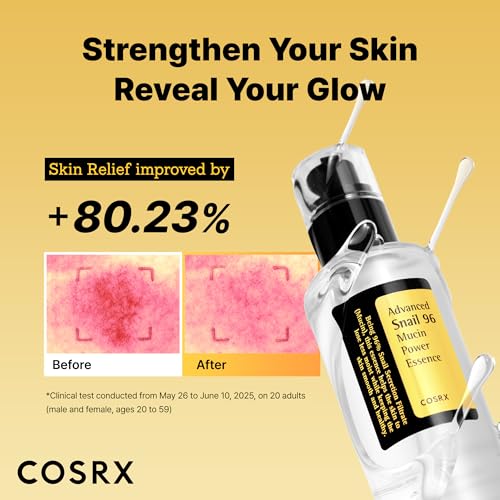
COSRX Snail Mucin 96% Repairing Serum for Sooothing & Hydrating 3.38 oz.



As an Amazon Associate we earn from qualifying purchases. Product prices and availability are accurate as of the date/time indicated.




As an Amazon Associate we earn from qualifying purchases. Product prices and availability are accurate as of the date/time indicated.
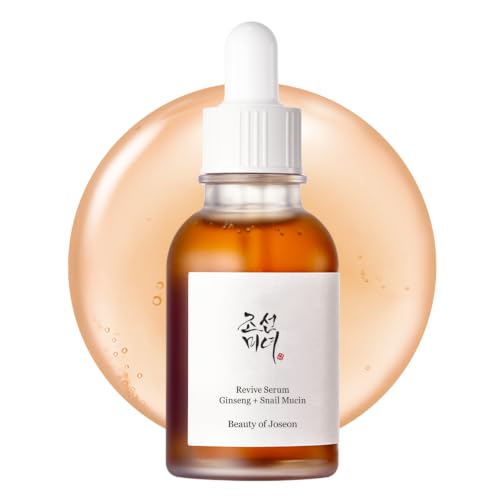
Beauty of Joseon Revive Snail Mucin Ginseng Serum





As an Amazon Associate we earn from qualifying purchases. Product prices and availability are accurate as of the date/time indicated.
PHA chemistry: why it behaves differently from AHA and BHA
The defining characteristic of PHAs is molecular weight. Gluconolactone (MW: 178 g/mol) and lactobionic acid (MW: 358 g/mol) are significantly larger than glycolic acid (MW: 76 g/mol) — the smallest and most penetrating AHA. This size difference determines tissue depth: AHA reaches the papillary dermis and stimulates fibroblast activity; PHA stays at the stratum corneum and loosens corneodesmosomes (the protein bonds holding dead skin cells together).
The humectant property is structural: PHAs contain multiple hydroxyl groups that form hydrogen bonds with water molecules. Gluconolactone can bind and hold water at the skin surface while simultaneously dissolving the intercellular cement holding corneocytes in the upper epidermis. No AHA does this — glycolic acid exfoliates or hydrates depending on concentration, but not both simultaneously at low concentrations.
PHA also does not suppress the skin microbiome at use concentrations. Several in-vitro studies have confirmed gluconolactone at 1–3% is non-bactericidal against Staphylococcus epidermidis and Cutibacterium acnes commensal strains — meaning it exfoliates without disrupting the protective bacterial layer that regulates barrier function. This matters particularly for microbiome-conscious K-beauty routines that include fermented products and prebiotics.
INCI comparison: Korean PHA exfoliant formulas
| Product | PHA type on INCI | Estimated % | pH | Supporting actives | Format |
|---|---|---|---|---|---|
| COSRX One Step Moisture Up Pad | Gluconolactone | ~1% | ~5.5 | Beta-glucan, niacinamide | Pad |
| Some By Mi AHA-BHA-PHA 30 Days Miracle Toner | Lactobionic acid | ~1–2% | ~4.5 | AHA, BHA, centella, tea tree | Toner |
| Neogen Bio-Peel Gauze Peeling Wine | Lactobionic acid | ~2% | ~4.0 | Resveratrol, AHA | Gauze pad |
| ISNTREE Hyaluronic Acid Toner | Gluconolactone | ~1% | ~5.5–6.0 | HA (5 types), panthenol | Toner |
| Klavuu Pure Pearlsation Toner | Gluconolactone | ~1–3% | ~5.0 | Pearl extract, ceramides | Toner |
Who should use a Korean PHA exfoliant
PHA is the correct exfoliant choice for four specific skin scenarios where AHA and BHA underperform or are contraindicated:
- Rosacea and chronic redness — PHA does not trigger TRPA1 channels or disrupt barrier tight junctions. AHA and BHA are frequently cited as rosacea triggers at typical use concentrations.
- Eczema-prone or atopic skin — PHA at 1–3% can improve texture without disrupting the already-compromised filaggrin-deficient barrier. Clinical studies on atopic dermatitis show gluconolactone lotion reduces scaling without worsening TEWL.
- Post-procedure skin — After laser, microneedling, or chemical peels, the skin is temporarily at AHA/BHA-incompatible vulnerability. PHA provides gentle resumption of exfoliation during the recovery period.
- Exfoliant beginners — PHA is the lowest-risk starting point. If you have never used chemical exfoliants and want to start, PHA at 1–2% trains skin acclimatization without the purging or sensitivity risk of AHA initiation.
Skin types that can upgrade from PHA to AHA or BHA once tolerance is established: oily, resilient, and non-reactive. PHA’s gentleness is a feature for sensitive skin but a limitation for thick, oily skin requiring deeper follicular clearing. For the AHA/BHA comparison in Korean exfoliants, see our Korean BHA AHA exfoliating toner guide.
How to use Korean PHA in a K-beauty routine
PHA’s broad pH compatibility (effective from pH 3.5–6.5) makes it the most flexible chemical exfoliant to position in a multi-step routine. It can follow cleansing as a first active step without the strict pH-timing requirements of glycolic acid.
Standard evening sequence: oil cleanser → water cleanser → PHA toner (apply, wait 2 minutes) → hydrating essence → treatment serum → moisturizer. Morning: cleanser → hydrating toner → essence → SPF. Unlike AHA, PHA does not require a mandatory post-use SPF from a photosensitivity standpoint — though daily SPF remains essential for any exfoliation-based routine.
PHA pairs exceptionally well with fermented essences. The gentle surface exfoliation PHA provides increases the absorption of fermented actives like galactomyces and bifida ferment lysate by removing the dead cell layer that partially blocks penetration. See our Korean fermented essence galactomyces guide for compatible fermented product options to stack with PHA.
For hydration layering after PHA, hyaluronic acid serums are the logical follow-up — PHA-exfoliated skin absorbs HA more effectively than unexfoliated skin. See our best hyaluronic acid Korean serum recommendations for compatible HA products.
Frequently asked questions
Can you use Korean PHA exfoliant every day?
Yes — for most skin types, PHA at 1–3% can be used daily without the desquamation risk associated with daily AHA use. The surface-only mechanism and concurrent humectant action mean daily PHA use does not strip the stratum corneum the way daily glycolic or lactic acid would. Clinical evidence supports twice-daily gluconolactone use in atopic dermatitis trials without barrier degradation. Start with once daily (PM) for 2 weeks to establish tolerance, then assess whether twice-daily adds visible benefit for your skin type. Oily skin tends to benefit most from twice-daily; dry and sensitive skin typically sees full benefit at once-daily PM use.
Does Korean PHA cause sun sensitivity like AHA?
No — this is one of PHA’s most significant clinical differentiators. AHA at typical use concentrations increases UV sensitivity for up to 7 days post-application by thinning the stratum corneum and reducing the natural UV-scattering function of the skin surface. PHA does not penetrate below the stratum corneum and does not reduce this UV-scattering layer. Multiple double-blind studies have confirmed that gluconolactone at concentrations up to 12% does not increase UV-induced erythema or photomutagenicity. Daily SPF remains essential — not because PHA creates new UV risk, but because any exfoliation routine is incompatible with sun damage accumulation.
What is the difference between gluconolactone and lactobionic acid in Korean products?
Both are PHAs but differ in molecular weight and secondary properties. Gluconolactone (MW 178) is the smaller of the two — slightly more exfoliating, better studied clinically, more common in Korean toners. Lactobionic acid (MW 358) is larger, stays even more superficially than gluconolactone, and has additional antioxidant properties from its galactose moiety. Lactobionic acid is the better choice for skin with significant barrier compromise or active eczema, where even gluconolactone’s modest penetration depth is a concern. In most Korean multi-acid toners (AHA-BHA-PHA blends), the PHA component is usually lactobionic acid — it balances the deeper-penetrating AHA and BHA in the same formula.
Can PHA replace AHA in a Korean routine?
For sensitive skin, yes — PHA delivers sufficient surface exfoliation for texture improvement, pore appearance, and enhanced ingredient absorption without the irritation risk of AHA. For skin that tolerates AHA well and has specific goals (deeper pigmentation, acne scarring, significant photoaging), PHA alone is insufficient. The dermal fibroblast stimulation and collagen remodeling effects of AHA at 5–10% require dermal penetration that PHA cannot achieve. A practical approach for most K-beauty users: PHA as the everyday exfoliant 5–7 nights per week; AHA as an intensive treatment 1–2 nights per week when skin is resilient. This preserves barrier integrity while capturing AHA’s anti-aging benefits.
Is Korean PHA effective for acne?
PHA has a limited but real role in acne management. Its surface exfoliation clears the hyperkeratosis in follicular openings — the precursor to comedone formation — which makes it useful for comedonal acne and congestion prevention. It does not penetrate to the follicular canal the way BHA does, so it cannot clear established closed comedones or cystic lesions. For acne, PHA works best as maintenance exfoliation between BHA sessions, or as the sole exfoliant for acne-adjacent skin that cannot tolerate BHA. Pair with a low-concentration niacinamide (2–4%) for sebum regulation without the over-drying risk of benzoyl peroxide. See our Korean acne treatment guide for a full acne-focused routine framework.
Bottom line
Korean PHA exfoliants fill a genuine gap in the chemical exfoliants market — not as a replacement for AHA or BHA but as the correct choice for the significant subset of K-beauty users whose skin cannot tolerate deeper acid penetration. The surface-only mechanism, concurrent humectant action, and microbiome compatibility make PHA the safest daily exfoliant for sensitive, reactive, and compromised skin.
Select products with PHA in the top 5 INCI ingredients, pH 4.5–6.0, and free from fragrance. For full routine context, see our Korean skincare winter dry skin guide where PHA’s humectant-exfoliation dual action is particularly valuable, and best Korean sheet mask 2026 for the post-exfoliation hydration step.
Related K-Beauty Guides
- Tranexamic Acid for Hyperpigmentation
- Some By Mi AHA BHA PHA 30 Days Miracle Toner Review
- Best Salicylic Acid Face Wash 2026
- Kojic Acid Soap for Dark Spots
- Innisfree Green Tea Hyaluronic Acid Serum Review
- Best Salicylic Acid Cleansers 2026
- Benzoyl Peroxide vs Salicylic Acid
Ready to decide? Our #1 pick for 2026 is the COSRX One Step Moisture Up Pad.
Live price & availability on Amazon.