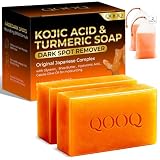
- Top Pick: VALITIC Kojic Acid Dark Spot Remover Soap Bars, Turmeric Bar Soaps 2 Pack
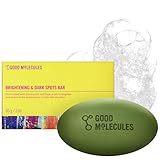
- Best Value: Kojie San Skin and Body Brightening Soap – Original Kojic Acid, Dark Spot Remover Bar Soap with Glycerin & Tea Tree Oil – 65g x 2 Bars
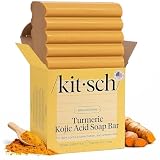
- Premium Choice: ORIENTLEAF Kojic Acid Soap, Turmeric Soap Bar for Dark Spots, 3 Pack
Last updated: October 4, 2026
As an Amazon Associate we earn from qualifying purchases at no extra cost to you.



📣 Disclosure: This post contains Amazon affiliate links. We may earn a small commission at no extra cost to you. Learn more.
Kojic Acid Soap for Dark Spots: Does It Actually Work? Best Picks 2026
Kojic acid soap is one of the most searched brightening products in skincare — and one of the most misunderstood. It promises to fade dark spots, even skin tone, and deliver the kind of glass-skin radiance associated with Korean skincare. But does a bar of soap — rinsed off in seconds — actually deliver results? The short answer: yes, with the right formula, consistent use, and realistic expectations. This guide covers exactly how kojic acid works, what results to expect, and the best kojic acid soaps you can actually buy.
🛒 Best Price Today on Amazon
Prime members get fast, free shipping on everything above, plus member-only deals. New members get a 30-day free trial — cancel anytime.
What Is Kojic Acid?
Kojic acid is a naturally occurring compound produced during the fermentation of certain fungi, most notably Aspergillus oryzae — the same organism used to ferment sake, soy sauce, and miso. It was first isolated in Japan in 1907 and has been studied as a skin brightener for decades.
The mechanism is well-established: kojic acid is a tyrosinase inhibitor. Tyrosinase is the enzyme responsible for the final steps of melanin synthesis in skin. By blocking tyrosinase activity, kojic acid reduces the production of melanin — the pigment responsible for dark spots, post-inflammatory hyperpigmentation (PIH), melasma, and uneven skin tone.
Effective concentrations for topical use are typically 1–4%. At these levels, kojic acid has a meaningful effect on melanin production with a manageable irritation profile. Soap formulations typically fall in the 1–2% range, which is effective for daily use as a cleanser.
Does Kojic Acid Soap Actually Work?
This is the key question — and it requires nuance. Kojic acid soap is rinsed off after 30–120 seconds of contact time. Can a rinse-off product have a brightening effect?
Yes — but with caveats.
- Daily repeated exposure matters: Even brief daily contact with kojic acid suppresses tyrosinase activity cumulatively over time. Studies on kojic acid in wash-off formats show measurable brightening with 4–8 weeks of consistent use.
- The vehicle (soap base) affects efficacy: Bar soaps with higher pH (alkaline) can reduce kojic acid stability. Better-formulated kojic acid products use a slightly acidic or neutral pH base.
- Leave-on products are more effective: A leave-on kojic acid serum or cream will outperform a soap for treating deep melasma or established dark spots. Soap works best as a maintenance brightener and preventive treatment, or for body use where soaps are the primary application format.
- Body skin responds well to kojic acid soap: For body areas (underarms, elbows, knees, inner thighs), soap is actually a very practical delivery format — it covers large areas easily, and body skin typically tolerates repeated exposure well.
Best Kojic Acid Soaps 2026
1. Marie France Kojic Acid Soap (Philippines Formula)
The cult classic. Marie France’s kojic acid soap is one of the most widely used brightening soaps in Asia, with a loyal following for over 20 years. The formula combines 2% kojic acid with kojic acid dipalmitate (a more stable ester form) for dual-source tyrosinase inhibition. The lather is moderate, the soap does not strip the skin harshly, and it works as both a face and body soap for most users. Available in twin-packs for cost efficiency.
- 2% kojic acid + kojic acid dipalmitate
- Face and body use
- Available in fragrance and fragrance-free variants
- Twin-pack value pricing
Pros: Proven track record; affordable; widely available; works on face and body
Cons: Traditional bar soap format may feel drying if overused; fragrance version unsuitable for sensitive skin
2. Koji-San Kojic Acid Soap
Koji-San is a Japanese-origin formula that has become extremely popular in the K-beauty brightening community. The soap combines kojic acid with glutathione — another potent skin brightener that works via a different pathway (reducing oxidized melanin precursors). The combination creates a dual-mechanism brightening effect that outperforms kojic acid alone for overall radiance. The glycerin-enriched base minimizes the drying effect typical of bar soaps.
- Kojic acid + glutathione combination
- Glycerin-enriched base for moisture
- Suitable for sensitive-to-normal skin
- Popular for underarm brightening in particular
Pros: Dual brightening mechanism; less drying than average kojic soap; excellent for underarm and body use
Cons: Higher price point than single-ingredient options
3. Likas Papaya Kojic Acid Whitening Soap
One of the oldest brightening soaps on the market, Likas combines kojic acid with papaya enzyme extract (papain) — a natural exfoliant that helps surface-level melanin shed more quickly. The dual approach of enzymatic exfoliation plus tyrosinase inhibition makes this a strong option for textured skin with surface pigmentation. Best for body use rather than face (papain can be sensitizing on facial skin).
- Kojic acid + papain enzyme
- Exfoliation + brightening dual action
- Effective for body hyperpigmentation
- Long track record (30+ years)
Pros: Exfoliation accelerates visible results; body-focused format; extremely affordable
Cons: Not recommended for sensitive facial skin; papain may irritate if left on too long
4. VLCC Skin Defense Kojic Acid Soap
VLCC’s entry is formulated for Indian and Southeast Asian skin tones that are prone to sun-induced hyperpigmentation. The formula adds aloe vera and vitamin E to offset the dryness common in kojic acid soaps, making it a more comfortable daily cleanser for face use. It also includes neem extract for mild antibacterial support, making it dual-purpose for acne-prone skin with pigmentation.
- Kojic acid + aloe vera + vitamin E
- Neem extract for antibacterial support
- Formulated for olive-to-deeper skin tones
- Face and body use
Pros: Moisturizing formula; suits deeper skin tones; acne + pigmentation use; reasonable pricing
Cons: Less widely available in Western markets
How to Use Kojic Acid Soap for Best Results
- Wet skin first — dampen the skin area before applying the soap to avoid concentrated irritation from direct bar contact
- Lather in your hands — work up a lather in your palms, then apply to skin rather than rubbing the bar directly against your face
- Leave on for 30–90 seconds — allow some contact time before rinsing; this increases the effective exposure to kojic acid
- Rinse thoroughly — especially on the face; residual soap alkalinity can disrupt skin pH
- Follow with moisturizer immediately — kojic acid soap can dry out skin; applying a hydrating moisturizer within 60 seconds of rinsing prevents moisture loss
- Apply SPF every morning — this is non-negotiable. Kojic acid reduces melanin production, which reduces your skin’s natural UV protection. SPF 30+ daily is essential to prevent new dark spots forming while treating existing ones.
How Long Until You See Results?
| Timeline | Expected Changes |
|---|---|
| Week 1–2 | Smoother skin texture; slight improvement in overall radiance |
| Week 3–4 | Visible reduction in surface-level PIH (post-inflammatory hyperpigmentation) |
| Week 6–8 | Measurable fading of existing dark spots; more even skin tone |
| Week 10–12 | Significant improvement; deeper melasma may require additional treatments |
Results depend heavily on: sun protection compliance, the depth of the pigmentation being treated, skin type, and whether kojic acid soap is used alongside leave-on brightening treatments.
Kojic Acid vs Other Brighteners: Quick Comparison
| Ingredient | Mechanism | Strength | Best Pairing |
|---|---|---|---|
| Kojic Acid | Tyrosinase inhibition | Moderate | Niacinamide, vitamin C |
| Niacinamide | Melanosome transfer inhibition | Moderate | Kojic acid, alpha-arbutin |
| Alpha-Arbutin | Tyrosinase inhibition (gentler) | Moderate | Niacinamide, tranexamic acid |
| Tranexamic Acid | Plasmin pathway inhibition | Moderate-strong | Niacinamide, kojic acid |
| Vitamin C | Tyrosinase inhibition + antioxidant | Strong | SPF, niacinamide |
| Hydroquinone | Tyrosinase inhibition (strongest OTC) | Strong (prescription-level) | Tretinoin (under dermatologist guidance) |
Frequently Asked Questions
Q: Can I use kojic acid soap on my face every day?
A: Yes — once daily is appropriate for most skin types. Twice daily may cause dryness or mild irritation, especially if you are also using other active ingredients (AHAs, retinol). If your skin feels tight or appears flaky after use, reduce to every other day and ensure you are moisturizing immediately after rinsing.
Q: Can kojic acid soap lighten skin permanently?
A: No — kojic acid suppresses melanin production while you use it, but melanin production resumes normally when you stop. Results are not permanent, particularly if sun exposure continues without protection. The ingredient treats hyperpigmentation effectively, but is not a permanent skin tone alteration.
Q: Is kojic acid soap safe for sensitive skin?
A: At 1–2%, kojic acid is generally well-tolerated. However, people with very sensitive skin or eczema-prone skin should patch-test first (inner wrist for 48 hours) before applying to the face. If you notice redness, stinging, or itching beyond a brief initial tingle, discontinue and try a gentler brightening option like alpha-arbutin.
Q: Can I use kojic acid soap with vitamin C serum?
A: Yes — these are complementary brighteners. Use the kojic acid soap for cleansing, then follow with your vitamin C serum as a leave-on treatment for synergistic tyrosinase inhibition and antioxidant protection. Both improve best when combined with SPF.
Q: How does kojic acid soap work for underarms?
A: Underarm darkening is typically caused by friction, shaving irritation, deodorant buildup, and hormonal factors — not just sun exposure. Kojic acid’s tyrosinase inhibition addresses the melanin production component effectively. For underarms, leave the lather on for 60–90 seconds before rinsing to maximize contact time. Results are typically visible within 3–4 weeks of daily use.
Ready to decide? Our #1 pick for 2026 is the Week 1–2.
Live price & availability on Amazon.