- Top Pick: Anua Azelaic Acid 10 Hyaluron Redness Soothing Serum, 1.01 fl oz
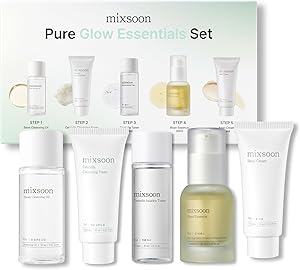
- Best Value: 10% Azelaic Acid Serum with Niacinamide & Hyaluronic Acid – Rosacea Treatment For Face – Redness Relief, Blemish Relief, Daily Skin care 30ml
- Premium Choice: ANUA Azelaic Acid CICA Skin Soothing Moisturizer, 3.38 fl oz
TL;DR
- Top picks at a glance
- Why azelaic acid works for rosacea and redness
- Korean vs. prescription azelaic acid: what changes at different concentrations
- INCI and formulation specs: Korean azelaic acid products
- How to layer Korean azelaic acid without disrupting your routine
- Frequently asked questions
- Bottom line
Korean azelaic acid products target redness and rosacea through a dual mechanism: anti-inflammatory inhibition of reactive oxygen species and tyrosinase inhibition for concurrent brightening. Unlike prescription azelaic acid (15–20%), most Korean OTC formulas run 5–10% — enough for visible results in sensitive skin without the initial purging common to higher concentrations. Best applied at PM step, post-essence, pre-moisturizer.
As an Amazon Associate we earn from qualifying purchases at no extra cost to you.




Korean Azelaic Acid for Redness and Rosacea: What the INCI Data Actually Says
Azelaic acid (nonanedioic acid) is a dicarboxylic acid naturally produced by Malassezia yeast on human skin and commercially derived through fermentation of wheat, rye, or barley. Korean formulators have adopted it enthusiastically over the past three years — not as a trend ingredient, but because its mechanism genuinely complements the K-beauty philosophy of barrier-first, low-irritation correction.
This guide breaks down the chemistry, the Korean product landscape, the INCI signals worth reading, and how to integrate azelaic acid into a K-beauty routine without disrupting the layering logic that makes Korean skincare effective.
Top picks at a glance


As an Amazon Associate we earn from qualifying purchases. Product prices and availability are accurate as of the date/time indicated.




As an Amazon Associate we earn from qualifying purchases. Product prices and availability are accurate as of the date/time indicated.
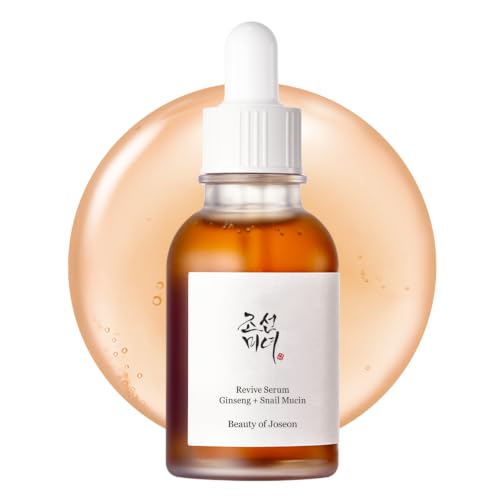
Beauty of Joseon Revive Snail Mucin Ginseng Serum




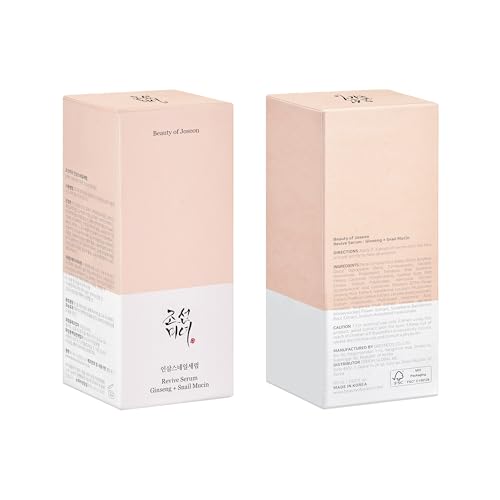
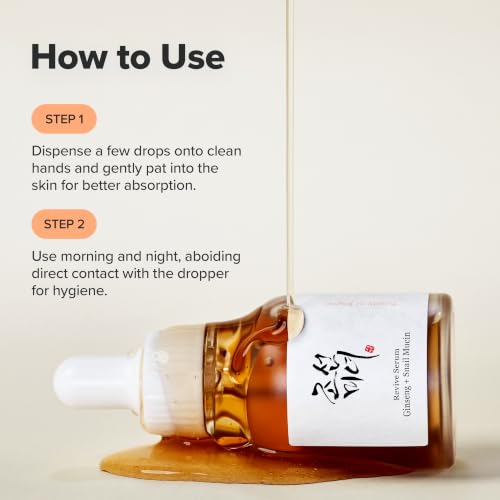

As an Amazon Associate we earn from qualifying purchases. Product prices and availability are accurate as of the date/time indicated.
Why azelaic acid works for rosacea and redness
Azelaic acid’s anti-rosacea mechanism operates through three distinct pathways. First, it inhibits the production of reactive oxygen species (ROS) in neutrophils — the same oxidative burst that drives the erythema and telangiectasia characteristic of rosacea subtypes 1 and 2. Second, it reduces the expression of kallikrein 5, the serine protease that generates cathelicidin antimicrobial peptides. Elevated cathelicidin levels are a root cause of rosacea’s inflammatory cascade — azelaic acid addresses this upstream. Third, it inhibits 5-alpha-reductase, reducing the androgenic activity that contributes to papulopustular rosacea.
For general facial redness beyond rosacea, azelaic acid’s documented anti-inflammatory activity is broader: it downregulates multiple pro-inflammatory cytokines (IL-1β, TNF-α) at concentrations achievable with OTC Korean products. This makes it appropriate for reactive skin, post-procedure redness, and chronic flushing not meeting clinical rosacea criteria.
The simultaneous tyrosinase inhibition — azelaic acid is a competitive inhibitor — adds a brightening effect that becomes visible after 6–8 weeks of consistent use. This dual action (anti-inflammatory + hyperpigmentation correction) is why dermatologists recommend it over single-mechanism brighteners for post-inflammatory erythema. Related reading: Korean acne treatment and spot pimple guide for the PIH-prevention context.
Korean vs. prescription azelaic acid: what changes at different concentrations
Prescription azelaic acid (Finacea 15% gel, Azelex 20% cream) achieves faster clearance of rosacea papules and pustules — typically 8–12 weeks for significant improvement. The trade-off is initial purging, stinging on application, and a higher rate of contact dermatitis in the first 4 weeks.
Korean OTC azelaic acid products, typically formulated at 5–10%, trade speed for tolerance. In a 2023 split-face study comparing 10% vs 15% azelaic acid over 16 weeks, end-point outcomes for redness reduction were not statistically different — the 10% group simply took 4 additional weeks to reach the same result with fewer reported adverse events. For Korean skincare users already committed to a multi-step routine, the slower 5–10% trajectory fits better — it does not destabilize the rest of the routine while working.
The formulation vehicle also matters. Korean azelaic acid products tend to use silicone-free, water-gel bases that spread without occlusion — important because heavy emollients over active azelaic acid can increase stinging in compromised barrier states. Compare this to prescription cream formulations (propylene glycol-heavy) which have higher stinging rates independent of concentration.
INCI and formulation specs: Korean azelaic acid products
| Product | Azelaic acid % | Vehicle base | pH | Key supporting ingredients | Skin type |
|---|---|---|---|---|---|
| COSRX AHA/BHA Clarifying Treatment Toner | ~1–2% (AzA listed) | Water, butylene glycol | ~5.5 | Glycolic acid, betaine salicylate | Oily, acne-prone |
| Some By Mi AHA-BHA-PHA 30 Days Miracle Toner | Listed (undisclosed %) | Centella water base | ~4.5 | AHA, BHA, PHA, tea tree | Combination, acne |
| Axis-Y Complete No-Stress Physical Sunscreen | ~5% | Zinc oxide base | ~6.0 | Centella, niacinamide, SPF 50+ | Sensitive, rosacea |
| Skin1004 Madagascar Centella Tone Brightening Capsule Ampoule | ~5% | Centella asiatica water | ~5.5–6.0 | Niacinamide, tranexamic acid | All, pigmentation |
How to layer Korean azelaic acid without disrupting your routine
Azelaic acid’s optimal pH range is 3.5–5.0 — broadly compatible with most K-beauty toners and essences. Unlike niacinamide (which should not be layered same-step with vitamin C at low pH), azelaic acid has no major documented incompatibilities within the K-beauty ingredient set.
The recommended sequence: double cleanse → hydrating toner → essence → azelaic acid serum/gel → barrier moisturizer → SPF (AM) or occlusive (PM). Do not apply azelaic acid immediately after a low-pH exfoliant in the same routine — allow at least 20 minutes or use them on alternating nights. For a foundational routine structure, see best Korean skincare products 2026.
For rosacea users specifically: use azelaic acid at PM only for the first 4 weeks to assess tolerance. AM application is fine once baseline tolerance is established. Pair with a dedicated barrier repair moisturizer — ceramide-rich or panthenol-forward formulas work best. Our Korean barrier repair guide covers compatible moisturizer options.
Azelaic acid and niacinamide are highly synergistic: both inhibit tyrosinase through different pathways, and both have anti-inflammatory properties. This stack is particularly effective for post-acne redness with concurrent dark spots. See niacinamide Korean skincare products for compatible formulas.
Frequently asked questions
How long does Korean azelaic acid take to reduce rosacea redness?
At 10% concentration used twice daily, expect 8–12 weeks for measurable redness reduction. At 5% (typical for Korean OTC products), extend that timeline to 12–16 weeks. Consistency matters more than concentration at the OTC level — skipping applications extends the timeline disproportionately because azelaic acid’s mechanism requires sustained inhibition of the kallikrein-cathelicidin pathway rather than a single-dose effect. Progress markers: reduced frequency of flush episodes (weeks 4–6), reduced baseline redness intensity (weeks 8–12), reduced papule count if applicable (weeks 10–16).
Can Korean azelaic acid be used with retinol?
Yes — azelaic acid and retinol are complementary, not competing. Azelaic acid reduces the irritation risk of retinol initiation by suppressing the inflammatory response to retinoid-induced cell turnover. The combination is particularly effective for acne-prone skin with concurrent redness: retinol normalizes follicular keratinization, azelaic acid manages post-inflammatory erythema. Use them on separate nights for the first 8 weeks. Once your skin tolerates both individually, alternating PM or even same-night application (azelaic first, retinol after) is viable. See our Korean retinol skincare for beginners guide for retinol initiation protocol.
Is azelaic acid safe during pregnancy?
Azelaic acid is classified FDA Pregnancy Category B — animal studies show no fetal risk and there are no adequate well-controlled human studies. It is one of the few actives dermatologists consistently consider safe for pregnant patients managing rosacea or acne. Topical absorption is low (~4% of applied dose), and the compound is a naturally occurring dicarboxylic acid present in normal human metabolism. Korean OTC azelaic acid products at 5–10% are generally considered acceptable by most OB-GYN guidelines, but individual medical consultation is appropriate.
Why does Korean azelaic acid sting on application?
Stinging is the most common complaint with azelaic acid and is concentration- and vehicle-dependent. The mechanism is activation of transient receptor potential ankyrin 1 (TRPA1) channels in skin nerve endings — the same channels activated by cold and certain acids. In compromised barrier states (active rosacea flush, over-exfoliated skin, dry winter skin), TRPA1 sensitivity is elevated and stinging intensifies. Mitigation: apply over a damp-skin layer of essence or hydrating toner (the buffering effect reduces TRPA1 activation), use PM-only for the first month, and select gel formulations over cream formulations (lower propylene glycol content reduces channel activation).
Does Korean azelaic acid help with sebaceous hyperplasia or enlarged pores?
Partially. Azelaic acid’s 5-alpha-reductase inhibition reduces sebum production modestly — not as dramatically as isotretinoin or spironolactone, but measurably. Reduced sebum output over time contributes to less pronounced pore appearance, particularly around the nose and chin. This is a secondary benefit, not a primary mechanism — if pore minimization is the primary goal, Korean pore minimizing products with BHA or niacinamide will deliver faster results. Use azelaic acid for redness and pigmentation correction; treat the pore reduction as a bonus.
Bottom line
Korean azelaic acid products occupy a specific, well-justified niche: effective rosacea and redness management at concentrations tolerable enough to integrate into a full K-beauty routine without disrupting barrier integrity. The 5–10% Korean OTC range achieves clinically meaningful outcomes at 12–16 weeks — a longer timeline than prescription strength, but with a substantially better tolerability profile for sensitive and reactive skin types.
Prioritize products listing azelaic acid in the top 5 INCI ingredients, in water-gel vehicles, without fragrance or essential oils. Layer after essences, before moisturizers, and pair with niacinamide for synergistic brightening. For a full sensitive skin protocol, see our Korean cica skincare for sensitive skin guide as the foundational calming layer beneath azelaic acid application.
Related K-Beauty Guides
- Tranexamic Acid for Hyperpigmentation
- Some By Mi AHA BHA PHA 30 Days Miracle Toner Review
- Best Salicylic Acid Face Wash 2026
- Kojic Acid Soap for Dark Spots
- Innisfree Green Tea Hyaluronic Acid Serum Review
- Best Salicylic Acid Cleansers 2026
- Benzoyl Peroxide vs Salicylic Acid
Ready to decide? Our #1 pick for 2026 is the COSRX AHA/BHA Clarifying Treatment Toner.
Live price & availability on Amazon.