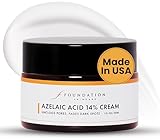
- Top Pick: Foundation Skincare Azelaic Acid for Face 14% (1 Fl Oz) – Dermatologist Formula for Uneven and Blemish-Prone Skin – Azalecic Acid Cream Supports Balanced Tone & Smooth Texture for Men & Women
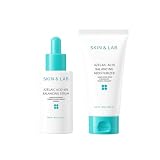
- Best Value: SKIN&LAB Azelaic Acid Skincare Bundle – Azelaic Acid 10% Balancing Serum (30ml) + Azelaic Acid Balancing Moisturizer (100ml) | Hydrating & Soothing Korean Skin Care Set for Sensitive, Acne-Prone Skin
- Premium Choice: AziMD Skincare Azelaic10 | Azelaic Acid 10% Serum with Arbutin and Hyaluronic Acid
Last updated: October 4, 2026
As an Amazon Associate we earn from qualifying purchases at no extra cost to you.


📣 Disclosure: This post contains Amazon affiliate links. We may earn a small commission at no extra cost to you. Learn more.
Azelaic Acid Benefits for Skin: The Underrated Multi-Tasker Dermatologists Love
Azelaic acid is one of skincare’s most underrated ingredients. While niacinamide and salicylic acid get the spotlight, azelaic acid quietly delivers a combination of benefits that no other single ingredient matches: it clears acne, calms rosacea, fades hyperpigmentation, and does it all with a gentleness that makes it safe during pregnancy. If your skin has multiple overlapping concerns — breakouts alongside redness, or dark spots alongside sensitivity — azelaic acid may be the one ingredient that addresses all of them simultaneously.
What Is Azelaic Acid?
Azelaic acid is a dicarboxylic acid naturally produced by Malassezia furfur, a yeast that lives on healthy skin, and also found in grains like wheat, rye, and barley. At low concentrations (10–20% in prescription formulas; 10% in OTC products), it functions as a multi-mechanism active with three distinct modes of action:
- Antimicrobial: Inhibits the growth of Cutibacterium acnes (acne bacteria) and Staphylococcus epidermidis — without creating antibiotic resistance
- Tyrosinase inhibitor: Blocks melanin synthesis, similar to kojic acid and arbutin but with a gentler profile — fading PIH, melasma, and uneven tone
- Keratolytic: Normalizes keratinization in follicles, preventing the dead-cell buildup that leads to comedones
The result is an ingredient that simultaneously treats acne at its source, prevents clogged pores, and fades the marks left behind — all without the barrier disruption of stronger acids or retinol.
Azelaic Acid Benefits at a Glance
| Skin Concern | How Azelaic Acid Helps | Timeline |
|---|---|---|
| Acne (inflammatory) | Kills C. acnes bacteria, reduces inflammation | 4–8 weeks |
| Acne (comedonal) | Normalizes follicle keratinization, prevents clogs | 6–8 weeks |
| Post-acne PIH | Tyrosinase inhibition fades dark marks | 8–12 weeks |
| Rosacea / redness | Anti-inflammatory; reduces flushing and papulopustular rosacea | 4–6 weeks |
| Melasma | Melanin inhibition; often combined with tretinoin for stubborn cases | 12–16 weeks |
| Sensitive, reactive skin | Anti-inflammatory action calms chronic low-grade inflammation | 2–4 weeks |
Best Azelaic Acid Products
1. The Ordinary Azelaic Acid Suspension 10%
The most accessible entry point into azelaic acid skincare. The Ordinary’s 10% suspension delivers a meaningful OTC concentration in a silicone-based formula that blends smoothly but may pill under makeup for some users. The texture is a white cream-gel that spreads evenly — apply to clean, dry skin before moisturizer. Best used PM to avoid any potential pilling interaction with SPF.
- 10% azelaic acid — maximum OTC concentration
- Silicone-based suspension; smooth application
- May pill under makeup — use PM or as a standalone
- Best-value azelaic acid option available
Rating: 4.4/5
2. Paula’s Choice 10% Azelaic Acid Booster
Paula’s Choice formulates their azelaic acid in a silky gel-cream base that layers beautifully under moisturizer and SPF without pilling — a major advantage over The Ordinary’s silicone suspension for daytime users. The formula adds salicylic acid and licorice root extract for complementary pore-clearing and brightening action, making this a more comprehensive multi-benefit booster. Fragrance-free, non-comedogenic.
- 10% azelaic acid + 0.5% salicylic acid + licorice root
- Gel-cream base — layers well under SPF, no pilling
- AM and PM use friendly
- Fragrance-free; non-comedogenic
Rating: 4.7/5
3. Naturium Azelaic Acid Emulsion 10%
Naturium’s emulsion format is the most skin-feel-friendly azelaic acid product in this roundup — it applies like a lightweight lotion, blends in immediately, and layers perfectly under any moisturizer or SPF. The addition of hyaluronic acid and niacinamide creates a synergistic brightening and barrier-support effect. A strong choice for those who found The Ordinary’s suspension too thick or prone to pilling.
- 10% azelaic acid + hyaluronic acid + niacinamide
- Emulsion format — lightest texture in this roundup
- No pilling under makeup or SPF
- Mid-range pricing with premium-quality formulation
Rating: 4.6/5
How to Use Azelaic Acid in Your Routine
- Start 2–3×/week: Even at 10%, azelaic acid can cause initial tingling or mild redness. Introduce slowly and build to daily use over 2–3 weeks.
- Apply after toner, before moisturizer: Azelaic acid goes in the serum/treatment step — after hydrating toner, before heavier creams.
- AM or PM: Unlike retinol, azelaic acid is not photosensitizing and can be used morning or evening. If pilling is a concern, PM use is safer.
- Do not layer directly with strong AHAs: On nights you use a glycolic or lactic acid toner, skip azelaic acid — the combination can over-irritate. On BHA nights, azelaic acid after the BHA has absorbed (15+ minutes later) is generally well-tolerated.
- Be patient: Rosacea and inflammation improvements appear in 4–6 weeks; hyperpigmentation fading takes 8–12 weeks of consistent use.
Azelaic Acid vs Niacinamide vs Kojic Acid: Brightening Comparison
| Ingredient | Brightening Strength | Also Treats | Irritation Risk |
|---|---|---|---|
| Azelaic Acid (10%) | Moderate-strong | Acne, rosacea, pores | Low (initial tingle) |
| Niacinamide (5–10%) | Moderate | Pores, acne, barrier | Very low |
| Kojic Acid (1–2%) | Moderate | Brightening only | Low-moderate |
| Alpha-Arbutin (2%) | Moderate | Brightening only | Very low |
| Vitamin C (15–20%) | Strong | Antioxidant protection | Moderate (at high %) |
Frequently Asked Questions
Q: Is azelaic acid safe during pregnancy?
A: Yes — azelaic acid is one of the very few acne and brightening ingredients considered safe during pregnancy (Pregnancy Category B). It is one of the few treatments obstetricians actively recommend for pregnant women dealing with acne or melasma, as alternatives like retinol and high-concentration salicylic acid are not recommended. Always confirm with your OB-GYN.
Q: Can azelaic acid and niacinamide be used together?
A: Yes — they are complementary brighteners with different mechanisms and can be used in the same routine. Apply niacinamide serum first, let it absorb, then apply azelaic acid treatment. The combination produces a synergistic brightening effect that outperforms either ingredient alone.
Q: How does azelaic acid compare to prescription treatments for rosacea?
A: Prescription azelaic acid (Finacea 15%, Azelex 20%) is a first-line treatment for papulopustular rosacea recommended by dermatologists. OTC 10% versions are gentler but still clinically meaningful. For mild-moderate rosacea, OTC 10% azelaic acid used consistently is a legitimate treatment option. Severe or vascular rosacea requires a dermatologist assessment.
Q: Why does azelaic acid tingle when applied?
A: Initial tingling is a normal and common reaction — it does not mean your skin is being damaged. The sensation typically decreases significantly after 1–2 weeks of regular use as skin adapts. If tingling progresses to burning, stinging that does not resolve, or visible redness lasting more than 30 minutes, discontinue and consult a dermatologist.
Ready to decide? Our #1 pick for 2026 is the Acne (inflammatory).
Live price & availability on Amazon.