TL;DR
Korean barrier repair products work by restoring the skin’s NMF (natural moisturizing factor), lipid bilayer structure, and tight junction integrity — the three components that fail in damaged skin. The most effective Korean barrier repair formulas combine ceramides (types 1, 3, 6-II), cholesterol, free fatty acids, and panthenol in physiologic ratios that match the stratum corneum’s native lipid composition. Stripped or over-exfoliated skin recovers fastest when all three lipid classes are present together — single-ingredient occlusives delay full recovery.
As an Amazon Associate we earn from qualifying purchases at no extra cost to you.


Korean Barrier Repair for Damaged Skin: An INCI-Backed Recovery Protocol
Barrier damage is the most common self-inflicted skin problem in skincare enthusiasts — caused by over-exfoliation, actives stacking without adequate moisturization, fragrance sensitivity, surfactant overload from cleansers, and environmental stripping. The symptoms are recognizable: stinging from previously well-tolerated products, tightness after cleansing, small bumps that are not acne, persistent redness that predates any new product, and sensitivity to temperature changes.
Korean skincare philosophy has always prioritized barrier health above corrective actives — the “7-skin method,” the double cleanse’s oil-first step, and the prevalence of panthenol and centella in even basic toners all reflect this upstream focus. This guide covers the science of barrier repair, the Korean products that do it most effectively by INCI analysis, and the recovery protocol to follow when your barrier is already compromised.
🛒 Best Price Today on Amazon
Prime members get fast, free shipping on everything above, plus member-only deals. New members get a 30-day free trial — cancel anytime.
Start 30-Day Prime Free Trial →See Today’s Amazon DealsTop picks at a glance


As an Amazon Associate we earn from qualifying purchases. Product prices and availability are accurate as of the date/time indicated.




As an Amazon Associate we earn from qualifying purchases. Product prices and availability are accurate as of the date/time indicated.
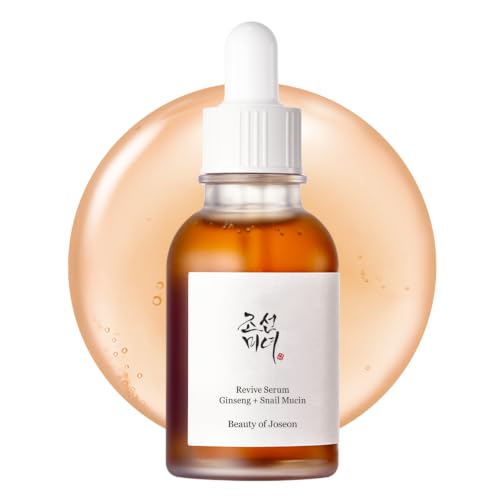
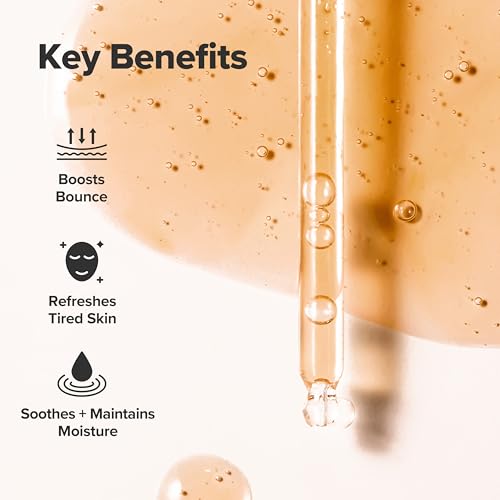
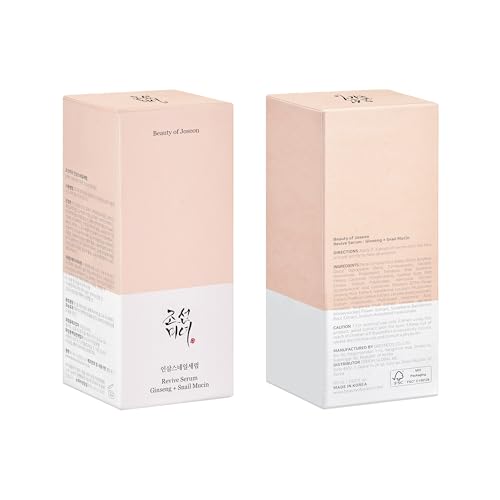
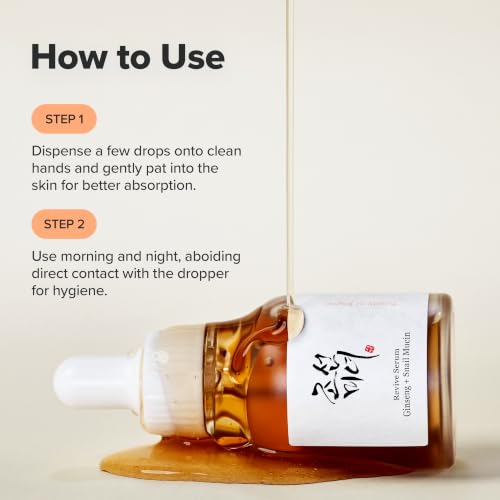
Beauty of Joseon Revive Snail Mucin Ginseng Serum





As an Amazon Associate we earn from qualifying purchases. Product prices and availability are accurate as of the date/time indicated.
The three components of a damaged skin barrier
The skin barrier is not a single layer — it is three interdependent systems that must all function for the barrier to be intact:
- The lipid bilayer — intercellular lamellar bodies filled with ceramides, cholesterol, and free fatty acids in a 1:1:1 molar ratio. Disruption causes transepidermal water loss (TEWL) and allows irritant penetration.
- Tight junctions — claudin and occludin proteins that form the second barrier layer below the lipid matrix. AHA over-exfoliation directly degrades claudin-1, explaining why over-exfoliated skin “leaks” even when the surface appears intact.
- Natural moisturizing factor (NMF) — the hygroscopic mixture of amino acids, lactic acid, urocanic acid, and PCA (pyrrolidone carboxylic acid) derived from filaggrin breakdown. Dehumidified environments, harsh surfactants, and UV all deplete NMF faster than it can be replaced.
Effective Korean barrier repair addresses all three. Products that only address one — for example, a pure occlusive like petrolatum that prevents TEWL but does not replace ceramides or restore NMF — delay full recovery. The clinically fastest recovery protocol delivers ceramides + cholesterol + fatty acids + NMF components (amino acids, lactic acid, urea or sodium PCA) simultaneously.
Reading ceramide content on Korean INCI lists
Ceramides are classified by the International Nomenclature of Cosmetic Ingredients (INCI) as:
- Ceramide NP (formerly Ceramide 3) — the most abundant ceramide in the stratum corneum; primary barrier function
- Ceramide AP (formerly Ceramide 6-II) — anti-aging and barrier synergy with NP
- Ceramide EOP (formerly Ceramide 1) — the “linker” ceramide that holds lamellar body structure together
- Ceramide NS, AS, EOS — secondary ceramide subtypes with supporting barrier roles
Products listing only one ceramide type are less effective than products with 2–3 types because the repair of the lamellar structure requires all three primary ceramides working together. CeraVe popularized the multi-ceramide formula in the West; Korean brands like Round Lab, Torriden, and Dr. Jart have developed equivalent or superior multi-ceramide formulas at K-beauty price points.
INCI comparison: Korean barrier repair products
| Product | Ceramide types | NMF components | Additional repair actives | Best for |
|---|---|---|---|---|
| Dr. Jart+ Cicapair Tiger Grass Cream | Ceramide NP | Panthenol, sodium PCA | Centella asiatica, madecassoside | Redness + barrier |
| Round Lab 1025 Dokdo Toner | Ceramide NP, AP | Urea, sodium hyaluronate | Mugwort extract, volcanic water | Dry, tight skin |
| Torriden Dive-In Low Molecular HA Serum | None (HA focus) | Sodium hyaluronate, HA | Panthenol, allantoin | Dehydrated barrier |
| COSRX Balancing Water Gel Moisturizer | Ceramide NP | Panthenol, amino acids | Beta-glucan, snail secretion | Oily-damaged skin |
| Skin1004 Madagascar Centella Ampoule | None (centella focus) | Panthenol | Centella asiatica 100%, madecassoside | Inflamed barrier |
The Korean barrier recovery protocol
When the barrier is actively damaged (stinging, reactive, tight), the K-beauty approach prescribes a temporary “skin fasting” (skin diet) protocol — stripping the routine down to essentials and rebuilding from a stabilized baseline:
Phase 1 — Barrier Halt (Days 1–7): Eliminate all actives. Cleanser + moisturizer + SPF only. Use a low-surfactant cleanser (amino acid-based: sodium cocoyl glutamate, sodium lauroyl methyl isethionate) — avoid SLS/SLES entirely. Moisturizer: ceramide NP/AP + cholesterol + fatty acids + panthenol. No toners, no essences, no treatments.
Phase 2 — Barrier Restore (Days 8–21): Add one hydrating layer (hyaluronic acid serum or fermented essence — fragrance-free only). Continue ceramide moisturizer. Introduce centella asiatica or madecassoside for tight junction repair — centella’s asiaticoside fraction specifically upregulates claudin-1 and occludin expression. See our Korean cica skincare for sensitive skin guide for centella product selection.
Phase 3 — Gradual Reintroduction (Day 22+): Reintroduce actives one at a time, 2 weeks apart. Start with the gentlest — PHA or low-concentration niacinamide. Assess barrier response before adding the next active. AHA, retinol, and vitamin C are the last actives to reintroduce. For PHA exfoliant selection during this phase, see our Korean PHA exfoliant guide.
Winter is the highest-risk season for barrier damage due to low ambient humidity and indoor heating — specific winter routine adjustments at Korean skincare winter dry skin guide.
Key barrier-repair ingredients and their INCI names
| Ingredient | INCI name | Mechanism | Use concentration |
|---|---|---|---|
| Panthenol (Vitamin B5) | Panthenol | Pro-vitamin → pantothenic acid; stimulates fibroblast proliferation, restores NMF | 0.5–5% |
| Ceramide NP | Ceramide NP | Lamellar body lipid replacement | 0.05–1% |
| Centella asiatica | Centella Asiatica Extract / Asiaticoside | Tight junction protein upregulation; collagen synthesis | 0.1–70%+ |
| Sodium hyaluronate | Sodium Hyaluronate | NMF humectant replacement; holds 1000x its weight in water | 0.1–2% |
| Allantoin | Allantoin | Keratolytic at high %, soothing at low %; accelerates epithelial regeneration | 0.1–2% |
| Beta-glucan | Beta-Glucan | Activates Langerhans cells; accelerates wound healing; films over barrier gaps | 0.1–1% |
For a deeper dive into panthenol — one of the most underappreciated barrier repair actives — see our dedicated panthenol vitamin B5 Korean skincare guide.
Frequently asked questions
How do I know if my skin barrier is damaged?
The five diagnostic signs of barrier damage, in order of severity: (1) stinging or burning from products that previously caused no reaction — especially toners, essences, and gentle moisturizers; (2) persistent tightness after cleansing that does not resolve with moisturizer application; (3) small flat bumps (milia-like) around the cheeks and under-eye area that are not inflammatory acne; (4) increased reactivity to temperature, wind, and water hardness; (5) visible surface flaking and rough texture despite adequate moisturizer application. If 3 or more of these are present simultaneously, barrier compromise is the most likely root cause. Dermatologist confirmation is valuable if symptoms persist beyond 4 weeks of the barrier recovery protocol.
Can Korean snail mucin repair a damaged barrier?
Yes — snail secretion filtrate is one of the most well-documented barrier-repair actives in Korean skincare. The mucin complex contains allantoin (epithelial regeneration), glycolic acid (gentle surface exfoliation at low concentrations in mucin’s native pH), glycoproteins (wound healing), and copper peptides (collagen and elastin synthesis). COSRX Advanced Snail 96 Mucin Power Essence is particularly effective for damaged barrier recovery because it combines the humectant and regenerative properties of mucin with the absence of fragrance, essential oils, or other common irritants. See our snail mucin layering routine guide for how to incorporate it during Phase 2 of barrier recovery.
How long does it take to repair a damaged skin barrier?
Barrier repair timeline depends on damage severity and consistency of the recovery protocol. Mild disruption (1–2 weeks of over-exfoliation): 1–2 weeks of ceramide-focused moisturization restores baseline tolerance. Moderate disruption (month-long actives stacking without adequate moisturization): 4–6 weeks on the three-phase protocol. Severe disruption (post-allergic reaction, prolonged exposure to harsh surfactants, extended over-exfoliation): 8–12 weeks, and dermatologist involvement may be appropriate. The skin’s keratinocyte turnover cycle is 28 days — one full cycle is the minimum for meaningful lamellar body reconstruction. Measurable TEWL reduction is typically seen at 2 weeks of consistent ceramide application.
Is slugging (Vaseline as final step) effective for Korean barrier repair?
Slugging — applying petrolatum as an overnight final occlusive — is effective for TEWL prevention but not sufficient as a standalone barrier repair strategy. Petrolatum does not replace ceramides, cholesterol, or fatty acids in the lamellar structure; it forms an external film that reduces water loss while the skin attempts to synthesize its own lipids underneath. The Korean approach to slugging uses it as a final PM step above a ceramide moisturizer — petrolatum locks in the lipid replacement actives applied underneath rather than replacing them. Apply in this order: treatment serum → ceramide moisturizer → thin petrolatum layer (or a K-beauty occlusive like Laneige Lip Sleeping Mask repurposed as face-slugging). Used this way, slugging accelerates barrier repair; used alone, it manages symptoms without addressing cause.
Which Korean moisturizer has the highest ceramide content?
By INCI position and disclosed formulation: Dr. Jart+ Ceramidin Cream and Round Lab Birch Juice Moisturizing Cream consistently place ceramide NP and AP in top 7 positions, above preservatives. Torriden Dive-In Rich Cream uses a ceramide-lipid complex that approximates physiologic ratios. For over-the-counter benchmarking, the standard is CeraVe’s ceramide complex — Korean equivalents match it at comparable or lower price points. When comparing Korean ceramide moisturizers, look for: (a) multiple ceramide types listed (not just Ceramide NP alone), (b) cholesterol present on the INCI list, (c) at least one free fatty acid (palmitic acid, stearic acid, or linoleic acid). This triple combination is the clinically validated formula for lamellar body repair. For comprehensive moisturizer comparisons, see our best Korean moisturizer 2026 guide.
Bottom line
Korean barrier repair philosophy is correct: fix the barrier first, then treat. Products with ceramides NP + AP + EOP, cholesterol, fatty acids, and panthenol in fragrance-free vehicles are the fastest path to barrier restoration. The three-phase recovery protocol — halt, restore, reintroduce — prevents the cycle of damage and repair that traps many skincare users. Centella asiatica and snail mucin are the Korean-specific additions that outperform comparable Western barrier products at equivalent price points.
Prevent future barrier damage with regular barrier assessment: if new products sting, patch test before full-face application. For full routine architecture from a barrier-first perspective, see best Korean skincare products 2026 and the Korean double cleansing method — cleansing is where most barrier damage begins.
Related K-Beauty Guides
- Skincare Routine for Beginners: The Complete Step-by-Step Guide
- Best Sunscreen Reapplication Sprays: On-the-Go UV Protection Refresh
- Best Face Steamers for Skincare: Deep Cleanse and Hydrate Your Skin
- Best Derma Rollers for Microneedling: Stimulate Collagen at Home
- Best Face Massage Rollers: Sculpt, Depuff, and Boost Glow
- Best Jade Rollers for Face: Cooling, Depuffing, and Skin-Boosting Benefits
- Best Gua Sha Face Tools: Ancient Ritual for Modern Skin Benefits
Ready to decide? Our #1 pick for 2026 is the Dr. Jart+ Cicapair Tiger Grass Cream.
Live price & availability on Amazon.