Last updated: September 26, 2026
For people with rosacea, the sun is often the number-one flare trigger. In surveys run by the National Rosacea Society, sun exposure regularly tops the list, ahead of heat, stress, alcohol and spicy food. That makes daily sunscreen one of the most useful things you can do, and also one of the most frustrating, because the wrong formula stings, burns or turns the cheeks redder within minutes. This guide explains why some sunscreens trigger rosacea skin, which features tend to be tolerated, and a shortlist of real products that many people with rosacea do well with.
Quick answer: For most people in 2026, the best sunscreen for rosacea is the Zinc oxide as the main or only filter — our #1 rated choice. See the full ranked comparison, alternatives and buying advice below.
Why sunscreen can sting rosacea skin
Rosacea skin has a leaky barrier and over-reactive blood vessels and nerve endings. That means ingredients most people never notice can cause burning:
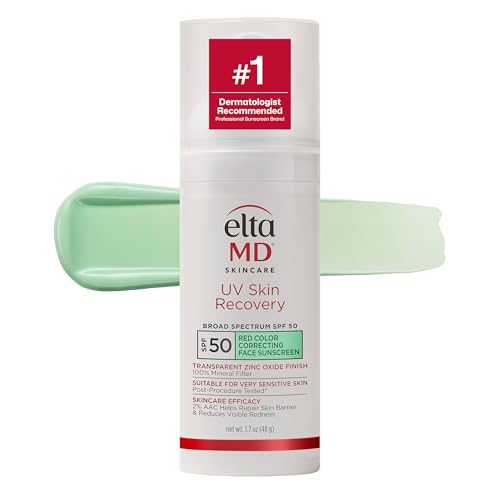
EltaMD UV Skin Recovery Green Tinted 100% Mineral Sunscreen, SPF 50, 1.7 oz
Included for 'Best Sunscreen for Rosacea' because the listing specifies SPF 50 and 1.7 oz, details this guide uses to compare options.
View on Amazon
EltaMD UV Clear Untinted Face Sunscreen with Zinc Oxide, SPF 46, 0.5 oz
Included for 'Best Sunscreen for Rosacea' because the listing specifies SPF 46 and 0.5 oz, details this guide uses to compare options.
View on Amazon
Cetaphil Redness Relieving Tinted Moisturizer, SPF 40, 1.7oz
Included for 'Best Sunscreen for Rosacea' because the listing specifies SPF 40 and 1.7oz, details this guide uses to compare options.
View on Amazon- Fragrance and essential oils, including “natural” citrus and floral extracts.
- High alcohol content, common in lightweight “dry-touch” and spray formulas.
- Some chemical filters in some people. Chemical filters absorb UV and convert it to a small amount of heat; certain users report more stinging with them, though reactions are individual.
- Heavy occlusion that traps heat, which some people with rosacea find worsens flushing.
Mineral sunscreens with zinc oxide are often the first recommendation because zinc tends to be well tolerated and even mildly calming. The trade-off is texture and white cast, particularly on medium and deep skin tones.
What to look for
| Feature | Why it helps rosacea |
|---|---|
| Zinc oxide as the main or only filter | Generally low irritation, broad UVA/UVB coverage |
| Fragrance-free | Removes one of the most common triggers |
| Green or neutral tint | Cancels visible redness and adds visible-light protection |
| Barrier ingredients (ceramides, niacinamide, glycerin) | Support the weakened skin barrier |
| SPF 30 or higher, broad spectrum | Adequate daily protection |
Real sunscreens often tolerated by rosacea skin
Prices are rough ranges and fluctuate; check the current price.
| Sunscreen | Filter | Notes | Rough price |
|---|---|---|---|
| Vanicream Facial Moisturizer SPF 30 | Zinc oxide only | Ceramides, free of fragrance and common irritants; may leave some cast on deeper skin | $15–$20 |
| EltaMD UV Physical SPF 41 | Zinc oxide + titanium dioxide, tinted | Sheer tint helps even out redness | $36–$42 |
| CeraVe Hydrating Mineral Sunscreen SPF 30 (face) | Zinc oxide + titanium dioxide | Ceramides and niacinamide; budget-friendly | $14–$19 |
| Blue Lizard Sensitive Mineral Sunscreen SPF 30 | Zinc oxide + titanium dioxide | Fragrance-free, water resistant; good for outdoor days | $12–$18 |
Everyday indoor-and-commute use
Vanicream Facial Moisturizer SPF 30 combines moisturiser and sunscreen in one step, which means less layering and less rubbing, both helpful for reactive cheeks.
If you want redness coverage
A tinted mineral formula like EltaMD UV Physical softens visible redness while protecting. Iron oxides in tinted sunscreens also block some visible light, which may matter for people whose rosacea flares with bright light.
Outdoor and exercise days
Heat is a trigger in itself, so pair a water-resistant mineral sunscreen with a wide-brimmed hat, shade, and cool water spritzes. Blue Lizard Sensitive is a practical option here.
Application tips that reduce flushing
- Apply over a light, fragrance-free moisturiser if sunscreen alone stings.
- Pat or press it on instead of rubbing; friction triggers flushing.
- Keep sunscreen in a cool place; cool product feels calmer on hot cheeks.
- Patch test on the side of the jaw for three to five days before using it all over.
- Reapply with a mineral powder or stick if you don’t want to rub lotion into irritated skin midday.
Rosacea needs a treatment plan, not just sunscreen
Sunscreen reduces one major trigger, but rosacea is a chronic condition with effective medical treatments: topical metronidazole, azelaic acid and ivermectin for bumps, topical agents that temporarily constrict vessels for redness, oral options for more severe cases, and vascular lasers for persistent redness and visible vessels. Eye symptoms such as grittiness, burning or redness can signal ocular rosacea, which should be assessed promptly. If you are pregnant, ask your clinician which rosacea treatments are appropriate. People taking photosensitising medications, including doxycycline which is sometimes prescribed for rosacea, should be especially consistent with sun protection.
FAQ
Is chemical sunscreen always bad for rosacea?
No. Many people with rosacea tolerate modern chemical sunscreens well. Mineral formulas are simply the lower-risk starting point; if one works for you, stick with it.
Why does my face get red right after applying sunscreen?
Rubbing, a fragrance or alcohol in the formula, or heat from applying it in a warm bathroom can all cause immediate flushing. If redness settles within 10 to 15 minutes, technique may be the issue; if it burns or lasts longer, change products.
Bottom line
The best sunscreen for rosacea is usually a fragrance-free mineral formula with zinc oxide, SPF 30 or higher, applied gently. Vanicream Facial Moisturizer SPF 30, EltaMD UV Physical SPF 41, CeraVe Hydrating Mineral and Blue Lizard Sensitive are well-known starting points. Pair daily sunscreen with shade, heat control and a clinician-guided treatment plan for the best long-term control.
Ready to decide? Our #1 pick for 2026 is the Zinc oxide as the main or only filter.
Live price & availability on Amazon.