Last updated: September 26, 2026
The most effective thing a cleanser can do for post-acne marks is not to fade the ones you have, but to prevent the next batch. Marks form from inflammation, so every new pimple is a potential new mark, and every irritated, stinging wash adds a little more inflammation to the mix. The right cleanser therefore depends on where you are in the cycle: still breaking out, mostly clear with lingering marks, or somewhere in between.
Match the cleanser to your stage
| Where you are | Cleanser choice | Why |
|---|---|---|
| Still getting regular breakouts | Salicylic acid or benzoyl peroxide wash, once a day | Fewer new pimples means fewer new marks |
| Occasional breakouts, many marks | Gentle cleanser daily, acid wash two or three times a week | Balances prevention with calm skin |
| Clear skin, only marks left | Gentle, fragrance-free cleanser | Let leave-on actives do the fading |
| Using a retinoid or strong prescription | Gentle, non-foaming cleanser only | Avoid stacking irritation |
Salicylic acid washes
Salicylic acid at 0.5–2% dissolves oil inside pores and can reduce blackheads and small breakouts. It is gentler than benzoyl peroxide for many people and does not bleach fabric. Options include CeraVe Renewing SA Cleanser and La Roche-Posay Effaclar Medicated Gel Cleanser, generally $10–$18; check current price. Leave it on for 30–60 seconds before rinsing for a little more effect.
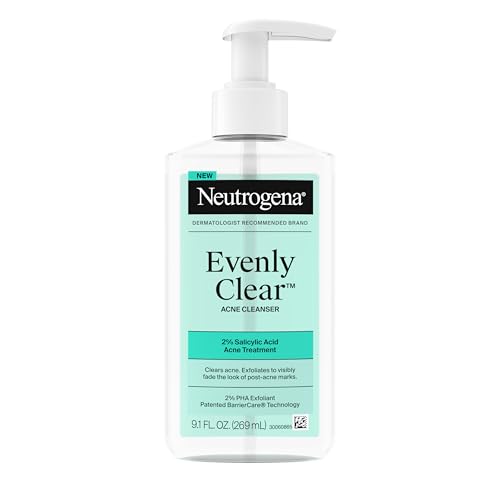
Neutrogena Evenly Clear Acne Cleanser, 9.1 fl. oz
Included for 'Best Cleanser for Post-Acne Marks: Stop New Marks While Old Ones Fade' because the listing specifies 9.1 fl. oz, details this guide uses to compare options.
View on Amazon
La Roche-Posay Mela B3 Anti Aging Face Wash, Dark Spot Corrector 6.76oz
Included for 'Best Cleanser for Post-Acne Marks: Stop New Marks While Old Ones Fade' because the listing specifies Dark Spot Corrector 6.76oz, details this guide uses to compare options.
View on Amazon
CeraVe Acne Control Cleanser, Face Wash with 2% Salicylic Acid, 8 oz
Included for 'Best Cleanser for Post-Acne Marks: Stop New Marks While Old Ones Fade' because the listing specifies Face Wash with 2% Salicylic Acid and 8 oz, details this guide uses to compare options.
View on Amazon
The Derma Co Sali-Cinamide Anti-Acne Face Wash | with 2% Salicylic Acid & 2% Niacinamide | Helps Reduce Acne & Acne Marks | Deeply Cleanses Clogged Pores | 2.71 Fl Oz/80ml
Included for 'Best Cleanser for Post-Acne Marks: Stop New Marks While Old Ones Fade' because the listing specifies with 2% Salicylic Acid & 2% Niacinamide and Helps Reduce Acne & Acne Marks, details this guide uses to compare options.
View on AmazonBenzoyl peroxide washes
Better for inflamed red pimples, which are the ones most likely to leave marks. A 4% wash used with one to two minutes of contact is usually enough on the face. On deeper skin tones in particular, irritation from benzoyl peroxide can create its own dark patches, so start slowly, use a moisturizer, and step down to every other day if you notice stinging or peeling.
AHA cleansers and marks
Glycolic and lactic acid cleansers can gently brighten the surface and are sometimes marketed for dark marks. Because they are rinsed off, their effect on pigment is modest. They are a reasonable option two or three times a week if your skin is comfortable and you are not already using acid or retinoid leave-ons. Daily use on top of other actives tends to produce irritation, which works against fading.
Red marks versus brown marks
Red or purple marks are from damaged small blood vessels; brown or grey marks are from excess pigment. For both, cleanser choice is mainly about calmness. Red marks in particular respond badly to heat and friction, so lukewarm water and no scrubbing matter. Brown marks darken with sun, so a thorough but gentle cleanse at night to remove sunscreen, followed by fresh sunscreen every morning, is the pairing that makes the biggest difference.
Washing technique that protects marks
- Use fingertips only; skip brushes, rough washcloths and scrubs.
- Wash for about 30–60 seconds, or one to two minutes for a medicated wash.
- Rinse with lukewarm water and pat dry.
- Apply leave-on treatments such as niacinamide, azelaic acid or a retinoid to dry skin afterwards.
- Resist the urge to pick at dry flakes over marks; peeling them early prolongs redness.
How long until marks fade?
With breakouts under control, daily sunscreen and a leave-on active, red marks commonly soften over three to six months and brown marks over three to twelve, longer on deeper skin tones. Photos taken monthly in the same light are the easiest way to see progress, since change is too gradual to notice in the mirror.
Cautions
If you are pregnant, ask your clinician which acne actives are suitable; retinoids are avoided, and many clinicians limit leave-on salicylic acid. If you are on isotretinoin, avoid medicated washes and use only a gentle cleanser. If you take a photosensitising antibiotic for acne, daily sunscreen is essential for mark fading. Stop any medicated wash that causes burning, swelling or hives.
Frequently asked questions
Can a cleanser remove dark marks on its own?
Not really. At best, an acid cleanser gives a slight brightening effect. Fading comes from leave-on treatments, sunscreen and time. The cleanser’s job is to keep new breakouts down without irritating the skin.
Should I switch to a gentle cleanser once my acne clears?
Often, yes. If you are no longer breaking out, a gentle cleanser lets your skin settle, and you can reintroduce a medicated wash a few times a week if the odd spot appears.
Bottom line
For post-acne marks, choose a cleanser according to your acne stage: salicylic acid or benzoyl peroxide while breakouts are active, then a gentle, fragrance-free cleanser once they calm down. Wash gently, protect with sunscreen each morning, and let leave-on treatments do the fading. The fewer new pimples and the less irritation you create, the sooner your marks disappear.