Last updated: September 27, 2026
Evening is when rosacea-prone, sensitive skin has its best chance to recover. There is no sun exposure, less temperature fluctuation and time for a barrier-friendly moisturizer to work for hours. The trap is overdoing it: trying a new serum, an exfoliating toner and a night mask all at once because the skin looks red. A good night routine for this skin type is almost boring. It cleans gently, adds at most one treatment step, and focuses on keeping the barrier intact. As with any redness concern, this is cosmetic guidance and works alongside, not instead of, dermatologist care.
What the night routine should achieve
Three outcomes matter: removing sunscreen without friction, keeping any treatment product from stinging, and waking up with skin that feels comfortable rather than tight or hot. If a step does not contribute to one of those, leave it out.
The PM routine
Step 1: Gentle sunscreen removal
If you wore mineral SPF or tinted products, use a fragrance-free cleansing balm or micellar water on a soft cotton pad with very light pressure, or a cleansing oil massaged gently for 30 seconds. Rinse with cool water.
Step 2: Mild cream cleanser (only if needed)
If your first cleanse leaves residue, follow with a non-foaming cream cleanser. Many people with sensitive skin find that one well-chosen cleanser is enough and a double cleanse is only needed after heavy makeup.
Step 3: Treatment step (one at a time)
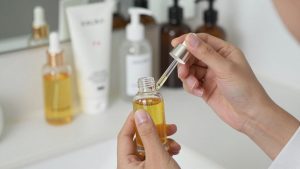
This is where prescription creams or gels go if your dermatologist has given you one; follow their instructions on timing and layering. If you are not using a prescription, a cosmetic azelaic acid product or a gentle niacinamide serum are common options for redness-prone skin. Introduce any new treatment two or three nights a week, then build up.
Step 4: Barrier-repair moisturizer
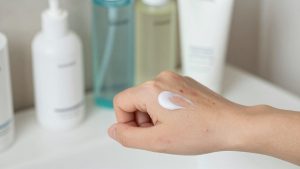
Choose a cream containing ceramides, cholesterol, fatty acids, glycerin or panthenol. Apply generously. On very dry areas, a thin layer of plain petrolatum or a simple ointment on top can reduce overnight water loss.
What to keep out of a sensitive PM routine
| Product type | Why it can cause trouble | Gentler alternative |
|---|---|---|
| Physical scrubs | Friction and micro-irritation | No exfoliation, or dermatologist-guided |
| High-strength glycolic acid | Stinging, redness | Skip, or ask about milder PHA products |
| Retinoids started aggressively | Dryness and flushing | Only with professional guidance, low and slow |
| Fragrance and essential oils | Common irritants | Fragrance-free products |
| Alcohol-heavy toners | Drying, stinging | Skip toner or use a plain hydrating one |
| Hot cloths and steaming | Heat triggers flushing | Cool water and fingertips |
How to introduce something new
Add only one product per two to three weeks. Patch test on the side of the neck or behind the ear for several evenings first. Keep a short note of what you used and how your skin looked the next morning. That simple log is often the fastest way to find a trigger, and it is very useful to bring to a dermatology appointment.
On retinoids
Retinoids are not automatically off-limits for sensitive skin, but they are one of the most common reasons redness-prone skin flares. If you want to use one, discuss it with your dermatologist, choose a low strength, buffer it over moisturizer, and start once or twice a week.
How to choose products
Look for fragrance-free, alcohol-free and short-ingredient-list moisturizers and cleansers. Texture matters: if a cream feels hot or tingly on application, it is not the right one for you, regardless of reviews. Formulas change over time, so check the current label rather than assuming an old favorite is unchanged.
Who should seek medical advice
If you have burning, swelling, bumps and pustules, thickening skin, or eye symptoms such as grittiness and redness, see a dermatologist or doctor. Stop any product that causes hives, blistering or significant swelling.
FAQ
Can I use a sleeping mask on rosacea-prone skin?
Some are fine, but many contain fragrance or high levels of actives. A generous layer of your usual fragrance-free moisturizer often does the same job with less risk.
How long before I see calmer skin with a gentler routine?
Many people notice less tightness within one to two weeks of cutting irritants. Visible redness changes more slowly and depends on triggers and medical treatment.
Bottom line
The best PM routine for sensitive, rosacea-prone skin is gentle and predictable: remove sunscreen without friction, add a single treatment step if you need one, and finish with a barrier-focused moisturizer. Introduce changes slowly, track reactions, and involve a dermatologist for persistent redness.