Last updated: September 26, 2026
People with eczema are often told to “moisturise, moisturise, moisturise,” and plant oils look like the most natural way to do it. The research is more nuanced than that. Some oils appear to support the damaged skin barrier in atopic dermatitis, while others — including one of the most commonly recommended kitchen oils — may actually weaken it. If you are considering a face oil for eczema-prone skin, the specific oil matters far more than the brand. This guide walks through what the evidence says and how to use oils without triggering a flare.
Quick answer: For most people in 2026, the best face oil for eczema is the Sunflower seed (high-linoleic) — our #1 rated choice. See the full ranked comparison, alternatives and buying advice below.
Why the choice of oil matters
Plant oils are mixtures of fatty acids. Two are especially relevant to eczema. Linoleic acid, an omega-6 fatty acid, is a building block for ceramides, the lipids that hold skin cells together; eczema skin tends to be short on them. Oleic acid, an omega-9 fatty acid, can loosen the skin’s lipid layers and increase water loss. Oils high in linoleic acid are therefore generally more barrier-friendly for eczema than oils high in oleic acid.

Mustela Stelatopia Eczema-Prone Skin Emollient Baby Face Cream - Face Moisturizer with Natural Avocado & Sunflower Oil - Fragrance-Free - 1.35 fl. oz.
Included for 'Best Face Oil for Eczema-Prone Skin: Sunflower, Squalane and the Oils to Skip' because the listing specifies Face Moisturizer with Natural Avocado & Sunflower Oil and Fragrance-Free, details this guide uses to compare options.
View on Amazon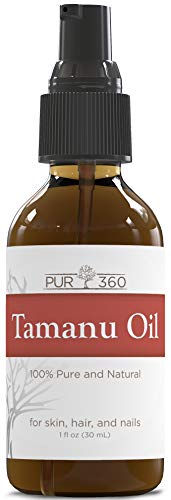
Tamanu Oil - Best Treatment for Psoriasis, Eczema, Acne Scar, Rosacea - Relief for Dry, Scaly Skin, Scalp and More - Cold Pressed – Proven 100% Pure
Included for 'Best Face Oil for Eczema-Prone Skin: Sunflower, Squalane and the Oils to Skip' because the listing specifies Best Treatment for Psoriasis and Eczema, details this guide uses to compare options.
View on Amazon
Palmer's Shea Formula Raw Shea Body Oil with Vitamin E, Deep Body Moisturizer to Soothe & Nourish Dry, Sensitive & Eczema-Prone Skin, 8.5 oz
Included for 'Best Face Oil for Eczema-Prone Skin: Sunflower, Squalane and the Oils to Skip' because the listing specifies Deep Body Moisturizer to Soothe & Nourish Dry and Sensitive & Eczema-Prone Skin, details this guide uses to compare options.
View on AmazonCommon oils compared
| Oil | Dominant fatty acid | Eczema fit | Notes |
|---|---|---|---|
| Sunflower seed (high-linoleic) | Linoleic | Good | Studied in adults and infants; supports barrier |
| Squalane | Not a fatty acid (hydrocarbon) | Good | Stable, bland, low allergy risk |
| Coconut (virgin) | Lauric | Reasonable for some | Some evidence in children; can clog facial pores |
| Olive | Oleic | Poor | Shown to weaken the barrier in a small study of adults |
| Essential oils | — | Avoid | Common allergens |
| Nut oils (peanut, almond) | Varies | Caution | Possible allergy sensitisation, especially in infants |
What an oil can do for eczema
Oils are occlusives and emollients: they slow water loss and smooth rough, scaly skin. They do not add water, and they do not treat the underlying inflammation. Think of an oil as a finishing layer over a proper eczema moisturiser, not a replacement for one. For the face, this layering usually beats using a thick ointment alone, which some people find too heavy for daytime.
Suitable options
A plain, cold-pressed, high-linoleic sunflower seed oil (roughly $8–20 for a bottle) is inexpensive and well supported. The Ordinary 100% Plant-Derived Squalane (roughly $9–15) or Biossance 100% Squalane Oil (roughly $30–40) are good if you prefer a lighter feel. For the underlying moisturiser, fragrance-free ceramide creams such as CeraVe Moisturizing Cream or Vanicream Moisturizing Cream (roughly $12–20) are frequent dermatologist suggestions. Prices move, so check the current price before buying.
How to use a face oil with eczema
- Wash with lukewarm water and a gentle, non-foaming cleanser.
- Pat skin until just damp, then apply a fragrance-free moisturiser within three minutes.
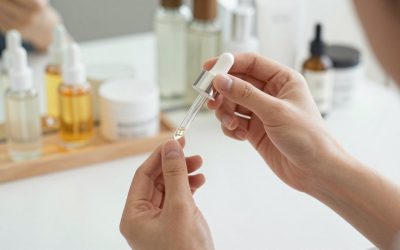
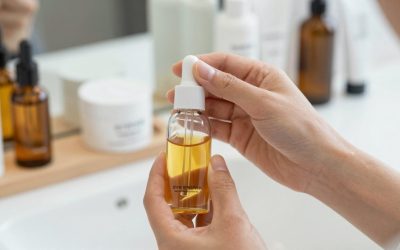
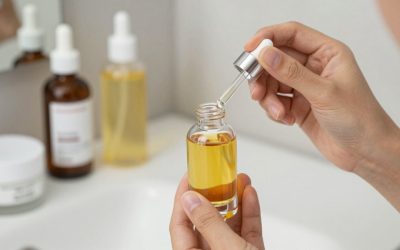
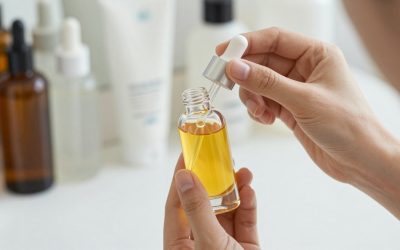
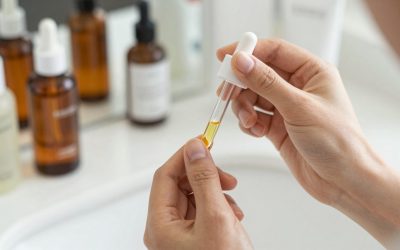
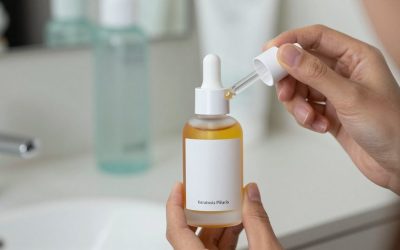
- Warm two to four drops of oil between your palms and press over dry areas.
- Use the oil mainly at night; in the morning, a thin layer is enough before sunscreen.
- Patch test any new oil on a small area for five days before using it on the whole face.
When oils are not enough
If eczema on your face is red, itchy and not settling within one to two weeks of gentle care, see a clinician. Facial eczema is often treated with short courses of mild topical steroids, calcineurin inhibitors such as tacrolimus or pimecrolimus, or newer non-steroidal creams. Moderate to severe eczema may need systemic treatment. Oils are a comfort layer alongside these, never a substitute.
Safety notes
- Babies and children: ask your paediatrician before using any oil, especially nut-based oils, on an infant with eczema.
- Infected eczema (yellow crusts, weeping, sudden worsening, fever) needs prompt medical review; do not seal it under oil.
- Eczema herpeticum — clusters of painful punched-out sores — is an emergency.
- Pregnancy: plain oils are generally considered low risk; discuss medicated treatments with your clinician.
FAQ
Is olive oil really bad for eczema?
A small study found that olive oil applied to adult skin for four weeks weakened the barrier, while sunflower oil did not. That is not proof it will harm everyone, but with better options available, most people with eczema can skip it.
Can I use coconut oil on facial eczema?
Some studies in children with eczema found benefits from virgin coconut oil. On the face, however, it can clog pores in acne-prone people, so squalane or sunflower oil is often a safer default for adults.
Bottom line
For eczema-prone facial skin, choose a single, fragrance-free oil high in linoleic acid, such as sunflower seed, or a bland option such as squalane, and layer it over a ceramide moisturiser. Avoid olive oil and essential oils, and get persistent or infected flares checked by a clinician.
Ready to decide? Our #1 pick for 2026 is the Sunflower seed (high-linoleic).
Live price & availability on Amazon.