Last updated: October 1, 2026
Hydrocolloid dots marketed for “blemishes” mostly fail on cystic acne because they’re built to pull fluid from a surface whitehead, not to penetrate a closed bump sitting 2-4mm under the skin. The patches that actually make a dent in cystic bumps are the microneedle and dissolving-core styles that deliver salicylic acid, niacinamide, or hydrocolloid-plus-centella deeper into the lesion, sized at 12mm or larger to actually cover a cyst’s full base rather than just its visible peak.
Why Standard Hydrocolloid Dots Underperform on Cysts
A cyst isn’t a pustule with a visible head. It’s an inflamed, closed node where the infection and fluid sit below the surface, often spanning 10-20mm at the base even though the visible redness looks smaller. Thin hydrocolloid patches (the 8-10mm dots sold in multi-packs) are designed to absorb surface oil and pus through contact. They do very little for a cyst because there’s nothing on the surface to absorb yet. That’s why people report “using ten patches and the bump is still there.”

TEAWOO 36-Count Microdart Pimple Patches, Hydrocolloid Acne Patches with Salicylic Acid & Madecossoside, Microdart Zit Patches for Deep Blemishes & Early Stage Acne (Patented)
Included for 'Best Acne Patches for Cystic Acne That Reach Deep Bumps' as a relevant option in this category; details come from the product listing.
View on Amazon
LivaClean 330 CT Pimple Patches for Face w/Salicylic Acid, Tea Tree Oil & Calendula Oil - Four Sizes - Pimple Patch, Hydrocolloid Patch, Acne Patches for Face
Included for 'Best Acne Patches for Cystic Acne That Reach Deep Bumps' because the listing specifies Tea Tree Oil & Calendula Oil and Four Sizes, details this guide uses to compare options.
View on Amazon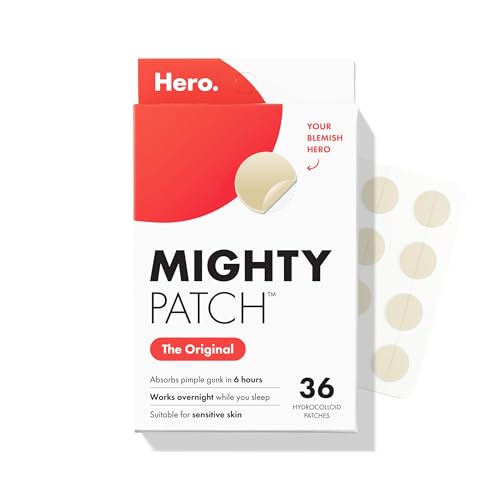
Mighty Patch Hero Cosmetics Original Nighttime Acne Pimple Patches, 36 Ct
Included for 'Best Acne Patches for Cystic Acne That Reach Deep Bumps' because the listing specifies 36 Ct, details this guide uses to compare options.
View on Amazon
Rael Miracle Invisible Spot Cover Hydrocolloid Acne Pimple Patches (96 Ct)
Included for 'Best Acne Patches for Cystic Acne That Reach Deep Bumps' as a relevant option in this category; details come from the product listing.
View on AmazonWhat actually moves the needle, according to how these products are formulated:
- Microneedle patches use dissolving needles (typically 0.3-0.5mm long) to carry salicylic acid or niacinamide a fraction of a millimeter into the skin, bypassing the surface barrier that blocks topical gels.
- Thick hydrocolloid-core patches combine a deeper adhesive gel matrix with centella asiatica or tea tree extract, meant to sit on the bump longer and reduce surface inflammation while the body resolves the underlying cyst on its own timeline.
- Oversized patches (14-18mm+) matter less for “reaching” the cyst and more for covering its full inflamed radius so the edges aren’t left exposed and irritated.
None of these patch types “pop” or drain a cyst. Cystic acne forms below the layer any topical patch can physically reach, so patches are realistically working on the surface inflammation, redness, and surrounding irritation, not the root cyst itself. For recurring or painful cysts, a dermatologist visit for a cortisone injection or prescription retinoid remains the faster fix.
What to Compare When Buying
Four specs determine whether a patch is worth it for jaw and chin cysts specifically:
- Patch diameter vs. your cyst size. Measure the raised area, not just the red dot. Most cystic jawline bumps run 10-15mm; chin cysts can run larger. A patch should extend at least 2-3mm beyond the visible edge.
- Microneedle length and density. Longer needles (0.5mm) with denser arrays theoretically deliver more active ingredient, but also sting more on inflamed skin — not ideal for an already-angry cyst.
- Flexibility and edge adhesion. Jaw and chin are high-movement zones (talking, chewing, sleeping on your side). A stiff patch edge lifts within hours there, while a thin, flexible hydrocolloid stays put.
- Overnight wear time. Look for patches rated 8+ hours of adhesion; anything under 6 hours typically peels off mid-sleep on a jawline.
Spec Comparison
| Patch Type | Typical Diameter | Active Delivery | Rated Wear Time | Best Placement |
|---|---|---|---|---|
| Standard thin hydrocolloid dot | 8-10mm | Passive absorption only | 6-8 hrs | Surface whiteheads, not cysts |
| Microneedle patch (salicylic acid core) | 10-12mm | 0.3-0.5mm needles, dissolve in 4-6 hrs | 6-8 hrs | Early-stage, smaller closed bumps |
| Thick hydrocolloid + centella/tea tree | 12-15mm | Surface gel, deeper matrix | 10-12 hrs | Established jaw/chin cysts |
| Oversized flexible hydrocolloid | 15-18mm | Surface absorption, large coverage | 10-12 hrs | Large or clustered chin cysts |
| Niacinamide microneedle patch | 10-14mm | 0.3mm needles, anti-inflammatory focus | 6-8 hrs | Red, inflamed but not yet pustular cysts |
Flexibility on the Jaw and Chin: Where Most Patches Fail
Flat skin zones like the cheek or forehead will hold almost any patch overnight. The jawline and chin are different — constant movement from talking, chewing, and side-sleeping peels thin plastic-backed patches within 2-3 hours for a lot of users. The patches that hold up share two traits: a fabric-backed or ultra-thin hydrocolloid layer that flexes with the skin, and a tapered edge rather than a hard-cut circle. A hard-edged patch catches on pillowcases and lifts at the corner first, which then lets air in and the whole patch loses adhesion within the night.
If you’re pairing a patch with makeup the next morning, the thinner microneedle styles blend under concealer better than the thick overnight hydrocolloid versions, which stay visibly raised.
How Many Nights Before Swelling Actually Drops
Based on how these actives work physiologically, timelines vary by cyst stage:
- Night 1-2: Patches mostly reduce surface redness and protect the area from picking. The underlying cyst is usually unchanged in size.
- Night 3-4: If the cyst was going to resolve on its own (many do within a week), this is typically when visible swelling starts to flatten, aided by anti-inflammatory ingredients like centella or niacinamide.
- Night 5-7: Established cysts that don’t respond by day 5 generally won’t resolve from patches alone — this is the point where dermatologists often recommend an in-office cortisone injection instead of continuing with patches.
Patches work best as support for the body’s own resolution process and for protecting the area, not as a treatment that drains or shrinks a cyst on a fixed schedule. A cyst that’s still hard, painful, and unchanged after a week of consistent nightly patching is a reasonable signal to see a dermatologist rather than buy another box.
Picking by Situation
- Small, early closed bump (under 10mm): A microneedle patch with salicylic acid is the better fit — the needle length is enough to reach a shallow lesion.
- Established jaw cyst, 12-18mm, painful to touch: A thick hydrocolloid-centella patch sized to fully cover the inflamed radius, worn overnight for up to 7 nights before reassessing.
- Chin cluster or multiple cysts close together: Oversized flexible patches (15mm+) placed to cover the group rather than multiple small dots overlapping.
- Sensitive or already-irritated skin: Skip microneedle styles (the needling itself can aggravate inflamed tissue) and use a niacinamide-based hydrocolloid instead.
- Recurring cysts in the same spot month after month: Patches are a stopgap. Recurring cystic breakouts in one location are worth discussing with a dermatologist for a longer-term treatment plan.
Common Mistakes That Waste a Patch
- Applying to wet or moisturized skin. Hydrocolloid and microneedle adhesives both need a dry surface to bond; any residual serum or cream causes early lift-off.
- Sizing down to “save” patches. A patch smaller than the cyst’s base leaves the most inflamed edge exposed and unprotected, which is the opposite of the intended effect.
- Reapplying the same patch after it turns white and swollen. That discoloration means it’s saturated and no longer absorbing — swap it for a fresh one.
- Combining with strong actives underneath. Layering retinoids or additional salicylic acid serum under a microneedle patch increases irritation risk without added benefit.
FAQ
Can a patch actually shrink a cystic bump overnight?
Not in one night. Most visible improvement in swelling and redness shows up after 3-4 consecutive nights, and that’s for cysts already trending toward resolving on their own.
Should I pop the cyst before applying a patch?
No. Cysts sit too deep to extract safely at home, and attempting to pop one typically increases inflammation and scarring risk. Patches are meant to go over an unbroken bump.
Is a bigger patch always better for cysts?
Only up to the point of covering the inflamed base with a small margin. Oversizing beyond that just adds unnecessary adhesive on healthy skin, which can irritate it.