Last updated: September 26, 2026
Combination skin makes sunscreen shopping unusually annoying. Products made for oily skin leave your cheeks tight and flaky; products made for dry skin turn your forehead and nose into an oil slick by lunchtime. And because the “wrong” sunscreen feels unpleasant, it is the one most likely to get skipped. The good news is that several formulas land in the middle ground, and a few simple application tricks let you tailor one product to two different zones on the same face.
What combination skin needs from a sunscreen
Combination skin usually means an oilier T-zone (forehead, nose, chin) with normal or dry cheeks. Its needs shift with the seasons, too: summer humidity makes the T-zone oilier, while winter heating dries out the cheeks. A good sunscreen for combination skin tends to have:
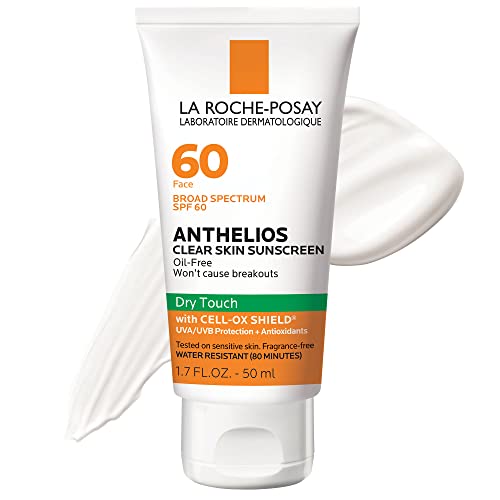
La Roche-Posay Anthelios Clear Skin Oil Free Face Sunscreen, SPF 60 1.7oz
Included for 'Best Sunscreen for Combination Skin' because the listing specifies SPF 60 1.7oz, details this guide uses to compare options.
View on Amazon
Biore UV Aqua Rich Moisturizer SPF 50 Facial Sunscreen, 1.7 fl oz
Included for 'Best Sunscreen for Combination Skin' because the listing specifies 1.7 fl oz, details this guide uses to compare options.
View on Amazon
BYOMA Sunscreen - Ultralight Face Fluid SPF 50, No White Cast
Included for 'Best Sunscreen for Combination Skin' because the listing specifies Ultralight Face Fluid SPF 50 and No White Cast, details this guide uses to compare options.
View on Amazon- A light gel, fluid or “watery” texture that hydrates without heavy oils.
- A satin or natural finish, rather than very dewy or totally matte.
- Humectants like glycerin or hyaluronic acid for the cheeks.
- Non-comedogenic labelling, since the T-zone is prone to congestion.
- Broad-spectrum SPF 30 or higher.
Real sunscreens that suit combination skin
Prices are approximate; check the current price before buying.
| Sunscreen | Texture / finish | Leans toward | Rough price |
|---|---|---|---|
| Bioré UV Aqua Rich Watery Essence SPF 50 | Watery gel, fresh finish | Normal-to-dry cheeks; fine on a mildly oily T-zone | $15–$20 |
| Beauty of Joseon Relief Sun: Rice + Probiotics SPF 50+ | Light cream, natural glow | Balanced combination skin | $15–$20 |
| Neutrogena Hydro Boost Water Gel Lotion SPF 50 | Gel lotion with hyaluronic acid | Combination-dry | $10–$15 |
| La Roche-Posay Anthelios Clear Skin Oil-Free SPF 60 | Dry-touch, oil-absorbing | Combination-oily, humid climates | $20–$28 |
Combination-dry: hydration first
If your cheeks are the bigger problem, a hydrating gel like Neutrogena Hydro Boost or Bioré UV Aqua Rich keeps them comfortable while staying light enough for the forehead. Blot the T-zone at midday if needed.
Balanced combination: the middle-ground cream
Beauty of Joseon Relief Sun is popular precisely because it sits in the middle: moisturising enough for normal cheeks, light enough not to feel heavy on the nose. Its high UVA rating is a bonus.
Combination-oily: control the shine
If the T-zone dominates, Anthelios Clear Skin’s oil-absorbing finish keeps shine down. Put a small amount of plain moisturiser on the cheeks first so they don’t feel tight under it.
Zone-application tricks
| Technique | How it works |
|---|---|
| Moisturise the cheeks only | Light moisturiser on cheeks, nothing extra on the T-zone, then sunscreen all over |
| Two sunscreens | Hydrating formula on cheeks, mattifying formula on T-zone; both must be applied at full amounts |
| Blot, don’t pile on powder | Blotting papers remove oil without disturbing sunscreen |
| Mattifying primer on the T-zone | Applied after sunscreen has set, only where you shine |
| Seasonal swap | Lighter formula in summer, more hydrating one in winter |
Whichever method you use, the whole face still needs the full amount of sunscreen, roughly a quarter teaspoon, to reach the labelled protection. Zoning is about what goes under or over the sunscreen, not about skimping on it.
Cautions
If you use a retinoid, benzoyl peroxide or acids, expect your skin’s oil-dry balance to shift, often toward drier cheeks, and adjust your sunscreen texture accordingly. Those treatments also increase sun sensitivity, so daily SPF is essential. People on isotretinoin often find that their T-zone stops being oily at all; a hydrating sunscreen usually works better during treatment. If you are pregnant, hormonal changes can alter oiliness and increase pigment sensitivity, which makes consistent broad-spectrum protection especially worthwhile; check any new actives with your clinician. If you develop persistent redness, scaling around the nose or eyebrows, or breakouts that don’t settle, it may be seborrhoeic dermatitis, rosacea or acne that deserves a clinician’s look.
FAQ
Can I skip moisturiser if I have combination skin?
Many people can, using a hydrating sunscreen as their morning moisturiser. If cheeks feel tight by midday, add a light moisturiser to those areas only.
Why does my T-zone get oilier after sunscreen?
Some formulas contain emollient oils or leave a dewy film. A satin or oil-absorbing formula, plus blotting, usually solves it. Stripping the skin with harsh cleansers can also make the T-zone produce more oil.
Bottom line
The best sunscreen for combination skin is a light, hydrating, non-comedogenic formula with a satin finish. Neutrogena Hydro Boost and Bioré UV Aqua Rich suit combination-dry skin, Beauty of Joseon Relief Sun fits balanced combination, and Anthelios Clear Skin handles an oily T-zone. Use zone tricks with moisturiser and blotting rather than skimping on sunscreen, and adjust with the seasons.