Last updated: September 26, 2026
Most people know keratosis pilaris (KP) as the rough, goosebump-like texture on the backs of the arms and thighs. On the face it usually appears as tiny rough bumps across the outer cheeks, often with a background of redness, and it is especially common in children, teenagers and people with eczema or dry skin. Because facial KP feels dry and rough, oils seem like an obvious answer. They can soften the texture, but on their own they do not remove the keratin plugs that cause the bumps. Here is how to combine an oil with the ingredients that actually smooth KP.
Quick answer: For most people in 2026, the best face oil for keratosis pilaris on the cheeks is the Lactic acid — our #1 rated choice. See the full ranked comparison, alternatives and buying advice below.
What causes KP
KP happens when keratin, a normal skin protein, builds up and forms a small plug in the opening of a hair follicle. It is genetic and harmless, tends to be worse in winter and in dry climates, and often improves in adulthood. The red-cheek variant, sometimes called keratosis pilaris rubra, adds visible redness around each bump. It is not acne, and it is not contagious.

Glytone Resurfacing Body Oil– Nourishing & moisturizing anti aging Body Oil for dry Skin & Keratosis Pilaris –5% Proactive Glycolic Acid After Shower oil for Body–Unscented, Non Toxic 4 Fl oz
Included for 'Best Face Oil for Keratosis Pilaris on the Cheeks: Oils, Acids and Limits' because the listing specifies 5% Proactive Glycolic Acid After Shower oil for Body and Unscented, details this guide uses to compare options.
View on AmazonWhat a face oil can and cannot do
An oil helps by reducing water loss and making dry skin more flexible, so the bumps feel less rough. It cannot dissolve the keratin plugs. That job belongs to keratolytic ingredients such as lactic acid, urea, salicylic acid and retinoids. The best results usually come from pairing a gentle keratolytic with a barrier-friendly moisturiser, and an oil can be part of that barrier layer.
Ingredients for facial KP
| Ingredient | Role | Typical facial strength | Notes |
|---|---|---|---|
| Lactic acid | Loosens keratin, hydrates | 5–10% | Gentler than glycolic |
| Urea | Softens and hydrates | 5–10% on face | Higher strengths for body |
| Salicylic acid | Clears follicle openings | 0.5–2% | Useful if also acne-prone |
| Retinoids | Normalise shedding | Low-strength retinol or adapalene | Start slowly; can irritate |
| Oils (squalane, jojoba, sunflower) | Barrier and softness | 2–4 drops | Supportive, not curative |
Oil choices
Light and non-irritating
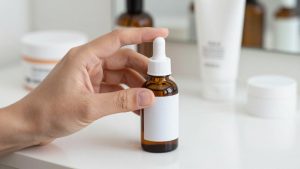
Squalane and jojoba are light, rarely irritating and blend well with moisturisers. High-linoleic sunflower seed oil has some evidence for supporting the skin barrier. Avoid fragranced blends and essential oils; KP skin is often dry and sensitive. The Ordinary 100% Plant-Derived Squalane (roughly $9–15) or a plain cold-pressed jojoba oil (roughly $8–20) are easy starting points. Check the current price, as these change.
Pair with a gentle acid
The Ordinary Lactic Acid 5% + HA (roughly $8–12) is a mild option to use two or three nights a week on the cheeks, followed by moisturiser and a few drops of oil. For KP on the arms, body products like CeraVe SA Smoothing Cream (salicylic acid) or urea lotions work well but are usually too strong for the face.
A simple facial KP routine
- Evening (2–3 nights a week): gentle cleanser, lactic acid serum, wait five minutes, fragrance-free moisturiser, two to three drops of oil.
- Other evenings: cleanser, moisturiser, oil.
- Morning: cleanser or water rinse, light moisturiser, SPF 30+.
Avoid scrubs, brushes and picking. Friction worsens the redness and can leave marks. Expect gradual improvement over 6–12 weeks, not overnight.
Safety notes
- Children: facial KP is common in kids. Use plain, fragrance-free moisturisers; ask a paediatrician or dermatologist before using acids or retinoids on a child.
- Pregnancy: skip retinoids; lactic acid and plain oils are generally considered acceptable, but confirm with your clinician.
- Isotretinoin: avoid acids and retinoids on top of it.
- Eczema flares or broken skin: pause acids until the skin has healed.
- If the “KP” is itchy, scaly in patches or spreading, see a clinician; other conditions can look similar.
Winter vs summer adjustments
Facial KP usually worsens when indoor heating drops humidity below about 40%. In winter, add an extra drop or two of oil at night and consider a humidifier in the bedroom. In summer, many people can cut the oil to every other night and rely on a lighter lotion, since sweat and humidity keep the skin more supple. Sunscreen still matters in both seasons, because lactic acid and retinoids make the skin more sun-sensitive.
FAQ
Can coconut oil help facial KP?
It may soften the skin, but it is heavier and more likely to clog pores on the face than squalane or jojoba. If you are also prone to acne, choose a lighter oil.
Will KP on my face go away permanently?
Many people see it fade in their 20s and 30s, but it can come back in dry seasons. Ongoing gentle care keeps it under control.
Bottom line
For keratosis pilaris on the face, a light, fragrance-free oil is a helpful comfort layer, but the smoothing comes from gentle keratolytics like lactic acid or urea used a few nights a week. Skip scrubs, be patient for two to three months, and keep children’s routines simple.
Ready to decide? Our #1 pick for 2026 is the Lactic acid.
Live price & availability on Amazon.