- Top Pick: GIVITASOT Clear Airless Pump Bottles, Vacuum Travel Cosmetic Containers
- Best Value: TSA Approved Travel Bottles Set for Toiletries Travel Size Containers Kit 4 Pack Portable Leak Proof Refillable Squeeze Cosmetic Airplane Essential Shampoo Hair Conditioner Body Lotion Bath Shower Gel
- Premium Choice: LONGWAY 3pcs Empty Refillable Airless Pump Bottle,Travel Foundation Containers,Airless Cosmetic Pump Bottle for Hand Sanitizer, Toner,Gel,Hair Oil, Lotion and Face Cream (1oz/30ml, Frosted)
Last updated: October 4, 2026
The Short Answer
For most trips, a 1-ounce (30 ml) cleanser bottle is the best choice. It holds enough face wash for roughly one to two weeks when used once or twice daily, while taking up very little room in a toiletry bag. If you are traveling for a weekend, a 0.5-ounce (15 ml) bottle may be enough. For longer vacations, family travel, or a cleanser with a thick formula, choose a 2-ounce (60 ml) bottle.
Air travel has an important limit: liquids, gels, and creams in carry-on luggage generally need to be in containers no larger than 3.4 fluid ounces (100 ml) and fit inside a single clear, quart-size bag. A cleanser bottle can be smaller than this limit, but it cannot exceed it merely because the bottle is partly empty.
As an Amazon Associate we earn from qualifying purchases at no extra cost to you.

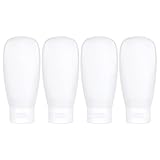


For everyday packing, look for a compact, leak-resistant bottle with a wide enough opening for your cleanser. Airless pump containers are useful for lotions and thicker face products because they reduce mess and help dispense small amounts. Refillable silicone squeeze bottles are convenient when you want to squeeze out nearly every drop.
Standard Sizes
The listed capacity is more important than the outside measurement, but both affect how easily a bottle fits in your toiletry kit. Dimensions vary by brand, cap style, and whether the container is round, oval, or rectangular. The measurements below are practical size ranges for common refillable cleanser bottles rather than a guarantee for every model.
| Capacity | Approximate dimensions | Approximate weight when empty | Best for |
|---|---|---|---|
| 0.5 oz / 15 ml | 1.6–2.2 in tall × 1.0–1.3 in wide (4.1–5.6 × 2.5–3.3 cm) | 0.3–0.6 oz (9–17 g) | Overnight trips, samples, or very short weekends |
| 1 oz / 30 ml | 2.2–3.0 in tall × 1.1–1.5 in wide (5.6–7.6 × 2.8–3.8 cm) | 0.5–1.0 oz (14–28 g) | Most solo trips lasting up to two weeks |
| 2 oz / 60 ml | 2.8–3.6 in tall × 1.3–1.7 in wide (7.1–9.1 × 3.3–4.3 cm) | 0.7–1.4 oz (20–40 g) | Longer travel, thick cleanser, or shared packing |
| 3.4 oz / 100 ml | 3.4–4.5 in tall × 1.5–2.0 in wide (8.6–11.4 × 3.8–5.1 cm) | 1.0–2.0 oz (28–57 g) | Maximum carry-on size or extended trips |
A 1-ounce airless pump bottle may have a wider body than a flexible squeeze bottle, even though the capacity is the same. For example, compact 30 ml airless containers often measure about 2.5 to 3 inches tall and 1.25 to 1.5 inches wide. Sets with several 30 ml bottles are useful if you also need containers for toner, moisturizer, sunscreen, or hand sanitizer. Current examples range from about $5 to $10 for small refillable sets, depending on the number of bottles and the pump or cap design. Individual multipacks may cost less per bottle, but they take up more storage space at home.
How to Measure Your Space
- Measure the toiletry bag’s usable interior. Do not measure only the outside. Include the depth between the lining and zipper, since a bag can be wide enough for a bottle but too shallow to close.
- Measure the bottle’s widest point. The cap, shoulder, pump collar, or base may be wider than the center of the bottle. Record height, width, and depth in inches and centimeters.
- Check the opening size. A cleanser with a thick gel or cream texture may not pass easily through a narrow opening. A bottle with an opening of about 0.6 inch (1.5 cm) or more is easier to refill and clean.
- Allow room around the cap. Leave at least 0.25 inch (0.6 cm) of clearance so the zipper does not press against the pump or flip-top. Pressure can cause leakage during transit.
- Consider the liquid bag. For carry-on travel, arrange the bottle in the same clear quart-size bag as your other liquids. A tall 100 ml bottle may technically meet the capacity rule but still waste valuable horizontal space.
- Test a filled bottle at home. Fill it with water first, close it, turn it upside down, and leave it for several hours. Then shake it gently and check the cap, seam, and pump collar before using it with cleanser.
By Room or Use Case
Short weekend trips
Choose a 0.5-ounce or 1-ounce bottle. A 15 ml container is sufficient if you use a small amount of cleanser or are traveling for one or two nights. A 30 ml bottle offers more flexibility and is less likely to run out if you wash your face after exercising or reapply sunscreen. For a simple weekend kit, a 1-ounce bottle is usually the most balanced option.
One- to two-week vacations
A 1-ounce bottle works for many concentrated cleansers, particularly when you use about a pea-sized amount per wash. Choose 2 ounces if the cleanser is watery, foaming, or packaged in a pump that dispenses a generous amount. If you wash twice daily and share the product, the larger option provides useful extra capacity without approaching the 3.4-ounce airline maximum.
Extended travel and checked luggage
For trips longer than two weeks, a 2-ounce bottle is a practical starting point. You can use a 3.4-ounce container if you know you will be away for a month or cannot replace your preferred cleanser at your destination. Checked luggage is not subject to the same carry-on liquid-bag arrangement, but leak prevention still matters. Place the bottle in a sealed plastic pouch and keep it upright between clothing.
Backpacking, gym bags, and minimalist packing
Prioritize low weight and a short profile. A 0.5-ounce or 1-ounce silicone squeeze bottle is easy to fit into a small wash bag. Soft silicone containers are also useful when space decreases as the cleanser is used. For a gym bag, a 1-ounce bottle with a secure flip-top is usually more convenient than a pump, which can activate when packed tightly.
Thick cleansers and cleansing balms
Use a wide-mouth jar, squeeze tube, or airless pump designed for thicker formulas. A narrow bottle may trap product along the sides, while a conventional pump may clog. A 1-ounce or 2-ounce airless container is a good choice for creams and balms, provided the product is compatible with the material. Airless designs can cost slightly more, with small sets commonly falling in the approximate $5 to $10 range.
Common Sizing Mistakes
- Choosing by airline maximum instead of actual need: A 3.4-ounce bottle is legal for carry-on liquid limits, but it may be unnecessarily bulky for a short trip.
- Ignoring formula texture: A thick cleanser needs a wider opening or a suitable pump. Capacity alone does not determine whether a container will dispense well.
- Forgetting bottle shape: A round 1-ounce bottle may use more vertical space than a flat 1-ounce pouch. Compare the full dimensions, not just the ounce label.
- Filling to the very top: Leave a small amount of headspace, particularly if the cleanser expands when shaken or if the bottle will travel through changing air pressure.
- Assuming every “travel size” is carry-on compliant: Check the printed volume. Some products marketed for travel are larger than 3.4 ounces.
- Buying a large multipack without checking the measurements: A 16-pack can be inexpensive—often around $5 to $8—but the extra bottles may crowd a small toiletry bag.
FAQ
Is 1 ounce enough for face cleanser when traveling?
Usually, yes. A 1-ounce, or 30 ml, bottle is enough for many travelers for about one to two weeks, depending on how often the face is washed and how much product is used each time. If you use a full pump per wash, share the cleanser, or prefer a generous amount, pack 2 ounces instead.
Can I bring a 3.4-ounce cleanser bottle on a plane?
Yes, a container holding no more than 3.4 fluid ounces, or 100 ml, generally fits the carry-on liquid limit. It must also fit inside the required clear quart-size bag with your other liquids. A half-full bottle labeled above 3.4 ounces may not qualify, so transfer the cleanser to a smaller container.
Is a pump bottle or squeeze bottle better for travel?
A squeeze bottle is often the lightest and easiest choice for liquid or gel cleanser. An airless pump is useful for creams and thicker formulas and can dispense measured amounts with less contact. Whichever style you choose, select a locking cap or protective cover and test it for leaks before packing.
What is the best cleanser bottle size for a month-long trip?
Choose a 2-ounce bottle for many month-long trips, or a 3.4-ounce bottle if you use cleanser twice daily, share it, or cannot restock. If space is limited, carry 1 ounce and purchase more at your destination. The best 2026 travel setup is the smallest container that covers your routine without sacrificing a secure, compatible closure.
Ready to decide? Our #1 pick for 2026 is the 0.5 oz / 15 ml.
Live price & availability on Amazon.