- Top Pick: Anua 3-Step Glass Skin Beginner Kit
- Best Value: SKIN1004 Centella Travel Kit, Korean Skin Care Set of 5, Travel Size
- Premium Choice: MEDITHERAPY Retinal Skin Booster Serum 5.07 fl.oz | Retinaldehyde, Niacinamide, Cica | Face & Body Serum for Uneven Skin, Refining Texture & Signs of Aging | Korean Skincare
Quick Answer
- What is Korean skincare and why is it different?
- Why does my friend say I need 10 products?
- What 4 products do I actually need?
- Do I really need a separate Korean toner?
- When should I add an essence vs a serum?
- My skin is sensitive — should I avoid Korean skincare?
- How do I know if a Korean product is authentic?
- How long until I see results?
- What is the order I apply products?
- Top 3 picks compared
- Common beginner mistakes to avoid
- Your beginner shopping list — under $60 total
- Frequently Asked Questions
- Related Articles
- Related Guides
If you are completely new to Korean skincare, start with four products in this exact order: gentle cleanser → hydrating toner → moisturizer → SPF 30+. Spend under $50 total. Do this routine consistently for 6 weeks before adding anything. Most “10-step routine” advice is for people who already have stable skin.
As an Amazon Associate we earn from qualifying purchases at no extra cost to you.




If you are reading this article you have probably seen at least one TikTok of a Korean influencer applying twelve products in sequence and looked at your one-bottle-of-Cetaphil bathroom counter wondering if you have been doing skincare wrong your whole life. You have not. The “10-step Korean routine” is a marketing artifact, not a medical recommendation.
This guide answers the questions actual beginners ask, in the order they ask them. No assumed knowledge, no jargon dumps. By the end you will know which 4 products you actually need, why each one matters, and which 8 you can safely skip until later.
🛒 Best Price Today on Amazon
Prime members get fast, free shipping on everything above, plus member-only deals. New members get a 30-day free trial — cancel anytime.
Start 30-Day Prime Free Trial →See Today’s Amazon DealsWhat is Korean skincare and why is it different?
Korean skincare is the popular shorthand for products formulated and manufactured in South Korea. The category is different from Western skincare in three ways:
- Layering culture — Korean routines emphasize multiple thin layers of product (toner → essence → serum → moisturizer) rather than one thick product. The thinking is that overlapping hydration humectants give better skin barrier function than one heavy cream
- Sun protection as core, not optional — daily broad-spectrum SPF is treated as the most important product in the routine, not the last one you add
- Gentler exfoliation — chemical exfoliants are common but at lower concentrations and combined with calming ingredients, vs the high-percentage acid serums popular in the US
You do not have to adopt the entire Korean philosophy to benefit from the products. The 4-step routine I will recommend below is influenced by Korean formulation choices but does not require committing to anything elaborate.
Why does my friend say I need 10 products?
The “10-step Korean routine” started as a marketing campaign by Sephora around 2014. Korean dermatologists do not recommend 10 products. Most actual Korean women I have spoken to use 4-7 in the morning and 5-8 at night, and that includes makeup-prep products like primers and toner pads.
Beginners with sensitive or reactive skin who try to start at 10 products usually trigger a barrier disruption (redness, stinging, breakouts) within 2-3 weeks. Then they conclude “K-beauty doesn’t work for my skin” — when really they just over-applied actives.
Start at 4. Add slowly.
What 4 products do I actually need?
The minimum effective routine for a complete K-beauty starter is:
1. Gentle cleanser (morning + night)
A pH-balanced, fragrance-free cleanser that removes oil and dirt without stripping the skin. COSRX Low-pH Good Morning Gel Cleanser or Beauty of Joseon Red Bean Refresh Foam are the universal recommendations. Both around $11-15.
2. Hydrating toner (morning + night, after cleansing)
Korean toners are NOT astringent or alcohol-based like American drugstore toners. They are humectant water-based products that re-hydrate the skin after cleansing. Anua Heartleaf 77% Soothing Toner is the safest universal pick — calming and hydrating without actives.
3. Moisturizer (morning + night, last step before sunscreen)
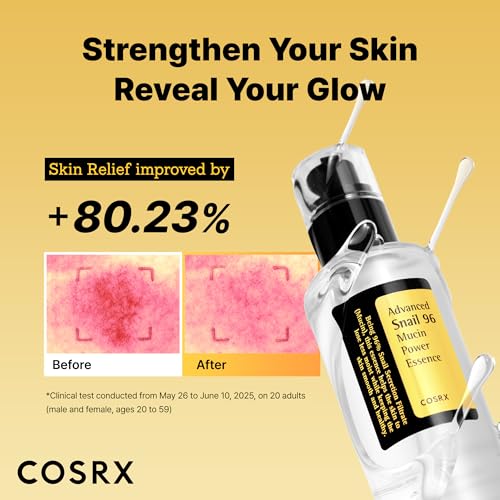
COSRX Advanced Snail 92 All-in-One Cream for normal-to-dry skin, or Beauty of Joseon Dynasty Cream for combination skin. Both are universally tolerated.
4. Sunscreen (morning only — non-negotiable)
Beauty of Joseon Relief Sun SPF 50+ — fragrance-free, no white cast, $15-18. Apply two finger-lengths to face and neck every morning, reapply every 2 hours if you are outside.




As an Amazon Associate we earn from qualifying purchases. Product prices and availability are accurate as of the date/time indicated.
Once you have used those four products consistently for 6 weeks and your skin is calm and clear, then start adding actives — vitamin C in the morning, retinol or AHA at night, never both at once.
Do I really need a separate Korean toner?
Yes — but understand that “toner” means something different here. A Korean hydrating toner is a hydration step, not a “removing residue from cleansing” step the way old-school astringents were marketed.
If you have ever finished cleansing your face and felt that tight, slightly dry sensation — that is your skin barrier briefly losing water. A Korean hydrating toner immediately resupplies that water with humectants (glycerin, hyaluronic acid, plant extracts) so your moisturizer has something to seal in.
When should I add an essence vs a serum?
Skip both for the first 6 weeks. Once your basic routine is stable:
- Essences are watery, lightly active products applied after toner. Hydrating-focused. Snail mucin essence is the entry point
- Serums are more concentrated treatments aimed at specific concerns — vitamin C for brightness, niacinamide for tone, peptides for fine lines
Add ONE at a time. Use it for at least 4 weeks before judging whether it works. Most beginners add three new products in the same week and then cannot tell which one caused a reaction.
My skin is sensitive — should I avoid Korean skincare?
The opposite — Korean skincare is generally more accommodating to sensitive skin than American drugstore skincare because:
- Fragrance-free options are abundant (look for “unscented” or absence of “parfum” in the ingredient list)
- Calming botanicals (centella, heartleaf, ginseng, propolis) are core to many formulations
- Acid concentrations are typically lower than US equivalents
The only Korean skincare to avoid for sensitive skin: anything heavily scented, anything with high alcohol content (rare), and the “First Treatment Essence” galactomyces fermentation products if you have malassezia (yeast) issues.
How do I know if a Korean product is authentic?
Counterfeits are real. Buy through:
- Amazon official brand stores (look for “sold by [Brand Name]”) — most S-tier brands have official Amazon storefronts now
- Stylevana, Yesstyle, Olive Young Global — direct importers with brand authentication
- iHerb — authorized for some brands, double-check on the brand’s official website
Avoid third-party Amazon sellers without brand verification, eBay listings under retail price, and “wholesale” sites with English broken in suspicious ways. A counterfeit Beauty of Joseon Glow Serum costs almost the same to make as a real one — they are profitable enough that fakes proliferate.
How long until I see results?
Realistic timeline for a 4-step beginner routine:
- Week 1-2: Skin feels more hydrated, less tightness after cleansing
- Week 3-4: Reduced redness, smoother texture, fewer surface breakouts
- Week 6-8: Tone evens out, complexion looks brighter
- Week 12+: Real changes to hyperpigmentation, fine lines, scarring
Skin cell turnover is roughly 28 days. Any product needs at least one full cycle to show its effect. Most beginners give up at week 2 because they expected dramatic change and got incremental change. Trust the process.
What is the order I apply products?
The simple rule: thinnest to thickest, water to oil. For the 4-step beginner routine:
- Cleanse with the gentle cleanser, pat dry
- Apply hydrating toner with hands or cotton pad
- Apply moisturizer in gentle upward motions
- (Morning only) Apply sunscreen as the final step
If you add an essence later, it goes between toner and moisturizer. If you add a serum, it goes after essence. Sunscreen always last in the morning, no exceptions.
Top 3 picks compared
BEST OVERALL
TruSkin — TruSkin Vitamin C Serum for Face – Anti Aging Face Serum wit
$16.99 · Editor’s pick — best balance of quality, price, and real-world durability.


As an Amazon Associate we earn from qualifying purchases. Product prices and availability are accurate as of the date/time indicated.
RUNNER-UP
COSRX — COSRX Snail Mucin Repairing Serum 100ml
$17.79 · Almost as good, often a better deal when on sale.
As an Amazon Associate we earn from qualifying purchases. Product prices and availability are accurate as of the date/time indicated.
BEST BUDGET
— — THAYERS Alcohol-Free Rose Petal Witch Hazel Facial Toner for
$9.14 · Solid quality at the lowest verified price in the category.


As an Amazon Associate we earn from qualifying purchases. Product prices and availability are accurate as of the date/time indicated.
Common beginner mistakes to avoid
- Buying everything at once — limits your ability to identify what worked or caused a reaction
- Skipping sunscreen — actives and brightening products without daily SPF will worsen the very pigmentation you are trying to fix
- Stacking acids — combining vitamin C in the morning with AHA at night for two weeks straight will compromise the skin barrier
- Switching products too fast — give each new addition 4-6 weeks before judging
- Following celebrity routines — a person with mature dry skin and no acne does not need the same products as a 22-year-old with combination acne-prone skin
Your beginner shopping list — under $60 total
If you walked away from this article and bought just four things, this is what I would buy with $60 of my own money:
- COSRX Low pH Good Morning Gel Cleanser ($12)
- Anua Heartleaf 77% Soothing Toner ($18)
- COSRX Advanced Snail 92 All-in-One Cream ($16)
- Beauty of Joseon Relief Sun SPF 50+ ($15)
Total: $61. Lasts 8-10 weeks. By the time you finish that first round, your skin will tell you whether to add an essence (yes if you want more glow) or a serum (yes if you have a specific concern like dark spots or acne scars). At that point you have earned the right to call it a Korean skincare routine — and you have done it the way Korean dermatologists actually recommend.
Frequently Asked Questions
How do I choose the right product for my skin?
Match the product to your skin type and main concern, oily skin suits lightweight, oil-controlling formulas, dry skin needs richer hydration, and sensitive skin prefers gentle, fragrance-free options. Patch-test new products first.
Are Korean skincare products good for beginners?
Yes, K-beauty emphasises gentle, layered hydration and is very beginner-friendly. Start with the basics, cleanser, moisturiser, and SPF, then add treatments one at a time.
How long until I see results?
Hydration is immediate, but brightening, anti-ageing, and texture improvements typically take four to six weeks of consistent use, with daily sunscreen.
Related K-Beauty Guides
- Skincare Routine for Beginners: The Complete Step-by-Step Guide
- Best Sunscreen Reapplication Sprays: On-the-Go UV Protection Refresh
- Best Face Steamers for Skincare: Deep Cleanse and Hydrate Your Skin
- Best Derma Rollers for Microneedling: Stimulate Collagen at Home
- Best Face Massage Rollers: Sculpt, Depuff, and Boost Glow
- Best Jade Rollers for Face: Cooling, Depuffing, and Skin-Boosting Benefits
- Best Gua Sha Face Tools: Ancient Ritual for Modern Skin Benefits