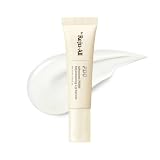
- Top Pick: Dr.Reju-All Advanced PDRN Rejuvenating Lip Serum 0.3 Fl Oz
- Best Value: NINELESS Molecule-Clear Lactic Acid Serum, AHA Exfoliating, 1.01 fl oz
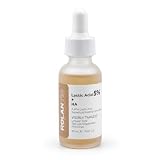
- Premium Choice: ROLANYIN Lactic Acid 5% + HA Facial Serum for Exfoliating Deep Hydration and Smoothing Skin Texture Nourishing Anti Aging Pore Minimizing Benefits Skin Care
Last updated: September 3, 2026
As an Amazon Associate we earn from qualifying purchases at no extra cost to you.





TL;DR: Korean lactic acid serums pair AHA exfoliation with inherent humectancy — lactic acid is both a keratolytic and a natural moisturising factor (NMF) component. Optimal formulations run at pH 3.5–4.5, 5–12% concentration, with Sodium Hyaluronate and Ceramides to reinforce barrier function post-exfoliation. Best suited to dry, dehydrated, and sensitive skin types that cannot tolerate glycolic acid.
Korean Lactic Acid Serum: INCI Guide to AHA Hydration Exfoliants in 2026
The Korean lactic acid serum category is built on a dual-function principle that sets it apart from every other AHA format: lactic acid (Lactic Acid, INCI) exfoliates via the same desmoglein-disruption pathway as glycolic acid, but its larger molecular weight (90 g/mol versus glycolic’s 76 g/mol) slows skin penetration and simultaneously allows it to function as a humectant once partially integrated into the stratum corneum. This makes it the only common AHA that actively contributes to skin hydration during the exfoliation process.
Korean cosmetic chemists have leveraged this dual property to engineer lactic acid serums that address two common skin concerns simultaneously — rough texture and dehydration — without requiring separate exfoliant and hydrating steps. The result is a serum format that works in both the PM routine as a primary exfoliant and in low-concentration AM formulas (3–5%, pH 4.5) as a gentle hydration-boosting step compatible with SPF application.
Top Picks at a Glance


As an Amazon Associate we earn from qualifying purchases. Product prices and availability are accurate as of the date/time indicated.


As an Amazon Associate we earn from qualifying purchases. Product prices and availability are accurate as of the date/time indicated.




As an Amazon Associate we earn from qualifying purchases. Product prices and availability are accurate as of the date/time indicated.
Lactic Acid as a Natural Moisturising Factor Component
Lactic acid is a naturally occurring constituent of the skin’s NMF — the complex mixture of water-soluble compounds in the stratum corneum that maintains corneal hydration and flexibility. The skin produces lactic acid endogenously via sweat glands and the pyruvate pathway, which means exogenously applied lactic acid integrates with existing NMF infrastructure rather than acting as a purely foreign chemical. At concentrations of 3–5%, lactic acid functions almost entirely as a humectant; above 8%, keratolytic action dominates.
Korean lactic acid serums exploit this concentration-dependent duality. Premium formulas use a graduated approach: 8–12% lactic acid for exfoliation at pH 3.5–4.0 in the soaking solution phase, then buffer the post-application skin surface with Sodium Hyaluronate, Ceramide NP, and Glycerin in a secondary emollient layer. This two-phase delivery mimics the NMF’s own water-retention architecture more closely than a simple AHA-only formula.
INCI and Specification Reference Table
| Specification | Value / INCI Name | Function |
|---|---|---|
| Primary AHA | Lactic Acid | Exfoliation + NMF humectancy |
| Molecular Weight | 90 g/mol | Slower penetration vs. glycolic; gentler profile |
| Target pH | 3.5–4.5 | Efficacy range; higher end for sensitive skin |
| Typical Concentration | 5–12% | 5% hydration-focus; 10–12% exfoliation-focus |
| Co-humectants | Sodium Hyaluronate, Glycerin, Sodium PCA | Reinforce NMF, reduce TEWL post-exfoliation |
| Barrier Actives | Ceramide NP, Ceramide AP, Phytosphingosine | Restore lamellar lipid structure post-AHA use |
| Soothing Agents | Allantoin, Panthenol, Beta-Glucan | Reduce erythema, support wound healing |
| Brightening Synergy | Niacinamide (2–5%), Alpha-Arbutin | Melanin transfer inhibition alongside exfoliation |
Who Benefits Most from Lactic Acid vs. Glycolic Acid
The choice between lactic and glycolic acid serums should be driven by skin type, barrier integrity, and sensitivity history. Lactic acid is the preferred AHA for dry and dehydrated skin because its intrinsic humectancy offsets the moisture disruption inherent to exfoliation. It is also the go-to option for rosacea-prone or reactive skin types — the slower penetration rate and higher molecular weight reduce the risk of irritant contact dermatitis that glycolic acid can trigger. New AHA users should always start with lactic acid, not glycolic.
Glycolic acid outperforms lactic for faster textural improvement and deeper penetration — relevant for addressing acanthosis or significantly thickened stratum corneum. But for the majority of Korean skincare routines centred on hydration, glow, and gentle brightening, lactic acid serum achieves comparable results with a meaningfully lower irritation ceiling. For those with extremely sensitive skin who cannot tolerate either, Korean PHA exfoliants provide the gentlest AHA-adjacent alternative.
Integrating Korean Lactic Acid Serum Into Your Routine
Apply after cleansing, before heavier serums and moisturisers. The standard protocol: cleanse at correct pH, wait 30–60 seconds for skin to normalise, apply lactic acid serum to dry face, wait 10–20 minutes, then continue with hydrating serums and occlusives. Do not apply lactic acid serum to wet skin — dilution raises the effective pH and reduces exfoliation efficacy. On PM lactic acid nights, layer a ceramide-rich moisturiser or a dedicated Korean barrier repair product as the final step to restore the lipid matrix disrupted by AHA action.
Frequency for beginners: 2x per week. Intermediate: 3–4x per week. Daily lactic acid use is feasible only with lower-concentration (3–5%) formulas at pH 4.2–4.5 specifically marketed for daily hydrating exfoliation. Mandatory daily SPF50+ when using any AHA in your routine — photosensitisation applies equally to lactic acid as to glycolic. For a full AM/PM framework, consult the Korean dry skin essentials routine guide.
Brightening Applications: Lactic Acid and Hyperpigmentation
Lactic acid addresses post-inflammatory hyperpigmentation (PIH) through two mechanisms: direct acceleration of pigmented corneocyte shedding and indirect inhibition of tyrosinase activity at lower pH. Korean lactic acid serums frequently combine lactic acid with Niacinamide (inhibits melanosome transfer), Alpha-Arbutin (competitive tyrosinase inhibitor), and Tranexamic Acid (plasmin-pathway melanogenesis inhibitor) for a multi-target brightening approach that addresses PIH faster than any single active alone. Results on moderate PIH typically become visible at 6–8 weeks of consistent use.
Frequently Asked Questions
Is a Korean lactic acid serum gentler than glycolic acid?
Yes — lactic acid’s higher molecular weight (90 g/mol vs. 76 g/mol for glycolic) means slower and shallower penetration into the epidermis. At equivalent concentrations and pH, lactic acid produces less erythema and stinging in controlled irritation tests. It also acts as a natural moisturising factor (NMF) component, contributing humectancy rather than just stripping — this is a fundamental difference that makes it the AHA of choice for dry, sensitive, and reactive skin types.
Can I use a Korean lactic acid serum every day?
Daily use is appropriate only for low-concentration (3–5%) formulas at pH 4.2–4.5. Standard exfoliating lactic acid serums (8–12%) require rest days to allow stratum corneum renewal — 2–4x weekly is the evidence-supported range. Over-exfoliation symptoms — shiny, tight, or easily flushed skin — indicate the barrier is compromised and require a pause from all AHA use for at least one week while prioritising ceramide replenishment.
How does a Korean lactic acid serum hydrate skin during exfoliation?
Lactic acid is a natural component of the skin’s NMF — the group of water-binding molecules that keep the stratum corneum flexible and hydrated. When applied topically, lactic acid integrates into the NMF pool, attracting and retaining water molecules in the upper skin layers while simultaneously loosening the bonds between dead skin cells. This dual action is unique to lactic acid among common AHAs; glycolic and mandelic acids do not contribute meaningfully to NMF hydration at cosmetic concentrations.
What should I apply after a Korean lactic acid serum?
After the 10–20 minute wait period, layer in this order: hydrating essence or toner (Sodium Hyaluronate-based), targeted serum (e.g. niacinamide or peptide), and a moisturiser with ceramides. Avoid vitamin C serums (Ascorbic Acid) immediately after lactic acid — the already-lowered skin-surface pH can cause the ascorbic acid to oxidise faster and may increase irritation. Vitamin C is best used in the AM; lactic acid serum in the PM.
Can Korean lactic acid serum help with keratosis pilaris?
Yes — keratosis pilaris (KP) is caused by excess keratin accumulation in hair follicles, and AHAs including lactic acid break down this keratin plug through the same keratolytic mechanism that exfoliates surface skin cells. Lactic acid is preferred over glycolic for KP because it also hydrates the surrounding dry skin — KP-affected areas are often accompanied by xerosis. A 10–12% lactic acid lotion applied to KP-prone areas 3–4x weekly typically shows visible improvement in follicular plugging within 4–8 weeks. Use alongside ceramide-rich moisturisers for optimal results.