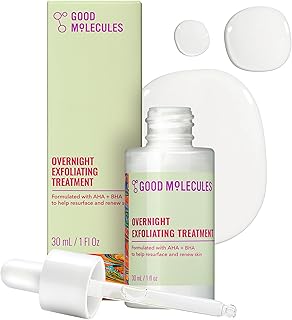
- Top Pick: Good Molecules Overnight Exfoliating Treatment, AHA BHA Exfoliant, 1 fl oz | Resurfaces and renews the look of skin overnight with AHA and BHA. Use up to 3 nights a week with daytime SPF.
- Best Value: The Ordinary AHA 30% + BHA 2% Peeling Solution, Advanced Exfoliating Peel for Brighter Skin
- Premium Choice: SOME BY MI AHA BHA PHA 30 Days Miracle Toner – 5.07oz, 150ml – Korean Refining Face Toner for All Skin Types – Daily Pore Care & Oil Control with 2% Niacinamide – Korean Skin Care
Last updated: October 4, 2026
AHAs and BHAs are the two acid families that do the most work in a modern exfoliating routine, but they don’t work the same way, and using them incorrectly is the fastest route to a compromised skin barrier. AHAs (glycolic, lactic) dissolve the “glue” between dead surface cells, while BHAs (salicylic) are oil-soluble and travel into pores to clear out sebum and debris. Knowing which one your skin needs, and how to layer them safely, is the difference between a glowing complexion and a red, stinging mess.
In 2026, formulas have gotten smarter about buffering acids with soothing ingredients like niacinamide, panthenol, and hyaluronic acid, which makes it easier to build a routine that exfoliates without over-stripping. Below, we break down how to choose the right product, how often to use it, and how to combine AHAs and BHAs without wrecking your skin barrier.
As an Amazon Associate we earn from qualifying purchases at no extra cost to you.




⚡ Save on Your Next PC — Amazon Prime
Prime members get fast free shipping on the systems above, plus early access to Prime Day & Black Friday PC deals. New members get a 30-day free trial.
Watch: How to Incorporate AHAs and BHAs into Your Skincare Routine — Video Review
Know the Difference Between AHA and BHA
Choosing a product starts with understanding what each acid targets. Most combination formulas blend both to cover more concerns at once, but the ratio matters.
- AHAs (glycolic, lactic acid): water-soluble, work on the skin’s surface to fade dullness, texture, and mild discoloration. Better for dry or sun-damaged skin.
- BHAs (salicylic acid): oil-soluble, penetrate into pores to clear excess sebum and reduce blackheads. Better for oily, acne-prone, or congested skin.
- Combination formulas like the Good Molecules Overnight Exfoliating Treatment or The Ordinary AHA 30% + BHA 2% Peeling Solution address texture and pores simultaneously, but at higher strength require more caution.
Start Low and Slow
Acid tolerance is built, not assumed. Jumping straight into a high-percentage peel is the number one cause of “acid burn” and post-inflammatory redness.
- Week 1–2: use a leave-on acid product just once weekly at night.
- Week 3–4: increase to twice weekly if skin shows no irritation, flaking, or excess redness.
- Maintenance: 2–3 times weekly is the ceiling for most exfoliating acids, even for tolerant skin.
- A gentler daily toner, such as the SOME BY MI AHA BHA PHA 30 Days Miracle Toner or NIDA AHA BHA Clarity Toner, can be used more frequently since the acid concentration is lower and diluted for daily contact.
Match the Product to the Format
Not every acid product is meant for the same step in your routine. Format affects both strength and how the product should be applied.
- Toners (SOME BY MI, NIDA) are low-concentration and meant for daily or near-daily use after cleansing, applied with a cotton pad or patted in by hand.
- Peeling solutions like The Ordinary’s 30% + 2% formula are high-strength, leave-on treatments meant for short contact time (start at 5–10 minutes, then rinse if you’re new to it) and used no more than 1–2 times weekly.
- Overnight treatments (Good Molecules) sit on skin for hours, so they’re formulated at a gentler strength and are meant to be left on rather than rinsed.
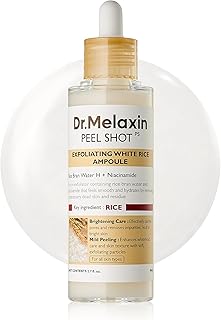
- Ampoules and serums like the Dr.Melaxin Peel Shot Glow White Rice Peeling Ampoule combine gentle exfoliation with brightening actives like niacinamide, making them suitable for slightly more frequent use than a true peel.
Build the Routine Around Your Skin Type
The right sequencing minimizes irritation while still delivering results.
- Oily or acne-prone skin: lead with a BHA-focused product like Paula’s Choice SKIN PERFECTING 2% BHA Liquid Exfoliant to keep pores clear, applied after cleansing on clean, dry skin.
- Dry or sensitive skin: favor lactic-acid-forward AHA products and pair with a hydrating toner step rather than a high-strength peel.
- Combination skin: a dual AHA/BHA toner used daily, with a stronger peel or overnight treatment layered in once or twice weekly, covers both concerns without overloading skin.
- Always apply acids on cleansed, dry skin. Damp skin increases penetration and irritation risk.
Layer Carefully With the Rest of Your Routine
Acids interact with other actives, and stacking too many strong ingredients in one routine is a common mistake.
- Don’t combine acids with retinoids in the same session; alternate nights instead.
- Avoid layering two high-strength leave-on acids (e.g., a peeling solution and a separate ampoule) on the same night.
- Follow every acid step with a barrier-supporting moisturizer containing ceramides or hyaluronic acid.
- Daytime SPF 30 or higher is non-negotiable; exfoliated skin is measurably more sensitive to UV damage.
Tips
- Patch test any new acid product on your inner arm for 48 hours before applying to your face.
- Introduce only one new acid product at a time so you can identify the source of any irritation.
- Keep a hydrating, fragrance-free moisturizer on hand for nights when skin feels tight or reactive.
- If you experience persistent stinging, peeling beyond mild flaking, or visible redness lasting more than a day, pause use and reintroduce more slowly.
Frequently Asked Questions
Can I use an AHA and a BHA toner every day?
Low-concentration daily toners like SOME BY MI or NIDA are formulated for frequent use, but most people do best starting at 3–4 times weekly and increasing gradually. Watch for tightness or flaking as a sign to scale back.
What percentage of AHA or BHA should a beginner start with?
Beginners should start with products in the 2–5% range, such as a 2% BHA liquid exfoliant, rather than a 30% peeling solution. Higher percentages should only be introduced once skin has built tolerance over several weeks.
Should I use AHA/BHA products in the morning or at night?
Nighttime is best for most leave-on acid treatments, since sun sensitivity increases after exfoliation and skin repairs overnight. Daily toners can be used morning or night, but always follow with SPF the next day.
Can I use AHA/BHA products with vitamin C or niacinamide?
Niacinamide pairs well with acids and is often formulated directly into them, as seen in the SOME BY MI toner and Dr.Melaxin ampoule. Vitamin C can be used in the same routine but is best applied at a different time of day (typically AM) to reduce the chance of irritation.
Conclusion
The most effective AHA/BHA routine in 2026 isn’t the strongest one, it’s the one your skin can tolerate consistently. Start with lower concentrations and lower frequency, layer in a daily toner for maintenance and a stronger peel or ampoule for targeted resurfacing, and always protect your barrier with moisturizer and SPF. Build up gradually, and you’ll get the brightening and pore-clearing benefits without the setbacks.