Last updated: November 23, 2026
Furniture projects punish a dust collector in two very different ways. The rough stage throws heavy shavings from a planer and a jointer, which demand strong airflow and a large bag, while the finishing stage produces fine sanding dust that hangs in the air and settles into fresh finish. A collector that handles one stage well often struggles with the other, so the buying decision is really about which stage dominates your work and which compromise you can live with.
This guide is for furniture makers, from a hobbyist building a first dining table to a small-shop maker turning out chairs and cabinets. The four collectors below were chosen from their Amazon titles and listed specifications, so the airflow, motor, bag size, and filtration numbers come from the product page itself.
Quick Picks
As an Amazon Associate we earn from qualifying purchases
| Product | Best for | Key spec from title |
|---|---|---|
| POWERTEC DC5371 | Fine sanding dust before finishing | 1 HP motor, 560 CFM, 1-micron filter bag |
| WEN DC3474 | Long planing sessions on table legs and tops | 7.4-amp induction motor, 15-gallon bag |
| Shop Fox W1826 | A fixed station beside the table saw | 1 HP motor, 537 CFM, 2.5-micron filtration |
| BUCKTOOL DC30A-1 | A collector hung above the assembly bench | 1 HP motor, 550 CFM, remote control included |
How to Choose
Split the job into rough work and fine work
Furniture making has two dust problems, and they need different answers. Rough milling a tabletop produces heavy chips that need airflow and bag volume, while sanding a chair leg produces fine dust that needs filtration. Before choosing, decide which stage creates more dust in your shop. If you mill rough lumber often, prioritize CFM and a large bag. If you spend more hours sanding and finishing, prioritize the micron rating. A collector that splits the difference, with 560 CFM and a 2-micron or 1-micron bag, is the safest all-round choice for furniture work.
Guard the finish, not just the floor
Dust on the floor is an annoyance; dust in a fresh coat of finish ruins a piece. Fine sanding dust stays airborne for hours and settles on anything left open in the shop, including a tabletop waiting for its next coat. A 1-micron or 2.5-micron bag keeps far more of that dust out of the air than a 5-micron bag, which matters when a project sits in the shop between coats. If you finish in the same room where you sand, filtration is not a luxury; it is part of the finishing process.
Size the bag for a board, not a session
A single wide tabletop can fill a small bag faster than a beginner expects, because a planer removes a lot of material in a few passes. A 12-gallon bag may not survive milling the parts for one table, while a 15-gallon or 21-gallon bag gives more breathing room. Check the bag capacity on the listing and think in terms of a project, not an hour. A bottom zipper and a clear window make the emptying stop quick, which matters when the glue is drying and the next board is waiting.
Keep the hose short enough to protect the work
Furniture projects involve large, awkward pieces that move around the shop, and a long hose draped across the floor becomes a tripping hazard and a scratch risk. Mount the collector on the wall nearest the machine you use most, usually the table saw or the planer, and keep the hose run short and straight. A wall mounted unit with a remote control helps here, because you can start the collector from the bench without walking around a half-assembled table. Short hoses also keep suction strong where the dust is actually made.
The 4 Best Options
POWERTEC DC5371

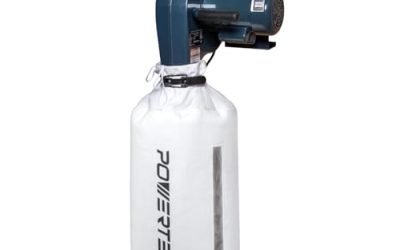
The POWERTEC DC5371 is the furniture pick for the finishing stage, when fine dust is the enemy. Its 1-micron reusable filter bag is the finest in this group, capturing the particles that orbital sanders throw up and that settle into fresh finish. The 1 HP induction motor delivers 560 CFM through a 4-inch inlet with a grate guarding the impeller, and the dual-voltage motor runs on 120V or 240V. A window in the bag shows the fill level, and a bottom zipper empties it without taking the unit off the wall, which keeps the shop clean between coats.
Specs
- 1 HP induction motor, dual voltage 120V or 240V
- Air suction capacity of 560 CFM
- 1-micron reusable filter bag with viewing window
- Motor speed of 3450 RPM
- 4-inch inlet with built-in grate
- 12 amps at 120V, 6 amps at 240V
- Mounting bracket and hardware included
- Bottom zipper for dust disposal
Best for: Furniture makers who sand and finish in the same shop and need the finest filtration here.
Watch out for: The 1-micron bag clogs faster than a coarser bag, so brush it clean after sanding sessions or airflow will fade before the next coat.
WEN DC3474

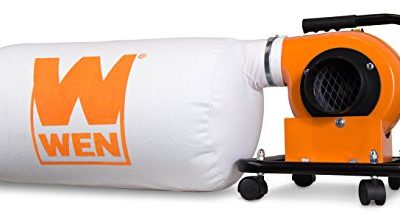
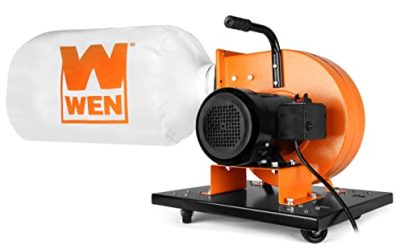
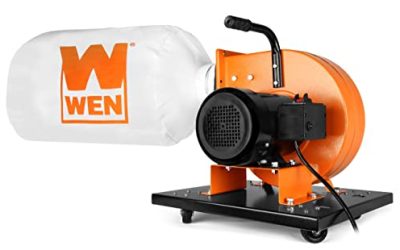
The WEN DC3474 is the furniture pick for the rough stage, when long planing sessions produce piles of shavings. Its 7.4-amp induction motor moves up to 600 CFM, and the 15-gallon bag holds more than compact units, so milling the parts for a table runs without constant emptying stops. The optional wall mount and the mobile base both come in the box, and the onboard carrying handle makes it easy to shift the unit between the planer and the saw. The smooth-running induction motor suits the long hours that furniture milling demands.
Specs
- 7.4-amp induction motor with 9-inch impeller
- Airflow up to 600 CFM
- 15-gallon 5-micron zippered collection bag
- 4-inch dust port
- Optional wall mount and mobile base included
- Onboard carrying handle
- Swivel casters on the mobile base
Best for: Furniture makers milling rough lumber for tables and chairs, where bag volume and steady airflow matter most.
Watch out for: The 5-micron bag is coarse for fine sanding, so switch to a finer replacement bag before the sanding and finishing stage.
Shop Fox W1826

The Shop Fox W1826 fits a furniture shop with a fixed table saw station, where the collector hangs beside the machine that cuts every board. Its 1 HP induction motor moves 537 CFM through a 4-inch intake, enough for a table saw, a bandsaw, or a router table used one at a time. The 2.5-micron cloth bag filters finer than budget bags, which helps when sanding happens near the saw, and the clear window on the lower bag shows the dust level without opening anything. The bracket locks to the wall with a screw, so the unit lifts off for cleaning and seats back on without tools.
Specs
- 1 HP induction motor
- Air suction capacity of 537 CFM
- 2.5-micron cloth filter bag
- 4-inch intake hole
- Collection capacity of 2 cubic feet
- Static pressure of 7.2 inches
- Dual voltage 110V or 220V single-phase
- Wall mounting bracket with locking screw
Best for: A furniture shop with a permanent table saw station and a fixed wall position.
Watch out for: The unit plus a full bag weighs over 50 pounds, so lag screws into studs are essential and the bracket spacing must match your studs.
BUCKTOOL DC30A-1

The BUCKTOOL DC30A-1 suits a furniture shop where the collector hangs above the assembly bench and the switch would otherwise be a stretch around a half-built table. Its remote control starts and stops the motor from anywhere in the room, which keeps the workflow moving during glue-ups and sanding. The 1 HP totally enclosed fan-cooled induction motor moves 550 CFM, and the 2-micron bag traps fine sanding dust better than a 5-micron bag. It mounts on the wall or rolls on braked wheels, so the same unit can serve a fixed station or move to a second machine.
Specs
- 1 HP TEFC induction motor, 6.5 amps
- Airflow of 550 CFM
- 2-micron dust filter bag
- Remote control included
- 4-inch by 80-inch hose included
- Wall mount bracket and wheels with brake
- 9-inch balanced steel radial fin impeller
- Maximum static pressure of 5.8 inches of water
Best for: A furniture shop where the collector hangs above the bench and the remote saves a walk around the project.
Watch out for: The 80-inch hose limits how far the collector can sit from the machine, so mount it close to the saw or the sander you use most.
Which One Fits Your Situation
You finish pieces in the same room where you sand them
Choose the POWERTEC DC5371 for its 1-micron bag, the finest filtration in this group. Fine dust is what ruins a fresh coat, and this bag keeps the most of it out of the air. Brush the bag clean after sanding so the fine pores stay open and the suction holds through the next session.
You mill rough lumber for tabletops and chair parts
Pick the WEN DC3474, with 600 CFM and a 15-gallon bag that handles long planing sessions without constant emptying. The induction motor runs smoothly for hours, and the wall mount or rolling base lets the unit follow the work. Swap in a finer bag before the sanding stage begins. The smooth induction motor suits the long hours that milling a table demands.
Your table saw never moves and cuts every board
Hang the Shop Fox W1826 beside the saw as a permanent station. Its 2.5-micron bag and 537 CFM suit a single machine used one at a time, and the locking bracket makes removal for cleaning easy. Confirm the stud spacing matches the bracket before drilling. The clear window on the lower bag shows the dust level without opening anything.
The collector has to hang above the assembly bench
Take the BUCKTOOL DC30A-1, because the remote control starts and stops the motor without walking around a half-assembled table. The 2-micron bag handles sanding dust well, and the braked wheels let the unit roll to a second machine when the layout changes. The included hose means the unit works straight from the box on the first day.
Common Mistakes
- Using a 5-micron bag through the finishing stage, then finding fine dust settled into a fresh coat.
- Milling a whole tabletop with a 12-gallon bag, which fills mid-project and forces a stop with glue drying.
- Leaving the hose draped across the floor, where it trips the maker and scratches the workpiece.
- Opening every blast gate at once, so no single machine gets enough suction during a cut.
- Mounting the collector on drywall anchors instead of lag screws into studs, risking the unit pulling free under a full bag.
Frequently Asked Questions
What airflow do I need for furniture projects?
A collector moving 550 to 660 CFM covers the machines furniture makers use most, including a table saw, a planer, and a jointer run one at a time. The WEN DC3474 at 600 CFM and the POWERTEC DC5371 at 560 CFM are strong matches, with the planer being the hungriest tool. Keep the hose short and empty the bag before it packs solid.
Does filter fineness really affect my finish?
Yes. Fine sanding dust stays airborne and settles on wet finish, leaving a rough surface that needs sanding back. A 1-micron or 2.5-micron bag captures far more of that dust than a 5-micron bag. If you finish in the same room where you sand, filtration is part of the finishing process, not an afterthought.
How big a bag do I need for a dining table project?
Milling the parts for a table produces a large volume of shavings, so a 15-gallon bag is a sensible minimum and a 21-gallon bag is better. A 12-gallon bag may fill before the milling is done, forcing a stop mid-project. The WEN DC3474 with its 15-gallon bag suits table work, and the VEVOR DC100M with 21 gallons is the largest option in this series.
Can one collector serve both the planer and the sander?
Yes, if you move the hose between machines or use a wye fitting with blast gates, keeping only one gate open at a time. The planer needs airflow and bag volume, while the sander needs fine filtration, so a 560 CFM collector with a 1-micron or 2-micron bag is the best compromise. Close the unused gate so suction stays strong at the active tool.