Last updated: November 23, 2026
Cabinet work lives or dies on clean cuts and clean surfaces. Sheet goods throw a constant stream of chips from the table saw, and the endless sanding of cabinet doors and drawer fronts produces fine dust that settles into joints, hardware holes, and fresh finish. A wall mounted collector earns its place in a cabinet shop by keeping the saw area clear without taking floor space that plywood sheets and assembled carcasses already claim. The decision is about matching the collector to the two faces of cabinet work: heavy chip volume and fine dust.
This guide is for cabinet makers and home woodworkers building kitchens, built-ins, and storage, whether in a dedicated shop or a garage. The four collectors below were chosen from their Amazon titles and listed specifications, so the airflow, motor, bag size, and filtration figures come from the product page itself.
Quick Picks
As an Amazon Associate we earn from qualifying purchases
| Product | Best for | Key spec from title |
|---|---|---|
| POWERTEC DC5371 | Fine dust from sanding cabinet doors | 1 HP motor, 560 CFM, 1-micron filter bag |
| Shop Fox W1826 | A fixed station beside the cabinet saw | 1 HP motor, 537 CFM, 2.5-micron filtration |
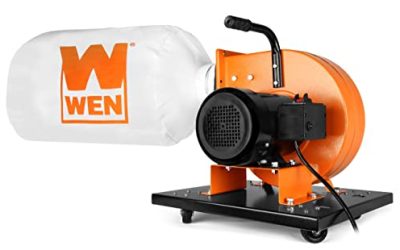
| WEN DC3401 | Breaking down sheet goods quickly | 5.7-amp motor, 660 CFM, 12-gallon bag |
| VEVOR DC100M | Long days cutting and sanding cabinet parts | 1 HP motor, 560 CFM, 21-gallon collection bag |
How to Choose
Plan for sheet goods first, then for sanding
Cabinet projects start with breaking down plywood and MDF sheets, which produces a high volume of chips in a short time, and end with sanding doors and drawer fronts, which produces fine dust over many hours. The collector has to handle both, so weigh airflow for the saw stage and filtration for the sanding stage together. A 560 CFM collector with a 1-micron or 2.5-micron bag is a better cabinet choice than a high-airflow unit with a coarse bag, because the fine dust from MDF sanding is the harder problem to solve later.
MDF dust deserves a finer bag than hardwood chips
MDF and melamine release fine, irritating dust when cut and sanded, and that dust is exactly what a coarse bag lets through. A 5-micron bag is adequate for hardwood chips, but cabinet work leans heavily on sheet goods, so a 2.5-micron bag is a sensible minimum and a 1-micron bag is the strongest choice here. Finer bags clog sooner, so expect to brush the bag clean after sanding sessions. If the shop is enclosed, or the cabinets are finished in the same room, filtration should rank above raw airflow in the decision.
Keep the floor clear for sheets and carcasses
A cabinet shop floor is a workspace in itself: full sheets lean against the wall, carcasses sit on sawhorses, and a floor-standing collector becomes an obstacle. A wall mounted unit keeps the floor free for moving 4-by-8 sheets, which is a daily reality in cabinet work. Measure the wall beside the table saw, confirm the stud spacing matches the bracket, and leave room below the bag for the zipper. A light unit that one person can hang is a practical advantage when the shop is already full of plywood.
Think about the hose path around big panels
Cutting cabinet parts means moving large panels past the saw, and a hose draped across the floor will snag a sheet edge at the worst moment. Mount the collector on the wall nearest the saw and keep the hose short, straight, and out of the panel path. A wye fitting with blast gates lets one collector serve the saw and the sander, but only one gate should stay open at a time. A short hose run also keeps suction strong, which matters when the saw is cutting MDF all afternoon.
The 4 Best Options
POWERTEC DC5371

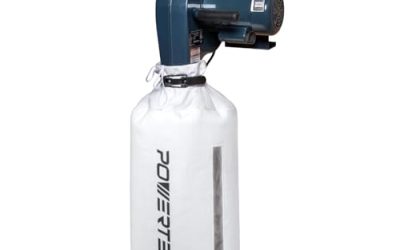
The POWERTEC DC5371 is the cabinet pick for the sanding stage, when fine dust from MDF and plywood threatens the finish on doors and drawer fronts. Its 1-micron reusable filter bag is the finest in this group, trapping the particles that orbital sanders release and that settle into joints and fresh finish. The 1 HP induction motor delivers 560 CFM through a 4-inch inlet with a grate guarding the impeller, and the dual-voltage motor runs on 120V or 240V. A window in the bag shows the fill level, and a bottom zipper empties it without removing the unit from the wall.
Specs
- 1 HP induction motor, dual voltage 120V or 240V
- Air suction capacity of 560 CFM
- 1-micron reusable filter bag with viewing window
- Motor speed of 3450 RPM
- 4-inch inlet with built-in grate
- 12 amps at 120V, 6 amps at 240V
- Mounting bracket and hardware included
- Bottom zipper for dust disposal
Best for: Cabinet makers sanding MDF and plywood doors who need the finest filtration here.
Watch out for: The 1-micron bag clogs faster than a coarser bag, so brush it clean after sanding sessions or suction will fade during a long day.
Shop Fox W1826

The Shop Fox W1826 fits a cabinet shop with a fixed table saw station, where the collector hangs beside the machine that cuts every panel. Its 1 HP induction motor moves 537 CFM through a 4-inch intake, enough for a table saw, a bandsaw, or a router table used one at a time. The 2.5-micron cloth bag filters finer than budget bags, which helps when sanding happens near the saw, and the clear window on the lower bag shows the dust level without opening anything. The bracket locks to the wall with a screw, so the unit lifts off for cleaning and seats back on without tools.
Specs
- 1 HP induction motor
- Air suction capacity of 537 CFM
- 2.5-micron cloth filter bag
- 4-inch intake hole
- Collection capacity of 2 cubic feet
- Static pressure of 7.2 inches
- Dual voltage 110V or 220V single-phase
- Wall mounting bracket with locking screw
Best for: A cabinet shop with a permanent table saw station and a fixed wall position.
Watch out for: The unit plus a full bag weighs over 50 pounds, so lag screws into studs are essential and the bracket spacing must match your stud layout.
WEN DC3401

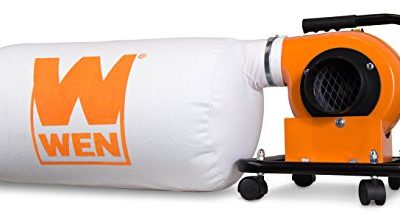
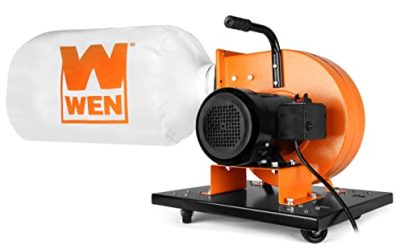
The WEN DC3401 is the cabinet pick for breaking down sheet goods, when strong airflow matters most. Its 660 CFM is the highest in this group, so it keeps up with a table saw cutting plywood and MDF all morning, and at about 17 pounds it is the lightest unit here, so one person can lift it onto the bracket alone. The optional wall mount keeps the floor clear for sheets and carcasses, while the included mobile base offers a rolling option if the shop rearranges. The 12-gallon zippered bag empties quickly between cutting sessions.
Specs
- 5.7-amp motor with 6-inch impeller
- Airflow up to 660 CFM
- 12-gallon collection bag with zipper
- 5-micron filter bag
- Optional wall mount and mobile base included
- 4-inch dust port
- Weighs about 17 pounds
Best for: A cabinet shop breaking down sheet goods fast, where maximum airflow matters most.
Watch out for: The 5-micron bag passes fine MDF dust, so wear a respirator when sanding and consider a finer replacement bag for the finishing stage.
VEVOR DC100M

The VEVOR DC100M suits a cabinet shop working long days, because its 21-gallon non-woven collection bag holds nearly twice what compact collectors carry. Cutting cabinet parts produces a steady stream of chips, and sanding doors fills a small bag quickly, so the large capacity means fewer interruptions across a full day. The 1 HP induction motor moves 560 CFM, the 2.5-micron bag handles fine dust, and the transparent window plus bottom zipper make checking and emptying straightforward. At about 24 pounds it is light for its capacity, which makes the wall installation a one-person job.
Specs
- 1 HP induction motor
- Air suction capacity of 560 CFM
- 21-gallon (80 L) non-woven collection bag
- 2.5-micron filter bag
- Noise level of 90 dB or less
- Voltage of 120 volts, 60 Hz
- Dimensions with bag of 40.94 by 13.78 by 15.75 inches
- Weight of 24.03 pounds
Best for: A cabinet shop running long days of cutting and sanding, where the bag should not interrupt the work.
Watch out for: The tall bag needs vertical wall clearance, so measure the wall height and leave room below for the zipper to open fully.
Which One Fits Your Situation
You sand cabinet doors and drawer fronts all day
Choose the POWERTEC DC5371 for its 1-micron bag, the finest filtration in this group. MDF sanding dust is fine and persistent, and this bag keeps the most of it out of the air and off the finish. Brush the bag clean after sanding so the fine pores stay open through a long day.
Your table saw never moves and cuts every panel
Hang the Shop Fox W1826 beside the saw as a permanent station. Its 2.5-micron bag and 537 CFM suit a single machine used one at a time, and the locking bracket makes removal for cleaning easy. Confirm the stud spacing matches the bracket before drilling. The clear window shows the dust level, so you can plan emptying around the cutting schedule.
You break down full sheets every morning
Pick the WEN DC3401, with the strongest airflow here at 660 CFM and the lightest install at about 17 pounds. It keeps up with a saw cutting plywood all morning, and the wall mount keeps the floor clear for moving sheets. The 12-gallon bag is small, so empty it between cutting sessions.
You work long days and the bag keeps interrupting you
Take the VEVOR DC100M and its 21-gallon bag, which nearly doubles the time between emptying compared with compact units. The window shows the level at a glance, and the bottom zipper empties it without taking the unit down. Measure the wall height first for the tall bag. The light weight also makes a solo installation realistic on a Friday evening.
Common Mistakes
- Using a 5-micron bag for MDF cabinet work, where fine dust is the real problem and passes straight through.
- Letting the hose cross the panel path, where a full sheet snags it mid-cut.
- Opening every blast gate at once, so no single machine gets enough suction during a cut.
- Filling the bag solid before emptying it, which strains the motor and cuts airflow during a long day.
- Mounting on drywall anchors instead of lag screws into studs, risking the unit pulling free under a full bag.
Frequently Asked Questions
Why is MDF dust a bigger concern than hardwood dust?
MDF releases very fine dust when cut and sanded, and that dust stays airborne longer and irritates airways more than coarse hardwood chips. A 1-micron or 2.5-micron bag captures far more of it than a 5-micron bag. Cabinet makers who cut a lot of MDF should treat filtration as the top priority and wear a respirator during sanding.
Can a wall mounted collector handle a cabinet saw?
Yes, for a single saw used one at a time. A 1 HP collector moving 537 to 660 CFM covers a cabinet saw cutting plywood and MDF, as long as the hose run is short and only one blast gate is open. The WEN DC3401 at 660 CFM gives the most headroom for heavy cutting sessions.
How do I keep dust off cabinet doors while they dry?
Sand and finish in the cleanest air you can manage. Run a fine-bag collector like the POWERTEC DC5371 during sanding, let the air settle before applying finish, and keep the shop door closed while coats dry. A 1-micron bag makes a visible difference compared with a 5-micron bag, because the finest dust is what settles into wet finish.
How often should I empty the bag during cabinet work?
Empty the bag when it reaches about two-thirds full, because a packed bag restricts airflow and strains the motor. Breaking down sheets fills a 12-gallon bag faster than sanding does, so check the window often during cutting. The VEVOR DC100M with its 21-gallon bag stretches the interval across a full day of cabinet work.