Last updated: September 26, 2026
Once a breakout heals, it often leaves a flat mark that lingers for months — pink or red on lighter skin, brown or nearly black on deeper tones. Face oils, especially rosehip, have a reputation online as mark erasers. Some of that reputation is earned: a well-chosen oil can support healing skin and make other treatments easier to tolerate. But the ingredients with the best evidence for fading marks are mostly not oils. This guide separates the two types of marks, explains which oils make sense, and shows how to build them into a routine that actually shortens the fading time.
Quick answer: For most people in 2026, the best face oil for post is the PIE (red / pink) — our #1 rated choice. See the full ranked comparison, alternatives and buying advice below.
First, identify the type of mark
Post-inflammatory erythema (PIE) is a red or pink flat mark caused by dilated or damaged small blood vessels after inflammation. It is most noticeable on fair to medium skin. Post-inflammatory hyperpigmentation (PIH) is brown, grey or dark purple, caused by extra melanin laid down during inflammation, and is more common and longer-lasting in medium to deep skin tones. A simple check: press a clear glass against the mark. If it blanches (fades) under pressure, it is mostly PIE; if the colour stays, it is PIH. Raised or pitted areas are scars, not marks, and need different treatment.

Palmer's Skin Therapy Face Oil, Moisturizing Cocoa Butter Formula (1 Fl Oz)
Included for 'Best Face Oil for Post-Acne Marks: Rosehip, Squalane and Realistic Results' because the listing specifies Moisturizing Cocoa Butter Formula (1 Fl Oz), details this guide uses to compare options.
View on Amazon
Good Molecules Squalane Oil for Face, Lightweight Facial Oil, 13 ml
Included for 'Best Face Oil for Post-Acne Marks: Rosehip, Squalane and Realistic Results' because the listing specifies Lightweight Facial Oil and 13 ml, details this guide uses to compare options.
View on AmazonWhat works for each
| Mark type | Best-supported topicals | Role of face oil | Typical fade time |
|---|---|---|---|
| PIE (red / pink) | Niacinamide, azelaic acid, gentle retinoid; sunscreen | Comfort, barrier support | 3–12 months |
| PIH (brown / dark) | Azelaic acid, retinoids, niacinamide, vitamin C; sunscreen | Reduce irritation from actives | 6–18 months |
| Atrophic scars | Retinoids help slightly; clinic procedures | Minimal | Needs in-clinic care |
Oils worth considering
Rosehip seed oil
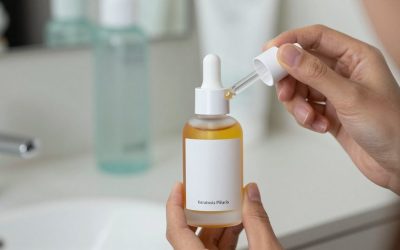
Rosehip is rich in linoleic acid and contains small amounts of carotenoids and naturally occurring trans-retinoic acid precursors. Small studies suggest it may help general scar appearance and skin texture. It is a reasonable, inexpensive oil for marks, as long as you treat it as support rather than a cure. The Ordinary 100% Organic Cold-Pressed Rose Hip Seed Oil (roughly $10–15) and Trilogy Certified Organic Rosehip Oil (roughly $25–35) are two long-standing options. Store rosehip away from light and heat; it oxidises faster than most oils.
Squalane
Squalane is not an active treatment, but it is light, stable and rarely clogs pores, which makes it a good buffer if retinoids or azelaic acid are drying you out. The Ordinary 100% Plant-Derived Squalane (roughly $9–15) is a budget pick.
A medicated oil if breakouts are still active
Sunday Riley U.F.O. Ultra-Clarifying Acne Treatment Face Oil (roughly $40–50 for 15 ml) contains 1.5% salicylic acid plus licorice extract. It suits people still getting new spots, since preventing new inflammation prevents new marks. It also contains essential oils, so sensitive skin may object. Prices shift, so check the current price.
The ingredients doing the heavy lifting
- Sunscreen: UV darkens PIH and slows PIE fading. SPF 30–50 every day is non-negotiable.
- Azelaic acid 10–20%: helps both redness and pigment and is gentle enough for many sensitive skins.
- Adapalene or other retinoids: speed turnover and prevent new breakouts; adapalene 0.1% gel is available over the counter in the US.
- Niacinamide 4–5%: reduces pigment transfer and supports the barrier.
How to layer oil with actives
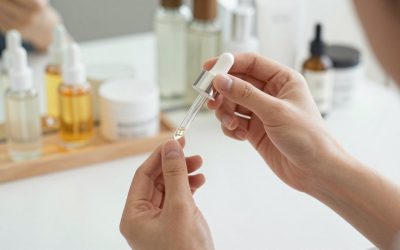
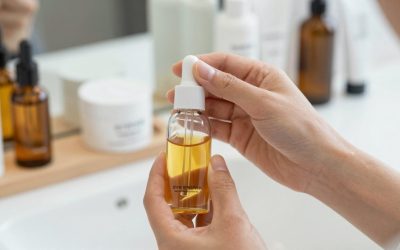
Apply water-based treatments first (azelaic acid, niacinamide serum), wait a few minutes, then moisturiser, then two to four drops of oil pressed on top at night. On retinoid nights, some people apply the oil first as a buffer to reduce irritation. In the morning, skip the oil or use a single drop so your sunscreen spreads evenly.
Safety notes
- Pregnancy: avoid topical retinoids including adapalene; azelaic acid and plain oils are generally considered acceptable, but confirm with your clinician. Salicylic acid in leave-on products at low concentration is often considered acceptable in limited areas; ask first.
- Isotretinoin: skip salicylic acid oils and retinoids; plain squalane is usually the safer choice for dryness.
- Photosensitising medicines (doxycycline, some diuretics) make marks darken more easily in the sun.
- Active infection or cysts: do not massage oils into painful, swollen spots; see a clinician for persistent cystic acne.
FAQ
Can rosehip oil cause breakouts?
It rarely does for most people, since it is high in linoleic acid, but anyone can react. Introduce it three nights a week for two weeks and watch for new bumps.
How long until an oil fades my marks?
On its own, it may make little visible difference. Combined with sunscreen and a proven active, many people see marks lighten noticeably within 8–12 weeks.
Bottom line
For post-acne marks, rosehip or squalane oil is a helpful supporting act, not the lead. Pair it with daily sunscreen and an evidence-based active such as azelaic acid, niacinamide or a retinoid, and prevent new marks by keeping active breakouts under control.
Ready to decide? Our #1 pick for 2026 is the PIE (red / pink).
Live price & availability on Amazon.