Last updated: November 23, 2026
Disclosure: As an Amazon Associate, I earn from qualifying purchases.
A ceramide toner sounds like a shortcut: barrier lipids in a light, layerable step. The honest version is narrower and still useful. A toner is a watery vehicle, so it can carry a modest amount of ceramide onto the skin and add a comfortable layer of hydration, but it cannot lay down the concentrated lipid film a cream delivers. Think of a ceramide toner as the comfort layer and your cream as the barrier’s heavy lifter. Used that way — patted on after cleansing, sealed in with moisturizer — the five toners below earn their place, especially for dry, tight, or easily flushed skin that wants hydration without heaviness.
How to Choose
Read the species, not just the word “ceramide.” Skin’s own barrier lipids are specific molecules — Ceramide NP, AP, and EOP are the ones most often named on labels — and they work alongside cholesterol and free fatty acids. A formula that names its ceramide species and includes cholesterol or phytosphingosine is stronger evidence than a front label that simply says “ceramide.” Position in the ingredient list matters too: ceramides sitting below the preservatives are present in trace amounts, which is fine for a hydration layer but worth knowing.
Match the texture class to your skin. Ceramide toners split into two families. Watery toners feel like scented water and suit combination or oilier skin that layers several steps. Milky and essence-style toners carry emulsified oils, feel cushiony, and are a different texture class entirely — better for dry skin, but possibly too rich as a first step for oily skin. Expect a milky toner to behave almost like a lotion in liquid form.
Layering adds water, not oil. The multi-layer “skin” method — patting on two or three rounds of toner — genuinely raises hydration because each layer is mostly water and humectants. It does not add meaningful oil or lipid. Dry skin still needs the cream on top; extra toner layers are not a substitute for it.
Keep expectations in the support lane. These products support barrier comfort: less tightness after cleansing, a softer feel, better tolerance of the rest of a routine. They do not heal eczema or dermatitis, and persistent flaking, cracking, or itching is a reason to see a doctor rather than to buy a stronger toner.
The 5 Best Ceramide Toners
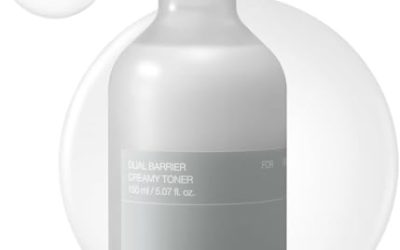
1. celimax Dual Barrier Creamy Toner

Specs
- Size: 150 ml / 5.07 fl oz
- Ceramides: NP, NS, AS, AP, and EOP (five species)
- Partner lipids: cholesterol and phytosphingosine
- Supporting ingredients: panthenol, sodium hyaluronate, Aquatide peptide complex
- Texture: milky, creamy; alcohol-free and fragrance-free
This is the most complete ceramide label in the roundup: five named species plus cholesterol and phytosphingosine, the partners ceramides need to sit properly in a barrier-style formula. The texture is a true milky emulsion rather than scented water, so one layer already feels like a light lotion. For dry or sensitive skin that wants the toner step to do real comforting work before cream, this is the strongest match — with the standing caveat that even this lipid-rich toner is a layer, not a replacement for the cream that follows it.
2. CeraVe Hydrating Toner

Specs
- Size: 200 ml / 6.8 fl oz
- Ceramides: NP, AP, and EOP
- Partner lipids: cholesterol and phytosphingosine
- Supporting ingredients: hyaluronic acid and niacinamide
- Texture: watery liquid; alcohol-free, fragrance-free, non-comedogenic, pH balanced
The watery counterpoint to the milky picks. CeraVe’s toner names the same three ceramide species the brand uses across its line and pairs them with cholesterol and phytosphingosine, all in a thin, fast-absorbing liquid that suits combination skin or anyone layering several steps. Because the vehicle is water, the ceramide dose per application is modest — this is best understood as a gentle, residue-clearing hydration step that happens to carry barrier-friendly lipids, finished as always with moisturizer on top.
3. Anua Rice 70 Glow Milky Toner

Specs
- Size: 250 ml / 8.45 fl oz
- Base: 71% rice bran water with niacinamide
- Ceramides: NP, AP, and EOP, with cholesterol and phytosphingosine
- Supporting ingredients: panthenol, allantoin, hyaluronic acid forms
- Texture: light milky liquid; fragrance-free and non-comedogenic
A brightening-leaning milky toner: the rice water and niacinamide do the glow work while a three-ceramide blend supports comfort. Read the ingredient list honestly, though — the ceramides sit in the lower half of the formula, so this is primarily a hydrating, tone-focused toner with ceramide support rather than a lipid treatment. That makes it a good pick for dull, slightly dry skin that wants one step to cover hydration and brightness, with a separate cream still doing the barrier heavy lifting.
4. LANEIGE Cream Skin Toner & Moisturizer

Specs
- Size: 170 ml / 5.6 fl oz, refillable bottle
- Key complex: Cerapeptide (ceramide plus peptides)
- Supporting ingredients: white leaf tea extract, hyaluronic acid
- Texture: milky toner-moisturizer hybrid
- Format: refill pouches sold for the same bottle
The original milky toner hybrid, rebuilt around a ceramide-and-peptide complex. Its texture is the richest here — closer to a fluid cream than a toner — which makes it the one pick that can stand in for a light moisturizer on combination skin in humid weather. Two cautions keep it honest: the brand markets a named complex rather than a species-by-species ceramide breakdown, which is weaker label evidence than the celimax or CeraVe lists, and formulas change, so check the current ingredient panel on the listing before buying.
5. TONYMOLY Wonder Ceramide Mochi Toner

Specs
- Size: 500 ml / 16.9 fl oz
- Ceramide: NP at 5,000 ppb
- Supporting ingredients: panthenol, sodium hyaluronate, centella asiatica extract
- Texture: viscous, milky; alcohol-free
- Note: contains lemon peel and rosewood oils (fragrance allergens limonene and linalool)
The value pick, with the roundup’s most instructive label. Five thousand ppb of Ceramide NP works out to 0.0005% — a trace amount, disclosed plainly by the brand. What you are really buying is a very large bottle of cushiony, panthenol-and-hyaluronate hydration that is pleasant to layer generously, with a token ceramide presence. That is a fair deal if you go in knowing it, and the generous size suits the multi-layer method. Skip it if your skin dislikes fragrant plant oils, since the lemon and rosewood oils will not suit every sensitive face.
Usage and Buying Notes
Apply to clean, slightly damp skin and press in with palms rather than wiping away on a cotton pad — padding wastes a milky formula you paid for. One layer is enough for combination skin; dry skin can repeat once or twice while the previous layer is still tacky. Follow with serum if you use one, then cream. The cream step is not optional decoration: it supplies the concentrated lipids and the occlusive seal that a watery or milky toner physically cannot.
When comparing listings, confirm three things before ordering: the size (several of these come in two volumes under similar names), the current ingredient list, since ceramide formulas are reformulated quietly, and that the ceramide species are actually named. A listing that only promises “ceramide care” without an ingredient panel is asking you to buy the word rather than the molecule.
FAQ
Can a ceramide toner replace my moisturizer?
For most people, no. A toner is mostly water, so even a milky one deposits far less lipid than a cream. Very oily or combination skin in humid weather may get away with a rich milky toner alone, but dry skin should treat the toner as a hydration layer and keep the cream.
How many layers of toner should I apply?
One to three, depending on how tight your skin feels after cleansing. Each extra layer adds water and humectants, which helps comfort, but layering does not add oil or meaningful lipid — piling on five layers is not a shortcut around moisturizer.
Which ceramide species matter most?
NP, AP, and EOP are the species most commonly used and studied in barrier formulas, and they perform best alongside cholesterol and fatty acids, which mimic the skin’s own lipid mix. A label naming species plus those partners is stronger evidence than the bare word “ceramide.”
Can I use a ceramide toner with retinol or vitamin C?
Yes. Ceramide toners are non-exfoliating and generally layer calmly under or over actives. A milky ceramide layer before a retinoid is a common comfort strategy for reducing dryness and flaking while skin adjusts.
Is a ceramide toner enough for eczema-prone skin?
No. Ceramide toners can support everyday comfort for dry, sensitive skin, but eczema and dermatitis are medical conditions. Ongoing patches, cracking, or itching need a doctor’s input and usually a proper barrier cream or prescribed treatment, not a toner.
Conclusion
Choose by label quality and texture, not by the size of the word “ceramide” on the bottle. The celimax toner offers the fullest named lipid system, CeraVe the lightest watery option, Anua a brightening milky layer, LANEIGE the richest hybrid, and TONYMOLY generous hydration with a trace — honestly disclosed — ceramide dose. Whichever you pick, let it do a toner’s real job: comfortable, layered hydration under the cream that does the barrier’s heavy lifting.