Last updated: November 23, 2026
Disclosure: As an Amazon Associate, I earn from qualifying purchases.
Ceramide serum vs ceramide cream sounds like a simple format choice, but the honest answer starts with chemistry. Ceramides are lipids — waxy fats that make up roughly half of the mortar between your skin cells. Lipids barely dissolve in water, which creates a problem the marketing rarely mentions: a clear, watery serum physically cannot carry much ceramide. The “serums” that do carry a meaningful load are milky emulsions, and a milky emulsion is really a light cream that happens to live in a dropper bottle. So this comparison is not serum versus cream in the abstract. It is about judging each product by its texture and its lipid system, whichever word is printed on the front.
The Core Difference
A ceramide cream is an emulsion with enough oil phase to hold ceramides, cholesterol and fatty acids in a stable, spreadable film. It sits on the skin longer, slows water loss more effectively, and delivers the full lipid trio in one step. A ceramide serum is designed to layer: it goes under a moisturizer, adds its lipids and humectants to the stack, and lets the cream on top do the sealing. The catch is that the serum category splits in two. Water-based ceramide serums are mostly humectant products with a token ceramide presence, useful for hydration but light on the ingredient in the name. Milky ceramide ampoules are emulsions with a real lipid phase — nutritionally they are junior creams, and they are the only serums worth comparing directly with creams.
Neither format repairs a damaged barrier overnight, and neither treats eczema, which is a medical condition that needs a clinician, not a cosmetic. What a good ceramide product in either format does is support barrier comfort: less tightness, less stinging from products that used to be fine, and skin that holds water better over days to weeks of consistent use.
How to Choose
Judge by texture, not by the word serum. If it pours like water and dries clear, the ceramide dose is small. If it looks like milk and leaves a slight film, the emulsion is carrying real lipid. Texture tells you more than the front label ever will.
Read the species, then look for the partners. Ceramide NP, AP, EOP and NS are the names worth finding in the ingredient list. But ceramides alone are an incomplete story: in skin, they work alongside cholesterol and free fatty acids as a system. A formula that names its ceramides and includes cholesterol and fatty acids is built more seriously than one that just says “ceramide complex.”
Do not be impressed by species counts or percentages. “5 ceramides” counts how many types are present, not how much of each. Percentages are rarely disclosed, and when a number appears it usually describes a raw-material blend, not pure ceramide. There is no honest way to rank these products by dose from the label.
Match the format to your routine. Dry, reactive or retinoid-stressed skin usually does best with a cream as the final step. Oily or combination skin, or anyone layering several products, may prefer a milky serum under a lighter moisturizer. Many people end up using both: serum for the lipid top-up, cream for the seal.
Keep expectations cosmetic. Comfort, softness and reduced tightness are realistic. Overnight transformation is not, and persistent flaking, cracking or itching belongs in a doctor’s office.
The Products
1. Anua Rice Ceramide 7 Hydrating Barrier Serum (Serum Side)

Specs
- Size: 1.69 fl oz (50 ml)
- Texture: milky emulsion serum in a dropper bottle
- Key ingredients: ceramide complex (seven ceramide species per the brand), rice extract, panthenol
- Fragrance-free; positioned for dry and sensitive skin
This is the milky kind of ceramide serum — an emulsion with enough body to carry its lipid complex, closer to a fluid lotion than to a watery essence. The rice extract base adds a soothing, hydrating cushion, and the seven-species ceramide blend is the headline. Remember the counting rule, though: seven species is a variety claim, not a dose claim. As a layering product for dry or combination skin that wants barrier lipids without a heavy cream feel, it makes a strong case.
2. AMPLE:N Ceramide Shot Ampoule (Serum Side)
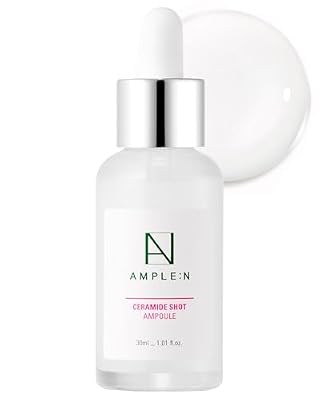
Specs
- Size: 1.01 fl oz (30 ml)
- Texture: concentrated milky ampoule
- Key ingredients: ceramide complex built around Ceramide NP, with humectants
- Korean pharmacy-style ampoule format from Coreana
AMPLE:N’s Ceramide Shot is the clearest example of the emulsion-in-a-dropper idea: a concentrated, opaque ampoule whose whole purpose is delivering ceramide in a lipid-friendly base. It wears like a very light cream, which is exactly the point — if a ceramide serum feels like a cream, it is probably carrying more ceramide than the clear ones. Best suited to targeted use on dry, tight areas or as the lipid step in a layered routine.
3. Cetaphil Ceramide Serum (Serum Side)

Specs
- Size: 1 fl oz (30 ml)
- Texture: lightweight water-based serum
- Key ingredients: ceramide with skin-soothing supporting ingredients
- Fragrance-free; formulated for sensitive, reactive skin
The Cetaphil entry represents the other end of the serum spectrum: a light, water-based formula built for skin that tolerates almost nothing. Be clear-eyed about the trade — this style of serum carries less ceramide than the milky ampoules above, and its real strengths are gentleness, layerability and hydration support. For very reactive skin that finds emulsions heavy or stinging, that trade can be worth it, with a cream on top doing the heavy lipid work.
4. CeraVe Moisturizing Cream (Cream Side)

Specs
- Size: 16 fl oz tub
- Ceramides: NP, AP and EOP (the 1, 3 and 6-II family), plus cholesterol and phytosphingosine
- Base: rich petrolatum-containing cream with MVE slow-release technology
- Fragrance-free and non-comedogenic; face and body use
This is the reference ceramide cream for a reason: it names three ceramide species and pairs them with cholesterol and fatty acids, the full lipid system rather than ceramide alone. The petrolatum base gives it the occlusive seal a serum cannot provide, which is why creams win for very dry, flaking or winter-stressed skin. It is utilitarian rather than elegant, and the tub format serves face and body alike — a practical anchor product for a barrier-focused routine.
5. ILLIYOON Ceramide Ato Concentrate Cream (Cream Side)

Specs
- Size: 200 ml tube
- Key ingredient: Ceramide Skin Complex (encapsulated ceramide), soybean-derived
- Texture: concentrated balm-cream that melts on contact
- Fragrance-free; formulated for sensitive and very dry skin
Illiyoon’s Ato cream uses encapsulated ceramide capsules that visibly melt into the skin as you spread it — a formulation trick aimed at getting lipid into an emulsion evenly. It is richer and more balm-like than the CeraVe, aimed squarely at very dry, sensitive skin that needs a substantial final layer. As the cream-side counterpart to the ampoules above, it shows what the format does best: a thick, slow water-loss barrier with the ceramide system embedded in it.
Usage and Buying Notes
Apply a ceramide serum after cleansing and any watery toner, while skin is slightly damp, then follow with moisturizer. A ceramide cream goes last in the routine (before sunscreen in the morning). If you use only one format, make it the cream in winter or during retinoid adjustment, and consider the milky serum in humid weather or under makeup. Give any new barrier product two to four weeks of consistent use before judging it; barrier comfort builds gradually. Patch-test first if your skin is reactive, and stop and seek medical advice if you develop cracking, weeping or persistent itching — those are not cosmetic problems.
FAQ
Can a ceramide serum replace my moisturizer?
Only the milky emulsion kind comes close, and even then most skin does better with a cream on top. A watery ceramide serum is a layering step, not a seal.
Why do some ceramide serums look milky and others clear?
Ceramides are fats and need an oil phase to travel in. Milky means emulsion, which means a real lipid load. Clear and watery means the ceramide is present in a much smaller amount.
Does “5 ceramides” mean a product is stronger?
No. It counts species, not dose. Percentages are rarely disclosed, so species count plus the presence of cholesterol and fatty acids is a better quality signal than any number on the front.
Can I use ceramide products with retinol or vitamin C?
Yes — ceramides are one of the easiest ingredients to pair. They are commonly used to buffer retinoid dryness, applied before or after the active depending on sensitivity.
Will a ceramide cream fix my eczema?
No. Ceramide products support comfort and hydration, but eczema is a medical condition. A cosmetic cream is not a treatment, and flares need a clinician’s input.
Conclusion
Ceramide serum vs ceramide cream is really a question of texture and lipid load. Choose a milky serum or ampoule when you want barrier lipids in a light, layerable step; choose a cream when you need the full lipid system plus an occlusive seal. Read the species names, look for cholesterol and fatty acids alongside, ignore species-count marketing, and judge every product by how it feels on the skin — that film tells you more than the word “serum” ever will.