Last updated: November 22, 2026
- Quick answer
- Ebanel Urea Cream 40 Percent plus Salicylic Acid 2 Percent
- Grocerism Urea Cream 40 Percent for Feet Plus 2 Percent Salicylic Acid
- PurOrganica Urea 40 Percent Foot Cream
- NUVADERMIS Urea Cream 40 Percent for Feet
- Aphesia Urea Cream 40 Percent Maximum Strength
- How to choose
- Who should skip
- Frequently Asked Questions
- Final verdict
- Product and ASIN Reference
Cracked heels and thick calluses are mostly a water problem: the skin on your soles has no oil glands, and when it dries out it hardens instead of flaking away. Urea is the ingredient dermatologists reach for because it does two jobs at once, drawing water into the skin and loosening the bonds between dead cells so thick patches soften and shed. At the 40 percent strength used by every cream in this roundup, urea works as a true keratolytic, closer to a leave-on treatment than a daily lotion. The five creams below pair that strength with different supporting ingredients, textures, and jar sizes, so you can match one to how rough your feet are and how much scent and grease you will tolerate.
As an Amazon Associate, we earn from qualifying purchases.
Quick answer
For most people with seriously cracked heels, Ebanel is the safest first buy, pairing 40 percent urea with 2 percent salicylic acid and a rich oil blend. Grocerism adds hyaluronic acid for drier skin, PurOrganica is the made-in-USA classic, NUVADERMIS suits full-body use, and Aphesia is the lightweight, non-greasy option.
Ebanel Urea Cream 40 Percent plus Salicylic Acid 2 Percent

Ebanel is the name most people meet first in this category, and its formula shows why. The 40 percent urea is backed by 2 percent salicylic acid, so the cream softens thick skin from two directions, urea pulling in water and loosening dead cells while the salicylic acid helps the roughest layers shed. Around those two actives the brand builds a moisturizing base of shea butter, coconut oil, jojoba oil, aloe vera, and tea tree oil, which makes the finish richer and more occlusive than the lighter creams in this list.
The jar holds 4.6 ounces, and the listing pitches the cream beyond feet, for knees, elbows, hands, cuticles, and thickened toenails, which the softening action genuinely suits. Tea tree gives it a noticeable herbal scent that some people like and others will not, and the oil-rich base can feel greasy if you apply it right before walking around barefoot, so it works best as an overnight treatment under socks.
Choose it if your heels are deeply cracked and callused rather than merely dry, and you want the strongest two-active formula here. If your skin is only mildly rough, this strength is more than you need, and a lighter cream below will be easier to live with daily.
Grocerism Urea Cream 40 Percent for Feet Plus 2 Percent Salicylic Acid

Grocerism matches Ebanel on the headline actives, 40 percent urea with 2 percent salicylic acid, but changes the supporting cast. Hyaluronic acid joins the formula alongside tea tree oil and aloe vera, which tilts the cream toward hydration as much as shedding, a useful balance if your feet are both callused and chronically dry rather than thick with hard skin alone.
The jar is the joint largest here at 5.29 ounces, and the brand sells the same formula in larger and multi-jar listings, which matters because urea creams only work with consistent daily use over several weeks. The texture sits in the middle of this group, a cream rather than an ointment, so it absorbs faster than the Ebanel and leaves less residue on bedding, though very rough heels will still benefit from socks overnight.
Two honest notes. The ingredient story is strong, but the brand is a marketplace label rather than a pharmacy name, so the listing, not a drugstore shelf, is the reference. And like most picks here, the salicylic acid means it is not the right choice for broken skin or for anyone told to avoid salicylates. For callused, thirsty feet that need value per ounce, it is the practical pick.
PurOrganica Urea 40 Percent Foot Cream

PurOrganica is the veteran of this group, a made-in-USA cream sold in the same 4-ounce format for years and marketed as dermatologist tested. It keeps the formula simpler than the newer marketplace brands: 40 percent urea does the heavy lifting, supported by a botanical blend the brand builds on aloe vera, chamomile, tea tree oil, and safflower seed oil, aimed at calming skin while the urea softens it.
Because the supporting ingredients lean soothing rather than acidic, this is the gentlest-feeling of the full-strength creams here, and the one to consider if salicylic acid has irritated your skin before. Check the current listing before ordering, though: PurOrganica sells look-alike listings with and without a bundled pumice stone, and pack sizes change, so confirm you are getting the plain cream if that is what you want.
The trade-offs are size and scent. Four ounces is the smallest full-size container in this roundup, so heavy users will reorder sooner, and the botanical blend gives it a light herbal smell. For buyers who prefer an established US-made label and a shorter ingredient story over the newest formula, it remains the reference point in this category.
NUVADERMIS Urea Cream 40 Percent for Feet
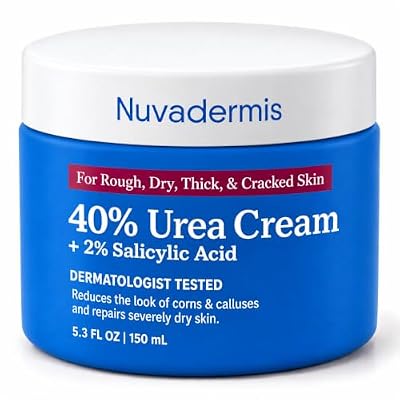
NUVADERMIS positions its cream as a full-body treatment rather than a foot-only product, and the published ingredient list backs that up. Alongside 40 percent urea and 2 percent salicylic acid it includes coconut oil, shea butter, tea tree leaf oil, vitamin E, trehalose, zinc PCA, and allantoin, a mix aimed as much at calming and protecting skin as at shedding it. The brand also labels the cream cruelty free, dermatologist tested, non-greasy, and neutral in scent.
That neutral scent and lighter finish are its real distinctions. At 5.29 ounces the jar matches the largest here, and the formula is pitched at hands, elbows, and body as well as feet, so one jar can cover the rough patches most people actually have. The non-greasy claim is relative, though: any 40 percent urea cream leaves some film, and on feet it still pairs best with socks.
Pick NUVADERMIS if scent is a dealbreaker for you, or if you want one maximum-strength jar for several body areas instead of a dedicated foot product. If your problem is a single pair of severely callused heels and nothing else, the more foot-focused formulas above aim more directly at it.
Aphesia Urea Cream 40 Percent Maximum Strength

Aphesia is the newest formula in this group and the one designed for people who dislike heavy creams. The base is 40 percent urea with salicylic acid, but the supporting list reads like a face cream: niacinamide, panthenol, vitamin E, allantoin, shea butter, jojoba oil, aloe, and tea tree oil, in a lightweight, non-greasy texture with a light camellia scent. The jar holds 5.3 ounces.
That lighter texture cuts both ways. It absorbs quickly enough for morning use before shoes, which makes daily consistency easier, and consistency is what decides whether any urea cream works. But on very thick, hard callus, a fast-absorbing cream can feel less forceful than the richer Ebanel, and you may go through the jar faster because it invites generous application.
Two cautions belong with this pick. The published ingredient list includes methylparaben, which will not bother most people but matters if you specifically shop paraben free. And as the newest label here, Aphesia has the shortest track record of the five. Choose it if texture and scent decide whether you will actually use a urea cream every day; choose a richer formula if your heels are severely built up.
How to choose
Start with strength. Urea is sold from 10 to 40 percent, and the percentage changes the job: lower strengths mostly moisturize, while 40 percent is a keratolytic that actively breaks down thick, hard skin. Every cream here is 40 percent because this roundup is for callused, cracked feet; if your feet are only dry, a milder cream will be more comfortable for daily use.
Next, look at the partner active. Four of these five add 2 percent salicylic acid, which speeds shedding but rules the cream out for broken skin and for anyone avoiding salicylates. PurOrganica is the option here without that pairing. Then weigh texture and scent, because a cream you skip does nothing: rich ointment-style formulas suit overnight sock treatments, lighter ones suit mornings.
Finally, plan on time. Urea softens gradually over two to four weeks of daily use, not overnight, and it maintains rather than cures: stop using it and callus rebuilds. Apply to clean, slightly damp feet, keep it off open cracks and between-toe skin, and wash your hands after applying.
Who should skip
Skip 40 percent urea creams entirely if you have diabetes or poor circulation in your feet, and talk to a doctor or podiatrist first instead: keratolytics can irritate or break down fragile skin, and foot injuries heal slowly with those conditions. The same caution applies to anyone with open cracks, cuts, eczema flares, or infections on the treatment area, since urea and salicylic acid sting and can worsen damaged skin.
Avoid the salicylic acid formulas if you are pregnant, buying for a child, or sensitive to aspirin and other salicylates, and patch test any of these creams on a small area before full use. If your only issue is mild dryness, skip this strength altogether and use a regular foot cream.
Frequently Asked Questions
How long does a 40 percent urea cream take to work?
Most people feel softer skin within the first week of daily use, but thick callus usually needs two to four weeks of consistent application before it thins noticeably. Urea works gradually, loosening dead skin layer by layer rather than peeling it off in sheets. Applying after a shower or soak, when skin is hydrated, and wearing socks afterward speeds the process.
Can I use urea foot cream every day?
Yes, daily use is how these creams are designed to work, once or twice a day on clean skin. Once calluses soften, many people drop to a few applications a week or switch to a lower-strength cream for maintenance. If you notice redness, burning, or peeling on healthy skin, cut back, since that usually means you are applying too much or too often.
Is urea cream the same as a foot peel mask?
No. A peel mask is a one-off acid soak in a plastic bootie that makes skin shed in sheets several days later, and peel masks get their own separate coverage. A urea cream is a leave-on daily treatment that softens callus gradually and also moisturizes, so it suits maintenance and thick, stubborn patches better than a single dramatic peel.
Can I use these creams on my hands, knees, and elbows?
Yes. Urea softens thick skin anywhere, and most of these listings name hands, knees, and elbows as uses, with Ebanel also pitched for thickened toenails and cuticles. Keep the salicylic acid formulas off your face and off thin or sensitive skin, apply a smaller amount than you would on soles, and wash your hands afterward unless your hands are the treatment area.
Final verdict
For severely cracked, callused heels, Ebanel is the default pick, with the strongest two-active formula and a rich base built for overnight use. Grocerism is the value alternative with hyaluronic acid for drier skin, PurOrganica suits buyers who want the established US-made cream without salicylic acid, NUVADERMIS covers full-body use with a neutral scent, and Aphesia wins on texture. Whichever you choose, give it daily use for a month before judging it.
Product and ASIN Reference
| Product | ASIN |
|---|---|
| Ebanel Urea Cream 40 Percent plus Salicylic Acid 2 Percent, 4.6 oz | B082TSRP9J |
| Grocerism Urea Cream 40 Percent for Feet Plus 2 Percent Salicylic Acid, 5.29 oz | B08TT7Q8YW |
| PurOrganica Urea 40 Percent Foot Cream, 4 oz | B01N7ULJSD |
| NUVADERMIS Urea Cream 40 Percent for Feet, 5.29 oz | B09S39W58D |
| Aphesia Urea Cream 40 Percent Maximum Strength, 5.3 oz | B0F1Z6H4FX |