Last updated: September 27, 2026
Rhode Glazing Milk is a milky essence-toner designed to prep the skin with hydration before serums and moisturizers. It usually costs around $29–35. It is part of Rhode’s focus on the “glazed skin” look: dewy, hydrated, and glowing. This review explains what the product is, how it differs from a typical toner, and whether it is worth adding to your routine.
What is inside
Glazing Milk is positioned as a ceramide-rich essence. It combines barrier-supporting lipids with humectants and soothing ingredients in a lightweight milky base. The goal is to hydrate and prepare the skin so that the following steps absorb evenly and the finish looks smoother. As with any product, check the current ingredient list, as formulations can be updated.

Rhodes Glazing Milk Lightweight Milky Facial Essence for Hydrated and Smooth Looking Skin 4.2 oz/124 mL
Included for 'Rhode Glazing Milk Review: Does It Actually Work?' as a relevant option in this category; details come from the product listing.
View on Amazon
BYOMA Milky Toner - Hydrating Face Toner, Moisturizing, Korean Skincare
Included for 'Rhode Glazing Milk Review: Does It Actually Work?' because the listing specifies Hydrating Face Toner and Moisturizing, details this guide uses to compare options.
View on Amazon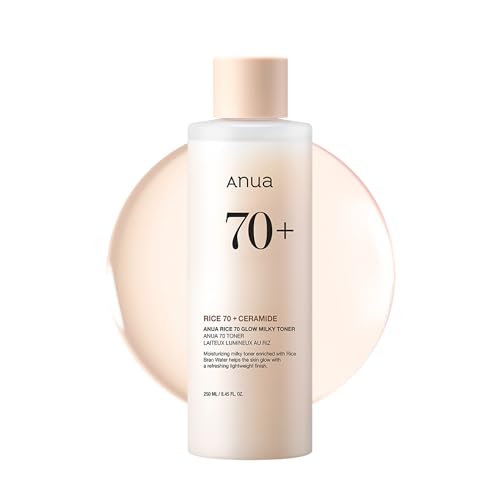
Anua Rice 70 Glow Milky Toner, Non Comedogenic, Korean Skincare, 8.45 fl.oz
Included for 'Rhode Glazing Milk Review: Does It Actually Work?' because the listing specifies Non Comedogenic and Korean Skincare, details this guide uses to compare options.
View on Amazon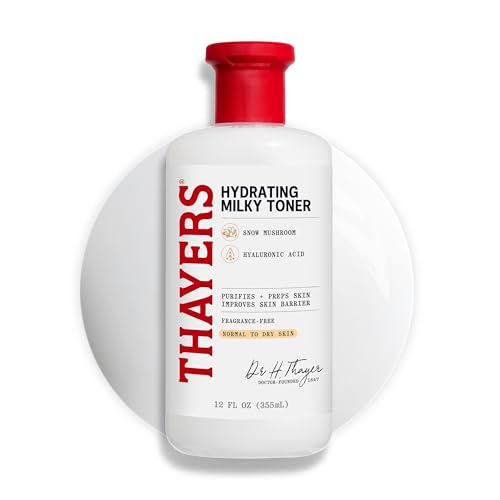
THAYERS Milky Hydrating Face Toner with Snow Mushroom Tremella, 12 Fl Oz
Included for 'Rhode Glazing Milk Review: Does It Actually Work?' because the listing specifies 12 Fl Oz, details this guide uses to compare options.
View on AmazonEssence vs toner vs milk
Traditional toners were designed to remove residue and rebalance skin after cleansing. Modern hydrating toners, essences, and milks focus instead on adding hydration. A milk is slightly richer than a watery toner, often containing a small amount of emollients. It sits between a toner and a lightweight lotion.
What to expect
| Effect | Typical result | Timeframe |
|---|---|---|
| Hydration | Softer, more supple skin | Immediately |
| Glow | Dewy, smooth finish | Immediately |
| Barrier comfort | Less tightness after cleansing | 1–2 weeks |
| Makeup base | Smoother application | Immediately |
| Dark spots or wrinkles | Little effect | Needs targeted actives |
Who it suits
- Dry and dehydrated skin that feels tight after cleansing.
- Normal and combination skin that wants extra glow.
- People who enjoy layered routines with a hydration-focused first step.
Who may not need it
If your skin is oily and you already use a serum and moisturizer, an extra hydrating layer may feel unnecessary or too dewy. If budget is tight, a simple hydrating toner or serum can do a similar job for less.
How to use it
- After cleansing, shake the bottle if needed and dispense a few drops into your palms.
- Press into the face and neck until mostly absorbed.
- Follow with serums, such as a peptide or vitamin C serum.
- Apply moisturizer.
- In the morning, finish with broad-spectrum SPF 30+.
Layering tips
Because it is a hydrating prep step, it pairs with almost everything. It can help buffer retinoids when applied before them and makes the skin feel more comfortable after exfoliating acids. For a lighter routine in summer, some people use it on its own under sunscreen.
Texture and finish
The milk has a fluid, lightly creamy texture that sinks in within a minute. It leaves a soft, dewy finish without stickiness in most skin types. It works well under makeup, giving a smooth base.
Value compared with alternatives
At around $29–35, it is priced above many hydrating toners and milks from K-beauty or pharmacy brands, which often cost $12–25 for larger sizes. The core function — lightweight hydration with barrier-friendly ingredients — is widely available. What you pay for is the texture, the brand’s aesthetic, and the way it fits into the Rhode routine. If you enjoy it and use it consistently, that has value; if you want the most cost-effective option, alternatives exist.
A simple “glazed skin” routine
- Morning: gentle cleanser, Glazing Milk, lightweight serum, moisturizer, SPF 30+.
- Evening: cleanser, Glazing Milk, treatment (retinoid or acid on alternating nights), moisturizer.
- Extra glow: a thin layer of a peptide or hydrating serum after the milk.
Realistic expectations
A hydrating essence improves how skin looks and feels day to day, especially in dry climates or seasons. It does not replace treatment products or sunscreen and will not change long-term concerns like wrinkles or pigmentation on its own. Think of it as a comfort and glow step that supports the rest of your routine.
FAQ
Can I use Rhode Glazing Milk as a moisturizer?
For oily skin in humid weather, some people use it alone. Most skin types still benefit from a moisturizer on top, especially in dry or cold conditions.
Is it suitable for sensitive skin?
It is designed to be gentle and barrier-friendly. As with any new product, patch test first if your skin is reactive.
Bottom line
Rhode Glazing Milk is a pleasant, hydrating essence that delivers an immediate dewy finish and supports a comfortable barrier. It suits dry, dehydrated, and normal skin that enjoys layering. It is not essential, and cheaper alternatives offer similar hydration, but for those who love the glazed look and the texture, it is a nice addition.