Last updated: November 23, 2026
Disclosure: As an Amazon Associate, I earn from qualifying purchases.
“Rice” is one of the slipperiest words on a Korean serum label, because it can stand for four different ingredients: rice water, rice bran extract, rice bran oil, or a rice ferment filtrate. Those are not interchangeable, they do not have the same evidence behind them, and the INCI list — not the front of the bottle — tells you which one a serum actually contains. This roundup reads the INCI first and groups the picks by which rice ingredient they really use.
A second honesty point: the brightening reputation of rice itself rests mostly on tradition and small studies. In most serums below, the ingredients doing the measurable brightening work are the declared partners — alpha-arbutin and niacinamide — while the rice contributes hydration, antioxidant support, and a softer look to the skin’s surface. That is still a reasonable thing to buy; it is just worth knowing which ingredient earns the credit. Everything here is framed in appearance terms only: no serum whitens skin, and any brightening routine stands or falls on daily sunscreen.
How to Choose
Identify which “rice” you are actually getting. Look for the INCI name. Oryza Sativa (Rice) Bran Water is the water fraction drawn from bran; Oryza Sativa (Rice) Extract is a concentrated extract; rice bran oil is an emollient lipid that rarely appears in watery serums; and a ferment filtrate (look for Saccharomyces/Rice Ferment Filtrate or a brand’s fermented black rice extract) is rice transformed by fermentation. A ferment filtrate serum is a different product story from a rice-extract serum — fermentation changes the ingredient’s composition and adds its own byproducts — so do not let a label blur the two.
Read percentages as extract-solution share, not pure active. When a Korean label says a serum is built on “68% rice bran water,” that percentage is almost always the share of an extract solution or ingredient water in the formula, not 68% of a purified active compound. It tells you the rice ingredient leads the formula; it does not let you rank two serums by dose.
Credit the partners for brightening. If a rice serum visibly evens the look of tone, the declared niacinamide or alpha-arbutin in it is the likeliest reason. Rice on its own is a gentle hydrator and antioxidant with a long traditional history and thin clinical data. Buy the rice for comfort and glow; buy the partners for the brightening work.
Separate leave-on serums from peeling ampoules. Two picks below are exfoliating ampoules with AHA and BHA. They are treatments used a few times a week, not daily hydrating serums, and they do not layer like one. Mixing the two jobs up is the fastest way to over-exfoliate.
The 5 Best Rice Serums
1. Beauty of Joseon Glow Deep Serum (Rice + Alpha-Arbutin)

Specs
- Size: 30 ml / 1.01 fl oz, dropper bottle
- Rice form: rice bran water — the INCI list leads with Oryza Sativa (Rice) Bran Water, which the brand declares at 68% of the formula
- Declared brighteners: alpha-arbutin 2%, plus niacinamide
- Supporting ingredients: panthenol, glycerin, grain extracts
- Fragrance: fragrance-free
This is the most straightforward rice serum here and the one whose brightening claim is easiest to audit: the label names its workers. The 2% alpha-arbutin and the niacinamide are established brightening ingredients at declared levels, while the rice bran water base supplies the hydration and soft-focus glow the line is known for. Treat the 68% figure as the How to Choose section advises — bran water leads the formula; it is not a 68% active dose. If you want one daily leave-on rice serum for the look of uneven tone, this is the pick, and the gentlest formula in the roundup.
2. Dr.Melaxin Peel Shot Glow White Rice Peeling Ampoule

Specs
- Size: 80 ml / 2.71 fl oz
- Rice form: white rice extract
- Actives: AHA and BHA exfoliating acids
- Supporting ingredients: niacinamide, hyaluronic acid
- Format: peeling treatment ampoule, not a daily leave-on serum
This ampoule is in the roundup with its job stated plainly: it is an exfoliating treatment that uses rice extract as its supporting story, and the AHA/BHA pair does the actual work of loosening dull surface cells and clearing pore buildup. That makes it a complement to a leave-on rice serum, not a substitute — smoother surface texture is what makes any brightening routine look brighter. Keep it to a few sessions a week, do not stack it with other strong exfoliants, and be diligent with sunscreen, since freshly exfoliated skin is more sun-sensitive.
3. haruharu wonder Black Rice Hyaluronic Anti-Wrinkle Serum

Specs
- Size: 50 ml / 1.6 fl oz
- Rice form: fermented black rice extract
- Supporting ingredients: hyaluronic acid, beta-glucan
- Positioning: hydration and the look of firmness and fine lines
- Formula standards: vegan
Black rice is a different ingredient from the white and bran rice above: its dark pigment fraction is rich in anthocyanin antioxidants, and haruharu ferments it, which puts this serum in the ferment story rather than the extract story. What you can judge directly is the format — a hydrating gel-serum that plumps the surface with hyaluronic acid so fine lines look softer while skin is hydrated. The “anti-wrinkle” language is appearance framing: no topical rice ferment restructures skin. Buy it as the hydrating, antioxidant-leaning black rice pick, especially if brighteners are not your goal.
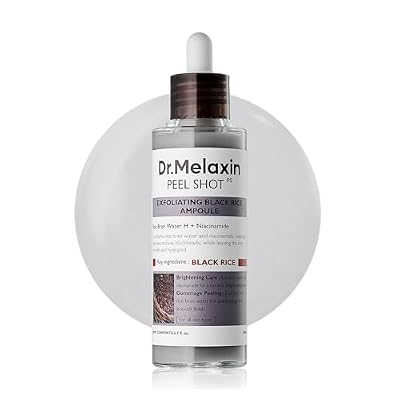
4. Dr.Melaxin Peel Shot Black Rice Exfoliating Ampoule
Specs
- Size: 80 ml / 2.7 oz
- Rice form: black rice bran water
- Actives: AHA and BHA exfoliating acids
- Supporting ingredients: niacinamide
- Focus: blackheads, sebum and pore care alongside surface brightening
The black rice sibling of pick 2, aimed more at oily and congested skin: the positioning shifts toward sebum control and blackhead care, with rice bran water and niacinamide supporting the acid pair. You do not need both Peel Shot ampoules — choose the white rice version if dullness is the main complaint and this one if congestion is. The same acid rules apply: a few times a week at most, no stacking with other exfoliants, and sunscreen is non-negotiable. As with its sibling, the visible work is done by the acids; the rice fraction is the supporting ingredient, not the exfoliant.
5. haruharu wonder Black Rice Botanical 2GF Ampoule

Specs
- Size: 30 ml / 1 fl oz
- Rice form: black rice extract
- Headline ingredients: “2GF” growth-factor-inspired peptides (EGF/FGF story)
- Positioning: wrinkle care and the look of elasticity
- Formula standards: vegan
This ampoule pairs black rice with a growth-factor narrative, and that narrative needs the honest frame: the EGF-style ingredients used in cosmetics are synthetic peptides, the topical evidence for them is limited and mostly small-scale, and regulators in some markets restrict how they can be sold. What is not in dispute is the base — a concentrated black rice ampoule that hydrates and leaves skin looking plumper and calmer. Buy it for the black rice formula and the ampoule texture, and treat the 2GF story as a bonus claim rather than the reason.
Usage and Buying Notes
Order matters more than quantity. A leave-on rice serum goes on after cleansing and toner, before cream; two or three drops pressed in is enough. The peeling ampoules replace the serum step on the nights you use them — not an extra layer on top.
Give a brightening routine a fair trial and a firm limit. Surface tone changes on the scale of a skin cycle, so judge a leave-on rice serum after six to eight weeks of consistent use, with sunscreen every morning. If nothing has changed by then, the formula is not doing the work for you.
Patch-test the acid ampoules and any ferment-first formula. Ferments occasionally bother skin that reacts to yeast-derived ingredients, and AHA/BHA products can sting compromised barriers. If your barrier is already irritated, fix that first — the rice bran water serum is the only pick here that belongs in a recovery routine.
Finally, check the INCI on the listing before you buy. Rice serums are reformulated often, and the current listing’s ingredient list is the only reliable statement of which rice ingredient you are paying for.
FAQ
Does rice itself brighten skin, or is it the other ingredients?
Mostly the other ingredients, in these formulas. Rice has traditional use and small-study support for hydration and antioxidant effects, but the declared alpha-arbutin and niacinamide in a serum like the Beauty of Joseon pick are the ingredients with the established brightening track record. Rice contributes comfort and glow; its partners do the measurable tone work.
What does a percentage like “68% rice bran water” actually mean?
It means that ingredient — an extract solution or ingredient water — makes up that share of the formula. It is not a 68% concentration of a purified active, and brands do not publish underlying active levels, so percentages cannot rank one rice serum’s potency against another’s.
Is a rice ferment filtrate serum the same as a rice extract serum?
No. An extract serum delivers rice components as extracted; a ferment filtrate has been transformed by fermentation, which changes its composition and adds byproducts. They are different ingredients with different INCI names, not interchangeable versions of the same thing.
Can I use a rice peeling ampoule every day?
That is not what it is for. The Peel Shot ampoules contain AHA and BHA and are treatments for a few sessions a week. Daily use invites over-exfoliation — stinging, flaking, a worse-looking barrier — and exfoliated skin needs consistent sunscreen.
Do I still need sunscreen if my rice serum is working?
Yes — sunscreen decides whether any brightening routine holds. UV drives new discoloration daily, and no serum outruns it. A rice serum improves the look of existing uneven tone only while sunscreen prevents the next round.
Conclusion
Choose by the rice ingredient first and the claim second. For a daily leave-on serum with auditable brightening partners, the Beauty of Joseon Glow Deep Serum is the clearest buy. For hydration with a fermented black rice story, haruharu’s Anti-Wrinkle Serum is the gentler all-rounder and its 2GF Ampoule the concentrated option — headline claim kept in perspective. And if dullness or congestion is the real problem, a Dr.Melaxin peeling ampoule used a few times a week will do more than any leave-on serum. Whichever you pick, read the INCI to confirm which “rice” you are getting, credit the partners for the brightening, and let sunscreen hold the result.