Last updated: October 4, 2026
The Short Answer
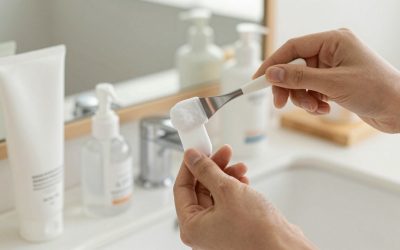
For most skincare jars, a spatula measuring 2.5 to 3 inches long (6.4 to 7.6 cm) with a scoop end about 0.25 to 0.45 inch wide (0.6 to 1.1 cm) is the most useful all-purpose size. It reaches into standard face cream, gel moisturizer, sleeping mask, and body butter jars without taking up much space in a bathroom organizer or travel bag.
Choose a narrower spatula—around 0.2 to 0.3 inch wide (0.5 to 0.8 cm)—for eye cream and small jars with openings under 1.5 inches (3.8 cm). Choose a longer, broader tool—about 3.5 to 4.5 inches long (8.9 to 11.4 cm)—for deep jars, large mask tubs, and body creams. The key measurement is not the jar’s outside diameter: it is the inside opening width and the depth from the rim to the bottom.
As an Amazon Associate we earn from qualifying purchases at no extra cost to you.
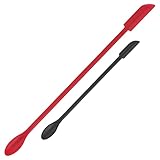

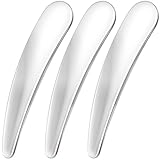

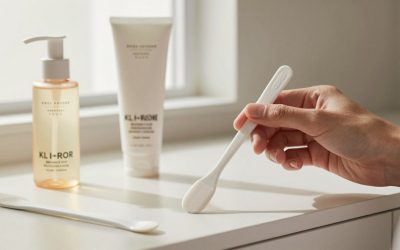
A small silicone or stainless-steel spatula is generally easier to keep clean than dipping fingers into a product. In 2026, compact two-piece sets remain a practical choice because one can stay at the vanity while the other goes in a toiletry bag or dries after washing.
Standard Sizes
Cosmetic spatulas are often sold by overall length, but the scoop width matters just as much. A tool may be long enough to reach the bottom of a jar yet still be awkward if its paddle is wider than the opening. Use the chart below as a practical shopping guide.
| Spatula Size Category | Overall Length | Typical Scoop Width | Best Jar Opening | Best Uses |
|---|---|---|---|---|
| Micro sampler | 1.5–2.25 in. / 3.8–5.7 cm | 0.15–0.25 in. / 0.4–0.6 cm | 0.75–1.25 in. / 1.9–3.2 cm | Eye cream, spot treatments, sample pots, lip masks |
| Mini jar spatula | 2.25–3 in. / 5.7–7.6 cm | 0.25–0.4 in. / 0.6–1 cm | 1.25–2.25 in. / 3.2–5.7 cm | Face cream, gel moisturizer, essence balm, small masks |
| Standard cosmetic spatula | 3–4 in. / 7.6–10.2 cm | 0.35–0.55 in. / 0.9–1.4 cm | 1.75–3 in. / 4.4–7.6 cm | Most moisturizer jars, cleansing balms, clay masks |
| Long-reach spatula | 4–5.5 in. / 10.2–14 cm | 0.4–0.7 in. / 1–1.8 cm | 2.25 in. and wider / 5.7 cm and wider | Deep jars, body butter, large treatment tubs |
| Wide mixing spatula | 3.5–5 in. / 8.9–12.7 cm | 0.6–1 in. / 1.5–2.5 cm | Wide bowls or tubs, not narrow-neck jars | Mixing masks, decanting creams, salon or spa use |
For a typical 1.7-ounce (50 mL) face cream jar, start with a 2.5- to 3-inch spatula. For larger 3.4-ounce (100 mL) jars, a 3- to 4-inch model is usually more comfortable. Small two-piece silicone sets commonly sell for about $4.50 to $6, while bulk packs of short disposable-style cosmetic spatulas can cost roughly $5 to $8 per 100 pieces. Small stainless-steel versions are often priced around $5 to $7 for one or two tools.
How to Measure Your Space
You do not need special equipment to size a skincare spatula. A ruler marked in inches and millimeters is enough. Measure the jar after removing the lid and any inner protective seal.
- Measure the inside opening. Place the ruler across the narrowest usable part of the jar mouth, from inner edge to inner edge. Do not measure the outer rim. If the opening measures 1.5 inches (3.8 cm), choose a scoop no wider than about 0.5 inch (1.3 cm), leaving room to angle and turn it.
- Measure the usable depth. Measure from the top rim down to the jar bottom. For a 2-inch-deep (5.1 cm) jar, a 2.5-inch (6.4 cm) spatula provides enough reach while still leaving a handle above the rim.
- Account for the shoulder. Some jars are wide at the base but narrow near the top. If the opening is smaller than the body, size the spatula to the opening—not the widest part of the container.
- Check the product texture. Thick balm and clay mask formulas need a firmer, slightly wider paddle. Thin gels and lightweight creams work well with narrow silicone or plastic spatulas.
- Leave a handling allowance. Add at least 0.5 inch (1.3 cm) to the jar depth when choosing overall length. This keeps the tool from disappearing below the rim as the product level drops.
- Consider storage. If the spatula will sit inside the lid, measure the lid’s interior clearance. A 3-inch tool may fit a low-profile jar lid, while a 4-inch model may not.
By Room or Use Case
Bathroom Vanity: Choose a 2.5- to 3-Inch Everyday Spatula
For a daily moisturizer, cleansing balm, or nighttime mask kept beside the sink, a 2.5- to 3-inch spatula is the easiest size to manage. Look for a scoop width between 0.3 and 0.45 inch (0.8 and 1.1 cm). It can collect a pea-size amount of cream without delivering an oversized portion.
Silicone is a good fit for glass vanity jars because it is gentle against the inner wall and less likely to make a sharp clinking sound. Stainless steel feels more substantial and is especially useful for dense creams, but choose a rounded, polished edge rather than a thin, sharp-edged metal paddle.
Small Eye Cream and Treatment Jars: Use a 1.5- to 2.5-Inch Narrow Tool
Eye creams, lip sleeping masks, spot-treatment balms, and sample-size jars call for the smallest scoop. Select a tool no wider than 0.25 inch (0.6 cm) when the jar opening is about 1 inch (2.5 cm) across. A broad spatula can scrape product onto the rim, where it is more likely to dry out or collect residue.
For these products, a tiny spoon-shaped end is often more useful than a flat paddle. It helps portion a very small amount—roughly the size of a grain of rice for eye cream—without repeatedly dipping back into the container.
Deep Moisturizer and Cleansing Balm Jars: Use a 3- to 4-Inch Tool
Choose a 3- to 4-inch spatula for jars deeper than 2 inches (5.1 cm), especially when you expect to use the product to the last bit. The ideal handle extends at least 0.75 inch (1.9 cm) above the rim when the scoop touches the bottom.
A firm silicone blade is excellent for sweeping product from the curved lower corners of a jar. A slim stainless-steel spatula also works well, particularly for balm formulas that soften with warmth. Avoid overly flexible, floppy silicone in dense cleansing balms; it can bend rather than lift the product cleanly.
Body Butter, Hair Mask, and Large Tubs: Choose 4 to 5.5 Inches
Large 6- to 12-ounce (177 to 355 mL) tubs benefit from a 4- to 5.5-inch spatula with a 0.5- to 0.7-inch-wide (1.3 to 1.8 cm) paddle. This size is long enough for a deep tub and broad enough to transfer a useful amount to your palm. It is also practical for hair masks, where you may need more product than a facial moisturizer requires.
For a wide tub that stays in a shower, prioritize a handle with a textured grip or flattened end. A smooth, very short spatula is easy to drop when hands are wet. Keep the tool on a small dish or lid rather than balanced on the tub edge.
Travel Bags and Decanted Products: Keep It Under 3 Inches
For travel, use a 2- to 3-inch spatula that can fit in a toiletry pouch without poking through mesh pockets. A lightweight silicone tool generally weighs only a few grams, while a compact stainless version is still easy to pack. If you decant creams into 0.5- to 1-ounce (15 to 30 mL) jars, a 2.25-inch spatula with a narrow scoop is usually sufficient.
Common Sizing Mistakes
Buying based on overall length alone: A 4-inch spatula may sound versatile, but it is not useful for a narrow jar if its scoop is too wide. Always compare paddle width with the inside opening.
Choosing a scoop that fills the opening: Leave clearance around the paddle. A scoop should generally be no more than one-third to one-half of the jar’s inside width. This makes it easier to reach the sides and reduces messy product buildup around the neck.
Using a too-short tool for a deep container: A spatula that barely reaches the bottom forces fingers close to the rim and becomes frustrating when the jar is nearly empty. Add at least 0.5 inch (1.3 cm) beyond the jar depth.
Using a wide mixing blade for daily portioning: Wide spatulas are handy for masks and decanting, but they pick up too much face cream. A smaller scoop helps control how much product you use.
Ignoring cleanability: Decorative grooves, very narrow crevices, and rough unfinished edges are harder to wash. Choose a simple one-piece silicone tool or a smooth stainless-steel spatula, then wash with warm water and mild soap and let it dry fully before reuse.
FAQ
What size skincare spatula works for most face cream jars?
A 2.5- to 3-inch-long spatula with a 0.25- to 0.45-inch-wide scoop works for most 1.7-ounce (50 mL) face cream jars. It is compact, reaches standard jar depths, and portions cream neatly.
How long should a spatula be for a deep jar?
Measure the depth from the rim to the bottom, then add at least 0.5 inch (1.3 cm). For example, a jar that is 3 inches (7.6 cm) deep needs a spatula at least 3.5 inches (8.9 cm) long; a 4-inch tool will be even easier to hold.
Is silicone or stainless steel better for skincare jars?
Silicone is flexible, lightweight, and useful for scraping curved jar walls. Stainless steel is firmer and better for thick balms, clay masks, and dense creams. Either material works well when it has a smooth, easy-to-clean finish.
Can I leave the spatula inside the jar?
You can if the lid closes without pressing on the spatula and the tool is washed and dried first. However, storing it on a clean dish or inside a small protective sleeve is often more hygienic, especially in a humid bathroom.
Ready to decide? Our #1 pick for 2026 is the Micro sampler.
Live price & availability on Amazon.