Last updated: September 27, 2026
At night, combination skin needs a different balance than in the morning. There is no sunscreen to remove oil around, no makeup to hold, and no shine to control for anyone to see. That makes evening the time to clean pores in the T-zone, repair dryness on the cheeks and use the actives that are hard to fit into a daytime routine. This PM routine keeps the steps few, rotates exfoliants and retinoids so they do not compete, and treats the two zones differently where it helps.
Evening priorities for combination skin
The night routine has four goals: remove sunscreen and sebum thoroughly, keep pores in the nose and chin clear, repair the barrier on drier areas, and support smoother texture over time. You do not need a separate product for every one of those; you need the right sequence.
The PM routine, step by step
Step 1: First cleanse with oil or balm
Cleansing oils dissolve sunscreen and sebum together. Massage for 30–60 seconds, focusing on the nose and chin, then emulsify and rinse. Combination skin often sees fewer blackheads with a consistent oil cleanse.
Step 2: Second cleanse with gentle gel
Follow with a low-pH gel cleanser. Keep it brief on the cheeks. If the cheeks feel tight afterwards, the cleanser is too strong or you are washing too long.
Step 3: Active (rotate by night)
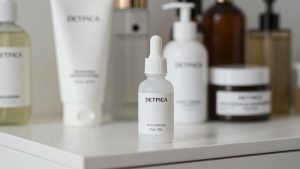
Alternate between a salicylic acid (BHA) product for the T-zone and a retinoid for overall texture. BHA is oil-soluble, which makes it well suited to clogged pores; it can be applied only to the nose, forehead and chin. A retinoid goes on the whole face in a pea-sized amount. Avoid using both on the same night while you are starting out.
Step 4: Hydrating serum
A hyaluronic acid or panthenol serum on damp skin offsets dryness from actives. On rest nights, this plus moisturizer is the whole treatment.
Step 5: Moisturizer, layered by zone
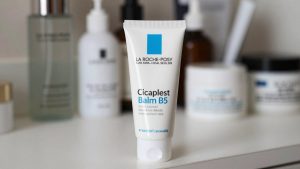
Use a gel-cream everywhere and add a richer cream to the cheeks. If your cheeks are very dry, a thin layer of occlusive balm over the cream on those areas only works well overnight.
A sample weekly rotation
| Night | Active | Where | Extra care |
|---|---|---|---|
| Mon | BHA | T-zone only | Hydrating serum everywhere |
| Tue | Retinoid | Full face | Richer cream on cheeks |
| Wed | None | — | Hydrating serum + moisturizer |
| Thu | BHA | T-zone only | Hydrating serum everywhere |
| Fri | Retinoid | Full face | Richer cream on cheeks |
| Sat | Clay mask (optional) | T-zone only, 10 min | Hydrating mask on cheeks |
| Sun | None | — | Barrier recovery |
Multi-masking on weekends
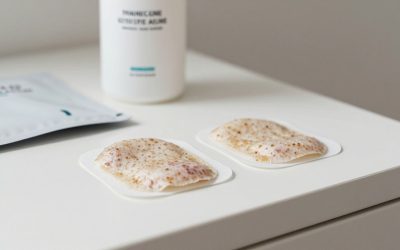
Combination skin is the classic case for applying two masks at once: a clay or charcoal mask on the T-zone and a hydrating cream or gel mask on the cheeks. Keep clay masks to about 10 minutes and do not let them crack fully dry. Skip the clay mask on any night you used BHA or a retinoid.
How to choose PM products
- BHA: leave-on liquids or gels in the 1–2% range are the common cosmetic strength. Check the current label for concentration and pH guidance.
- Retinoid: start with a low-strength retinol in a lightweight lotion rather than a heavy cream, which may feel greasy on the T-zone.
- Moisturizer: if one product must serve the whole face, a gel-cream with ceramides is the most forgiving choice.
- Fragrance: not required for results and a common cause of irritation.
Who should adapt this routine
If you are pregnant or breastfeeding, skip retinoids and ask your clinician about salicylic acid. People with rosacea, eczema or very sensitive skin should introduce one active at a time with at least two weeks between additions. Anyone using prescription acne treatments should check with their prescriber before adding over-the-counter acids or retinoids, since combining them can over-dry the skin.
FAQ
Can I use BHA and a retinoid on the same night?
Experienced users sometimes do, but it raises the risk of dryness and irritation. Alternating nights gets most of the benefit with far less trouble, especially on the drier cheeks.
Why do my cheeks flake while my nose is still oily?
That usually means an active is too strong for the cheeks. Apply BHA only to the T-zone and buffer the retinoid with moisturizer on the cheeks.
Bottom line
A PM routine for combination skin works when it treats each zone for what it needs: a thorough double cleanse, a rotating active that targets pores or texture, and moisturizer layered heavier where skin is dry. Keep the rotation simple for at least six to eight weeks before judging it.