Last updated: September 26, 2026
Years of sun show up as more than a few lines. Photodamage brings rough texture, loss of firmness, blotchy brown patches, tiny visible vessels and a thinner, more fragile surface. The most useful moisturizer for sun-damaged skin is a night cream that pairs a proven repair ingredient with enough barrier support to make it tolerable, backed by daily sunscreen. It is a slow, steady project, but it is also one of the few areas where topical skincare has strong evidence behind it.
What sun damage looks like
| Sign | What a night moisturizer can do | What it cannot do |
|---|---|---|
| Fine lines and roughness | Noticeable smoothing over 3–6 months with retinoids | Erase deep folds |
| Mottled brown pigment | Gradual fading with retinoids, niacinamide, vitamin C | Remove distinct sun spots quickly |
| Loss of firmness | Modest improvement with long-term retinoid use | Lift sagging skin |
| Visible small vessels | Reduce redness slightly by calming the barrier | Close dilated vessels (needs laser) |
| Rough, scaly spots that persist | Nothing; these need assessment | Treat possible precancerous changes |
Retinoids: the core ingredient
Retinoids are the best-studied topical treatment for photoaging. Prescription tretinoin has decades of evidence; over-the-counter retinol and retinal are gentler and slower but useful. Drugstore retinol night moisturizers such as RoC Retinol Correxion, Olay Regenerist Retinol 24 and Neutrogena Rapid Wrinkle Repair generally fall between $20 and $35; check current price. A moisturizer base makes these easier to tolerate than a standalone serum for many people with dry, thinned skin.
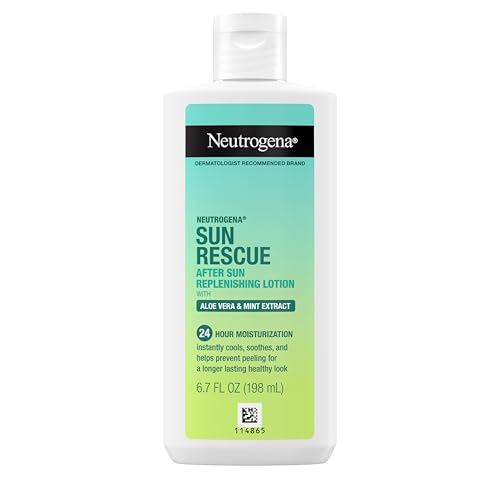
Neutrogena Sun Rescue After Sun Replenishing Lotion, Aloe Vera, 6.7 oz
Included for 'Best Moisturizer for Sun Damage: Night Repair That Is Worth Buying' because the listing specifies Aloe Vera and 6.7 oz, details this guide uses to compare options.
View on Amazon
Eucerin Advanced Hydration Antioxidant Enriched After Sun Lotion, 6.8 FL OZ
Included for 'Best Moisturizer for Sun Damage: Night Repair That Is Worth Buying' because the listing specifies 6.8 FL OZ, details this guide uses to compare options.
View on Amazon
No7 Future Renew Damage Reversal Night Cream, 1.69 oz
Included for 'Best Moisturizer for Sun Damage: Night Repair That Is Worth Buying' because the listing specifies 1.69 oz, details this guide uses to compare options.
View on AmazonHow to start
- Two nights a week for two weeks, then three nights, then nightly if comfortable.
- Apply a pea-sized amount to dry skin, avoiding the corners of the nose and mouth.
- Expect some dryness and flaking in the first month; a plain moisturizer on off nights helps.
Supporting ingredients
Niacinamide
Evens blotchy pigment and supports the barrier, which helps with the dryness retinoids bring.
Peptides and antioxidants
Peptides, vitamin E and green tea extracts are sensible supporting players, but the evidence is weaker than for retinoids. They should not be the main reason you choose a product.
Ceramides and humectants
Sun-damaged skin loses water more easily; ceramides, cholesterol and glycerin make any active routine more comfortable.
Alpha hydroxy acids
Glycolic or lactic acid lotions at 5–10% smooth roughness and brighten the surface faster than retinoids do, though with less effect on deeper changes. If you use one, keep it to nights when you are not using a retinoid until you know how your skin handles both.
Choosing between a cream and a serum
If your skin is dry, thin or easily irritated, a retinoid already built into a moisturizer is the simplest route: fewer steps and a built-in buffer. If your skin is oily or you want to control strength precisely, a separate retinoid serum under a plain moisturizer gives more flexibility. Either way, one retinoid product at a time is enough; doubling up rarely adds benefit and often adds peeling.
Morning matters just as much
A repair night cream is undone quickly without daily sun protection. Use a broad-spectrum SPF 30 or higher every morning, whether in a moisturizer or a separate sunscreen, on the face, neck, ears and backs of the hands. Retinoids and alpha hydroxy acids make skin more sensitive to sun, which makes this step essential rather than optional.
Who should be careful
Avoid retinoids in pregnancy, while trying to conceive and while breastfeeding. If you take photosensitising medicines, such as some antibiotics, diuretics or acne treatments, discuss any retinoid with your prescriber. Pause actives on eczema flares, sunburn, broken skin or areas of infection, and do not use a retinoid moisturizer while taking isotretinoin.
Check before you treat
Sun damage and skin cancer share a cause. Before treating spots cosmetically, have a clinician look at any spot that is new, changing, bleeding, crusting, itching, or looks different from its neighbours. Persistent rough, sandpapery patches on the face, scalp or hands may be actinic keratoses, which are precancerous and need treatment of their own. An annual skin check is sensible for anyone with significant past sun exposure.
Frequently asked questions
Can sun damage be reversed with a moisturizer?
Partly. Retinoid-based night creams can improve texture, fine lines and pigment meaningfully over months, and sunscreen lets the skin recover further. Deep wrinkles, sagging and vessels generally need clinic treatment.
Is it too late to start at 60 or 70?
No. Older skin still responds to retinoids and sun protection, although it may need a gentler start and more moisturizer. Improvements in texture and pigment are common at any age.
Bottom line
For sun damage, the best moisturizer is a night cream with retinol or retinal in a ceramide-rich base, introduced slowly, plus a broad-spectrum SPF moisturizer every morning. Give it three to six months, keep an eye on any spot that changes, and let a clinician handle vessels, deep lines and anything suspicious.