Last updated: November 23, 2026
Winter is hard on scalps. Indoor heating dries the air, hot showers strip surface oils, and hats plus stretched-out wash days do the rest. The result is familiar: a tight, itchy scalp and small, dry flakes dusting your shoulders. Before you buy anything, understand that most winter flaking is simple dry scalp, not dandruff — two similar-looking problems that respond to different products.
Disclosure: As an Amazon Associate, I earn from qualifying purchases.
Dry scalp flakes are small, white and dry, and they usually show up alongside dry skin elsewhere — tight cheeks, flaky shins, chapped hands. Dandruff flakes tend to be larger, oilier and yellowish, and they come from a reaction to a yeast that normally lives on the scalp. A moisturizing treatment fixes the first problem and does very little for the second; an antifungal product targets the second and can leave the first feeling drier. The five treatments below are chosen mainly for winter dryness, with one medicated option for readers whose flakes turn out to be true dandruff. None of them is a medical treatment, and none should be expected to fix a scalp condition that needs a doctor.
How to Choose
First, decide which problem you actually have. If your flakes are fine and powdery, your scalp feels tight after washing, and the itching eases when you moisturize, you are almost certainly dealing with dryness. Look for leave-on formulas built around humectants and barrier ingredients: hyaluronic acid, glycerin, urea, sodium PCA, panthenol and squalane. These mimic the scalp’s own moisturizing factors and work best left on the skin rather than rinsed away, which is why serums and leave-ins dominate this list.
If your flakes are bigger, stickier and yellowish, if the itch concentrates in oily areas, or if moisturizing products have already failed you, suspect dandruff instead and choose a product with an antifungal active such as zinc pyrithione; using it on a merely dry scalp can add unnecessary dryness.
Format matters too. Leave-on serums give dry scalps the most contact time and are easy to apply precisely along the part line. Soothing drop treatments with tea tree and menthol feel best when itch is the main complaint. Resist the urge to attack winter flakes with aggressive daily scrubbing: over-exfoliating a dry scalp removes the barrier you are trying to rebuild and makes flaking worse. One gentle exfoliating wash a week is plenty for most people.
Finally, know the limits of cosmetics. Flaking with redness, thick crusty scale, soreness, weeping patches or hair loss — or itching that persists after a few weeks of sensible care — belongs in front of a dermatologist, not a stronger scrub. Psoriasis, eczema and seborrheic dermatitis all mimic winter dryness and need proper treatment.
The Best Winter Scalp Treatments
1. Briogeo Scalp Revival Charcoal + Tea Tree Scalp Treatment

Specs
- Size: 1 fl oz
- Format: Leave-on dropper serum, applied after washing or before bed
- Key ingredients: Binchotan charcoal, tea tree oil, peppermint and spearmint oils, witch hazel, biotin, panthenol
- Formula notes: Vegan and cruelty-free; free from sulfates, silicones, phthalates and parabens per the listing
- Hair compatibility: Safe for color-treated, keratin-treated and relaxed hair per the listing
This is the pick for a scalp that is both dry and easily congested. The water-based serum goes on in drops along your partings, massages in and is left on — no rinsing. Charcoal and witch hazel deal with the buildup and excess oil that accumulate when winter stretches the time between washes, while the peppermint and spearmint oils give an immediate cooling sensation that helps when itch strikes. The brand’s clinical testing reports a measurable boost in scalp hydration, and it hydrates without leaving roots greasy, which makes it practical for daily use. If your winter problem is a flaky scalp that also feels dirty and product-heavy by day three, start here.
2. The Ordinary Natural Moisturizing Factors + HA for Scalp

Specs
- Size: 60 ml (2 fl oz)
- Format: Lightweight milky leave-in serum
- Key ingredients: Natural moisturizing factors (amino acids, urea, sodium PCA), hyaluronic acid, squalane
- Application: Apply a few drops to a clean scalp, massage in, do not rinse
- Formula notes: Fragrance-free style minimalist formula from DECIEM
If your scalp is simply thirsty, this is the most direct answer on the list. It takes the same natural moisturizing factor complex The Ordinary uses in its face moisturizer — the amino acids, urea and sodium PCA your skin uses to hold water — and puts it in a light, milky serum with hyaluronic acid and squalane for the scalp. There is no fragrance, no cooling tingle and no antifungal active; it is purely a hydration and barrier-support product. It absorbs without sticking to the hair or weighing roots down. For straightforward cold-weather dryness with fine, powdery flakes, this is the sensible first purchase.
3. Living Proof Scalp Care Dry Scalp Treatment

Specs
- Size: 3.4 fl oz (100 ml)
- Format: Leave-in treatment for clean, damp scalp
- Key ingredients: Hyaluronic acid-based Molecular Patch; vitamin B3 (niacinamide) microbiome balancing complex
- Directions: Section hair, apply directly to scalp, massage in, do not rinse; use three times per week
- Formula notes: No SLS or SLES; light citrus scent
Living Proof is unusually honest about the dry scalp versus dandruff distinction — the brand states plainly that this product treats dry scalp, a different condition from dandruff. The formula pairs a hyaluronic acid-based delivery system, built for immediate and sustained hydration, with a vitamin B3 complex aimed at rebalancing the scalp’s natural ecosystem. The texture is fast-absorbing and lightweight, so it suits people whose hair is fine or who hate the coated feeling of scalp oils. The brand suggests judging it after about four weeks of three-times-weekly use — a fair expectation for any barrier product: steady repair, not an instant fix.
4. Jupiter Restoring Scalp Serum
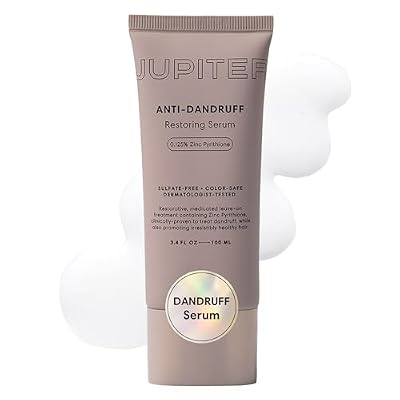
Specs
- Format: Leave-on medicated scalp serum
- Active ingredient: Zinc pyrithione
- Targets: Itching, flaking, redness and irritation linked to dandruff
- Formula notes: Color-safe, sulfate-free and paraben-free per the listing
- Application: Designed for daily leave-on use between washes
This is the deliberate exception in the lineup, included for readers whose “winter dryness” is actually dandruff that flares in cold weather. Its zinc pyrithione is an antifungal active — a fundamentally different mechanism from the moisturizers above — in a leave-on serum rather than a shampoo, so it keeps working between washes. It is the right choice if your flakes are larger and oilier, if itching centers on greasy areas, or if purely hydrating products have disappointed you. The trade-off: on a scalp that is only dry, an antifungal serum is the wrong tool and may leave skin feeling tighter, so treat this as the dandruff pick, not the default.
5. DERMA E Scalp Relief Treatment

Specs
- Size: 1 fl oz
- Format: Water-based moisturizer serum with dropper application
- Key ingredients: Tea tree oil, menthol, aloe vera
- Scent: Aloe and tea tree
- Use: Apply directly to the scalp to cool and soothe itch
When itch is the symptom that bothers you most, this small bottle earns its place. Tea tree oil and menthol cool and calm on contact, with aloe vera adding soothing moisture. The dropper makes it easy to target the worst spots — the crown, the hairline, behind the ears — instead of coating your whole head, and the water-based texture will not undo a fresh blowout. The one-ounce size is the smallest here, so heavy users will go through it quickly, but as a spot treatment for dry, itchy winter patches, it is well judged.
Usage Notes
Apply leave-on treatments to a clean, slightly damp scalp; damp skin absorbs humectant serums better, and parting your hair in rows keeps product off the lengths. Massage with fingertips, never nails — scratched, broken skin plus winter dryness is a recipe for irritation. Give a new product at least two to three weeks of consistent use before judging it, since barrier repair is gradual.
Support the treatments with boring habits that matter more than any bottle: wash with lukewarm rather than hot water, do not stretch wash days so far that buildup accumulates, and keep scalp exfoliation to about once a week while your scalp is dry. A bedroom humidifier helps more than people expect. If a moisturizing serum has done nothing after a month, reconsider whether you are treating dandruff — or something that needs a dermatologist.
FAQ
How can I tell winter dry scalp from dandruff?
Dry scalp flakes are small, white and dry, and usually appear alongside dry skin elsewhere. Dandruff flakes are larger, oilier and often yellowish, with itching in oilier areas. Dryness responds to moisturizing leave-on treatments; dandruff needs an antifungal active such as zinc pyrithione.
How often should I use a scalp treatment in winter?
Follow the product’s own directions. Hydrating serums can generally be used daily or after every wash, while the Living Proof treatment is directed at three times per week. More is not automatically better — over-applying or layering several actives can irritate a dry scalp.
Can I use a scalp scrub as well?
Yes, but sparingly. A gentle exfoliating wash once a week can lift loose flakes and buildup, yet scrubbing a dry winter scalp several times a week removes protective surface oils and worsens flaking. Never scrub skin that is red, sore or broken.
Will a leave-on serum make my hair greasy?
The water-based serums here absorb into the scalp rather than coating the hair, especially in small amounts along partings on damp skin. Oil-based treatments are likelier to weigh down fine hair, so apply sparingly and keep them off the lengths.
When should I see a dermatologist instead?
See one if flaking comes with redness, thick or crusty scale, pain, weeping patches or hair loss, or if itching and flakes persist after a few weeks of consistent care. Those signs point to conditions like seborrheic dermatitis, eczema or psoriasis, which need medical treatment rather than cosmetics.
Conclusion
Most winter scalp misery is plain dryness wearing a disguise. Match the product to the problem — humectant leave-ons like The Ordinary’s and Living Proof’s for true dryness, Briogeo’s or DERMA E’s formulas when itch and buildup join in, and Jupiter’s zinc pyrithione serum only when flakes point to real dandruff — go gently on exfoliation, and give it a few patient weeks. If symptoms argue back with redness or thick scale, skip the next bottle and book a dermatologist instead.