Last updated: November 23, 2026
Disclosure: As an Amazon Associate, I earn from qualifying purchases.
A shampoo bar looks like the simplest swap in the bathroom: drop the bottle, pick up a solid. In practice, switching formats changes more than packaging. Bars and liquids differ in pH, in how they behave in hard water, in how they treat color, and in how you store and travel with them. Neither format is automatically gentler or better — that depends on the formula inside, not the shape it comes in. This guide compares the two formats honestly, then walks through five real products — three bars and two liquids — so you can see what each side actually offers.
The Core Difference
The biggest divide is not solid versus liquid. It is what the cleanser is made from. Shampoo bars come in two chemically different families. Syndet bars (short for synthetic detergent) are built from detergent ingredients such as sodium cocoyl isethionate, the same family of cleansers used in many liquid shampoos. They can be formulated near the pH of hair and scalp, roughly pH 4.5 to 5.5, and they rinse clean in most water types. True soap bars, like traditional cold-process shampoo bars, are made from saponified oils. Soap is naturally alkaline, usually around pH 9 to 10, and that alkalinity lifts the hair cuticle more, which can leave hair feeling rough or coated until it settles.
Liquid shampoos are almost always detergent-based and pH-balanced by design, with water making up most of the bottle. That water is also why liquids need preservatives and why a bottle runs out faster than its size suggests.
Water type matters too. Soap reacts with the minerals in hard water and can leave a film on hair — the same scum it leaves on a tub. Syndet bars and liquids are far less reactive, so they are usually the safer pick in hard-water homes. Color-treated hair is the other fault line: alkaline soap can swell the hair shaft and fade color faster, which is why most soap-bar makers quietly steer dyed hair toward their syndet competitors, and why color-safe claims on bars almost always belong to syndet formulas.
How to Choose
Start with the ingredient family, not the format. If a bar lists saponified oils first, it is soap, whatever the front of the box calls it. If it lists sodium cocoyl isethionate or sodium coco-sulfate, it is a syndet bar that behaves much like a liquid.
Match the format to your water. Hard water plus a soap bar is the combination behind most “shampoo bars don’t work for me” stories. In hard water, choose a syndet bar or stay with liquid.
Be skeptical of washes-per-bar math. Brands quote generous numbers — one bar replacing two or three bottles — but those figures assume short hair, one wash, and a bar kept bone dry. Long hair washed twice per session goes through a bar far faster. Treat the claims as a best case, not a promise.
Ignore the “transition period” framing. Some soap-bar sellers say hair needs weeks to adjust. What is usually happening is soap residue and raised cuticle, not detox. A syndet bar should feel normal from the first wash; if it does not, the formula does not suit your hair or water.
Think about storage before you buy. A bar left sitting in water turns to mush and can be gone in a couple of weeks. It needs a draining dish, a slatted rack, or a tin with airflow. A liquid bottle asks nothing of you.
Travel cuts both ways. Bars skip liquid limits, never leak, and weigh little — a genuine win for carry-on. But a wet bar needs drying before it goes back in the bag, and hotel showers rarely offer a dry shelf. Liquids are limited to small travel bottles in hand luggage, yet they are grab-and-go simple.
Five Products Across Both Formats
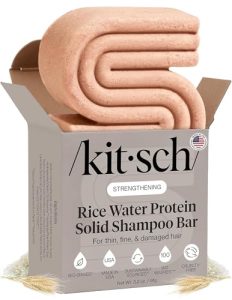
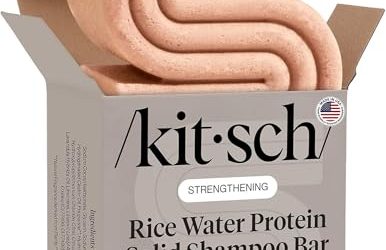
1. Kitsch Rice Water Protein Shampoo Bar (Syndet Bar)

Kitsch’s bar is a syndet formula built around rice protein, aimed at hair that feels weak or breaks easily. It is a good example of the modern bar: detergent-based, pH-conscious, and free of the sulfates many shoppers are avoiding, in a compact 3.2-ounce puck that suits a travel kit as easily as a shower shelf.
Specs
- Format: Solid syndet shampoo bar, 3.2 oz
- Key ingredient: Hydrolyzed rice protein
- Free from: Sulfates, parabens, silicones
- Vegan formula, made in the USA
- Best for: Fine or fragile-feeling hair, frequent travelers
2. Ethique Everyday Shampoo Bar (Syndet Bar)

Ethique helped define the syndet bar category, and this everyday formula (long sold as Pinkalicious) is its all-rounder for normal hair, scented with pink grapefruit and vanilla. Ethique states one 3.88-ounce bar replaces up to three standard liquid bottles — read that as the brand’s best-case figure, dependent on hair length and dry storage between washes.
Specs
- Format: Solid syndet shampoo bar, 3.88 oz
- Key ingredients: Vitamin C, vitamin B5, coconut oil
- Scent: Pink grapefruit and vanilla
- Plastic-free, vegan, cruelty-free
- Brand claim: Replaces up to three liquid bottles
3. J.R. Liggett’s Original Shampoo Bar (True Soap Bar)

This is the old-school end of the bar world: a handmade-style bar of saponified olive, coconut, and castor oils, sold since long before solid shampoo was fashionable. It lathers generously and the ingredient list could not be shorter, but it is genuine soap — alkaline, reactive in hard water, and the bar most likely to leave color-treated or hard-water hair feeling coated. In soft water, on short or undyed hair, many people use nothing else.
Specs
- Format: True soap shampoo bar, 3.5 oz
- Ingredients: Saponified olive oil, coconut oil, castor oil
- Free from: Palm oil, GMOs, synthetic detergents
- Maker claim: One bar roughly equals 24 fl oz of liquid shampoo when air-dried between uses
- Best for: Soft water, short hair, minimal-ingredient routines
4. Aveeno Oat Milk Blend Shampoo (Liquid)
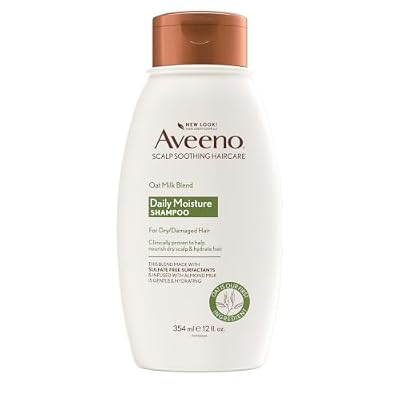
On the liquid side, Aveeno’s oat milk formula shows what bottles still do well: a mild, sulfate-free detergent system in a balanced liquid that behaves the same in any water, with colloidal oatmeal and almond milk aimed at dry, everyday hair. It is the low-effort option — no dish, no drying time, no learning curve — and the brand rates it safe for color-treated hair.
Specs
- Format: Liquid shampoo, 12 fl oz bottle
- Key ingredients: Colloidal oatmeal, almond milk
- Free from: Sulfates, parabens, dyes
- Stated safe for color-treated hair
- Best for: Dry, everyday hair and sensitive-feeling scalps
5. Kristin Ess The One Signature Shampoo and Conditioner Set (Liquid)

Kristin Ess built this salon-style pair around a sulfate-free liquid shampoo with a proprietary strengthening complex, finished with a light pear fragrance. As a set it shows the liquid format’s other advantage: a matched conditioner designed for the shampoo is one purchase away, while bar users often mix brands to find a conditioner bar that pairs well.
Specs
- Format: Liquid shampoo and conditioner set
- Cleanser type: Sulfate-free, color-safe formula
- Scent: Pear fragrance
- Vegan and paraben-free
- Best for: Daily washing, frizz-prone or dull-feeling hair
Using and Storing Each Format
With any bar, wet it and either rub it between your hands or glide it over wet hair a few times — a little goes further than it looks, and over-applying is the fastest way to waste a bar. Rinse thoroughly, especially with a soap bar in hard water; some soap-bar users follow with a diluted acidic rinse to counter residue, which tells you something about the format’s trade-offs.
Storage decides a bar’s lifespan more than its size does. Keep it on a draining dish outside the direct shower stream, and let it dry fully between washes. In a travel tin, dry the bar on a towel first or it will glue itself to the lid.
Liquids ask less: store the bottle anywhere, and decant into a small travel bottle for flights. The hidden cost is water weight and plastic — a standard bottle is mostly water, which is exactly what the bar leaves behind.
FAQ
Do shampoo bars last longer than liquid shampoo?
They can, because they are concentrated and contain no added water. But the advantage disappears if the bar sits in water or you wash long hair twice per session. Kept dry, a syndet bar typically covers a similar span to a standard bottle or a bit more; treat “replaces three bottles” claims as best-case marketing.
Are shampoo bars better for color-treated hair?
Only the syndet kind, and only when the brand formulates for color. True soap bars are alkaline and can fade color faster, so dyed hair is generally better served by a syndet bar or a color-safe liquid.
Why does my hair feel waxy with a shampoo bar?
That feeling is usually soap residue reacting with hard-water minerals, or an alkaline formula lifting the cuticle. It is a sign the bar type does not match your water, not a detox phase you must push through. Switching to a syndet bar usually ends it.
Can I take a shampoo bar in hand luggage?
Yes. Solids are not subject to the liquids limit, which is one of the format’s clearest advantages. Just dry the bar before packing so it does not soften against everything else in the tin.
Is a shampoo bar automatically more natural or gentler?
No. A bar is a format, not an ingredient standard. Syndet bars use synthetic detergents much like liquids do, and soap bars are natural but alkaline. Read the ingredient list the same way you would for a bottle.
Conclusion
Choose a syndet bar if you want the travel and packaging benefits with liquid-like behavior, a soap bar only if your water is soft and your hair is undyed, and a liquid if you want zero adjustment and predictable results in any water. The format matters less than the formula and your water supply — get those two right and either side of this comparison can work well.