Last updated: September 26, 2026
Sunspots, also called solar lentigines or age spots, are flat, clearly defined brown marks that appear on the cheeks, temples and forehead after years of sun exposure. Once they are there, no moisturizer will remove them the way a laser or cryotherapy can. What a moisturizer can do is stop them getting darker, prevent new ones forming, and, with the right ingredients, soften them slowly. That is why the most important “sunspot moisturizer” is the one you wear every morning with SPF.
Is it really a sunspot?
Before treating any brown mark, check what it is. Sunspots are flat, uniform in colour and appear on sun-exposed areas. Freckles are smaller and fade in winter. Melasma forms broader, blurry patches, often symmetrical. Seborrhoeic keratoses are raised and have a waxy, stuck-on look. Most importantly, a spot that is changing, has irregular edges or several colours, or looks different from your other spots needs a clinician’s assessment, as some skin cancers can start as a flat brown patch on the face.

CeraVe AM Facial Daily Moisturizer, SPF 30 Face Sunscreen, 3oz
Included for 'Best Moisturizer for Sunspots on the Face: Choosing a Daytime SPF Moisturizer' because the listing specifies SPF 30 Face Sunscreen and 3oz, details this guide uses to compare options.
View on Amazon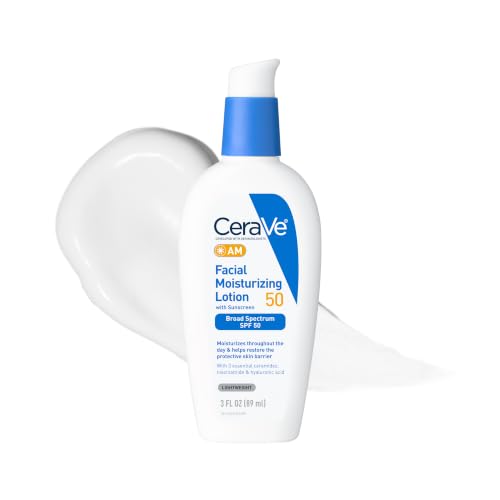
CeraVe AM Facial Moisturizing Lotion SPF 50, Face Moisturizer with SPF, 3oz
Included for 'Best Moisturizer for Sunspots on the Face: Choosing a Daytime SPF Moisturizer' because the listing specifies Face Moisturizer with SPF and 3oz, details this guide uses to compare options.
View on Amazon
Olay Super Cream with Sunscreen SPF 30, Lightweight Face Moisturizer with Sun Protection, 5-in-1 Skin Care Benefits - Hydrating, Brightening, Firming - Niacinamide, Vitamin C, Collagen Peptide, 1.7 oz
Included for 'Best Moisturizer for Sunspots on the Face: Choosing a Daytime SPF Moisturizer' because the listing specifies Lightweight Face Moisturizer with Sun Protection and 5-in-1 Skin Care Benefits, details this guide uses to compare options.
View on Amazon
Neutrogena Hydro Boost Face Moisturizer SPF 50, 1.7 fl oz
Included for 'Best Moisturizer for Sunspots on the Face: Choosing a Daytime SPF Moisturizer' because the listing specifies 1.7 fl oz, details this guide uses to compare options.
View on AmazonChoosing a daytime SPF moisturizer
| Type | Strengths | Drawbacks | Typical price |
|---|---|---|---|
| Chemical-filter SPF moisturizer | Light, invisible on most skin tones | Can sting sensitive eyes | $12–$30 |
| Mineral (zinc/titanium) SPF moisturizer | Gentle, good for sensitive skin | Can leave a white cast | $15–$40 |
| Tinted mineral SPF with iron oxides | Also blocks visible light, evens tone instantly | Shade matching needed | $25–$45 |
| SPF moisturizer with niacinamide | Adds gentle tone-evening benefit | Niacinamide levels often low | $15–$40 |
Aim for broad-spectrum SPF 30 or higher. EltaMD UV Clear SPF 46, which contains niacinamide, is a widely used example; check current price. The best formula is simply the one you like enough to wear every day, generously.
Apply enough, then reapply
Most people use a third to half of the sunscreen needed to reach the SPF on the label. For the face alone, a quarter teaspoon (about 1.25 ml) is a reasonable guide; the “two finger” method, two strips along the index and middle fingers, covers face and neck. If you are outdoors, reapply every two hours or after sweating. A tinted SPF moisturizer on its own at a thin, makeup-like amount does not give the labelled protection, so layer it over a plain sunscreen if you like a light coverage.
Evening: slowly soften existing spots
At night, a moisturizer or serum with ingredients that act on pigment can lighten sunspots gradually, though usually only partly:
- Retinoids: the best evidence for fading sun-induced pigment over six to twelve months.
- Niacinamide: reduces pigment transfer; gentle and easy to combine.
- Vitamin C, licorice, arbutin, azelaic acid: modest benefits, useful as add-ons.
Expect sunspots to lighten by a shade or two over months rather than disappear. If you want them gone, clinic treatments such as IPL, pigment lasers or cryotherapy are far more effective, and daily SPF afterwards is what keeps them from returning.
Habits that support the moisturizer
- Keep the SPF moisturizer by your toothbrush so it becomes part of the morning without thinking.
- Extend it to the ears, neck and the backs of your hands, which develop spots too.
- Add a wide-brimmed hat and sunglasses for long outdoor stretches; no moisturizer beats shade.
- Remember that driving exposes the left or right side of the face, depending on where you sit, to more UVA; spots are often more pronounced on that side.
- Take a photo of your spots every three months in the same daylight to track changes and catch any that behave differently.
Cautions
Retinoids and hydroquinone should be avoided in pregnancy. If you use photosensitising medicines, daily SPF and shade become even more important. Mineral filters are generally the gentlest choice around the eyes and for very reactive skin. Anyone with a history of skin cancer, many moles or significant sun exposure should have regular skin checks rather than treating spots on their own.
Frequently asked questions
Can an SPF moisturizer fade sunspots by itself?
Daily SPF mainly prevents them getting darker and stops new ones. Some spots lighten slightly over months because they are no longer being stimulated, but meaningful fading usually needs a retinoid or clinic treatment.
Do I need SPF on cloudy days or indoors near windows?
Yes. UVA, which drives pigment, passes through clouds and window glass. If you sit near a window or drive a lot, wear SPF daily regardless of the weather.
Bottom line
For sunspots on the face, the best moisturizer is a broad-spectrum SPF 30+ you will wear every morning in a proper amount, ideally tinted with iron oxides if you also have patchy pigment. Add a retinoid or niacinamide product at night for slow softening, and have any spot that changes checked by a clinician before you treat it.