Last updated: November 23, 2026
Disclosure: As an Amazon Associate, I earn from qualifying purchases.
Rosehip oil and vitamin C serum are recommended for the same goals — brighter-looking skin, a more even-looking tone, and support against the visible effects of sun and time. They are not interchangeable, though. One is a single-ingredient plant oil that moisturizes and seals; the other is a formulated water-based treatment built around a specific active. This comparison covers what each can realistically do, where the marketing runs ahead of the evidence, and five products worth considering.
The Core Difference
Rosehip oil is pressed from the seeds of rose hips, usually Rosa canina or Rosa rubiginosa (sold as Rosa mosqueta). It is a dry-feeling, linoleic-acid-rich oil with naturally occurring carotenoids that give good cold-pressed batches a deep orange color. It contains no water, no formulated active, and nothing to standardize its potency from bottle to bottle. What it does well is moisturize: it softens skin and reduces water loss, with a light finish compared with heavier oils.
A vitamin C serum is a formulated product. Its job is to deliver a measured dose of vitamin C — either pure L-ascorbic acid or a gentler derivative such as sodium ascorbyl phosphate — in a base designed for stability and absorption. Vitamin C is one of the better-studied cosmetic antioxidants, with real evidence behind its role in supporting brighter-looking skin and helping sunscreen work against free-radical damage. Unlike an oil, a serum adds no meaningful moisture barrier and is meant to sit under a moisturizer.
One claim needs correcting up front: rosehip oil is often sold as a “natural retinol” because rosehip seeds contain trace amounts of trans-retinoic acid. The amount is tiny, variable, and unstandardized — nothing like the measured dose in an actual retinoid product. Rosehip oil is not a retinoid replacement and cannot deliver retinoid results. It is a good moisturizing oil, and that is the honest frame for everything below.
How to Choose
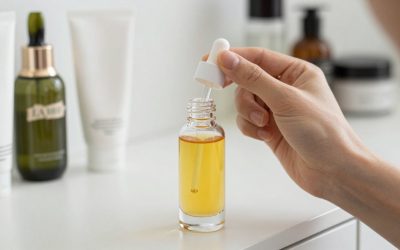
Choose rosehip oil if your skin is dry, combination, or oily but dehydrated, and your main goal is comfortable moisture with a light finish. Its linoleic-rich profile suits skin that finds oleic-heavy oils (like marula or olive) too heavy. Look for cold-pressed, unrefined seed oil with a natural orange-amber color — that color signals carotenoid content. Pale, nearly clear rosehip oil is usually refined or pressed from the whole fruit rather than the seed, a meaningfully weaker product. Buy small bottles in dark glass, since rosehip oxidizes faster than most face oils. The deep pigment can also leave a slight tint on very fair skin and on pillowcases, so apply it at night or let it absorb fully.
Choose a vitamin C serum if your main concerns are dullness, uneven-looking tone, and daytime antioxidant support under sunscreen. Decide which form you want. Pure L-ascorbic acid (typically 10–20%, at a low pH) has the strongest research behind it but can sting and oxidizes quickly — a serum that has turned dark orange-brown has lost its potency. Derivatives like sodium ascorbyl phosphate are far more stable and gentler, but the evidence for them is thinner. Either way, a vitamin C serum does not replace sunscreen; it complements it.
You can use both. They solve different problems: vitamin C in the morning, rosehip oil at night as the final sealing step. If budget forces one choice, pick by your primary goal — moisture points to the oil, tone and brightness to the serum.
The Products
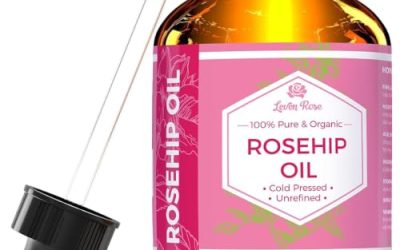
1. Leven Rose Pure Rosehip Oil, 4 fl oz (Rosehip Oil)

Specs
- Ingredient: 100% pure, organic, unrefined cold-pressed rosehip seed oil (Rosa mosqueta)
- Volume: 4 fl oz (118 ml)
- Packaging: dark amber glass bottle with glass dropper
- Material type free: paraben free
- Filled and packaged in Colorado, USA
Leven Rose is the straightforward benchmark for the oil side: a single ingredient, cold-pressed and unrefined, in the dark glass bottle this oil genuinely needs. The 4-ounce size is generous — which is also its one caution. Because rosehip oxidizes relatively quickly once opened, a bottle this large makes most sense if you also use it on hair, nails, or body. For face-only use, store it cool and dark, and watch for any change in smell, the first sign the oil has turned.
2. Teddie Organics Rosehip Seed Oil, 1 oz (Rosehip Oil)

Specs
- Ingredient: 100% pure rosehip seed oil
- Volume: 1 fl oz (30 ml)
- Use: face, hair, and skin; works as a facial oil and a carrier oil
- Format: dropper bottle
Teddie Organics takes the opposite approach to size. A 1-ounce bottle is roughly a two-to-three-month supply for facial use, so you are far more likely to finish it while the oil is still fresh. If you are trying rosehip for the first time, this smaller format is the more sensible buy — “more per bottle” is not automatically better value with an oxidation-prone oil.
3. Botanical Beauty Organic Rosehip Seed Oil, 0.5 fl oz (Rosehip Oil)

Specs
- Ingredient: 100% pure, virgin, unrefined cold-pressed organic rosehip seed oil
- Volume: 0.5 fl oz (15 ml)
- Use: face, skin, body, hair, lips, and nails
- Format: small dropper bottle
The smallest bottle here is also the most freshness-conservative. Botanical Beauty’s virgin, unrefined oil keeps the carotenoid-rich profile you want from rosehip, and suits anyone who rotates oils or travels. Per ounce it is the least economical way to buy rosehip oil, so treat it as a trial size or travel staple. And do not expect it to fade scars — the evidence for rosehip on scarring is thin, and no oil is a scar treatment.
4. TruSkin Vitamin C Serum, 1 fl oz (Vitamin C Serum)

Specs
- Vitamin C form: sodium ascorbyl phosphate (SAP), a stable derivative
- Supporting ingredients: botanical hyaluronic acid, vitamin E, aloe, jojoba
- Volume: 1 fl oz (30 ml)
- Format: dropper bottle
- Formula style: plant-based, designed for daily use including sensitive skin
TruSkin represents the derivative side of vitamin C. Sodium ascorbyl phosphate does not need the low pH that makes pure L-ascorbic acid sting, and it stays stable far longer, so this is the friendlier option for beginners and reactive skin. The honest trade-off is evidence: SAP has less research behind it than L-ascorbic acid, so expectations should be gradual and modest.
5. Timeless 20% Vitamin C + E Ferulic Acid Serum, 1 oz (Vitamin C Serum)

Specs
- Vitamin C form: 20% L-ascorbic acid
- Supporting ingredients: vitamin E (alpha tocopherol) and ferulic acid
- Volume: 1 fl oz (30 ml)
- Fragrance-free, paraben-free, dye-free, cruelty-free
- Application: 2–3 pumps on freshly cleansed skin
Timeless is the classic high-strength L-ascorbic acid formula, modeled on the vitamin C + E + ferulic combination used in dermatology research, where ferulic acid stabilizes the other two antioxidants. Twenty percent is the top of the commonly sold range, and it can tingle or irritate — sensitive skin should start slowly or choose the derivative route. Because L-ascorbic acid oxidizes, buy it fresh, keep it away from heat and light, and retire it if it darkens significantly. Under sunscreen, it has the strongest evidence-based case here for brightness and tone.
Usage and Buying Notes
Layering order matters. Water-based serums go on first, after cleansing; oils go last, over moisturizer, because an oil applied first can block everything after it from absorbing. If you use both products, the natural split is vitamin C serum in the morning and rosehip oil at night.
Patch-test either product before full use, especially the high-strength L-ascorbic acid serum, which commonly causes temporary tingling. Introduce one product at a time so you know what caused any reaction.
For rosehip, buy by process, not front-label claims: “cold-pressed,” “unrefined,” and “seed oil” are the words that matter, and a natural orange-amber color is a good sign. Check the ingredient list for a single entry — some “rosehip” products are blends diluted with cheaper oils. For vitamin C serums, check the form and percentage if disclosed, prefer opaque or air-restrictive packaging, and treat a strongly darkened serum as spent.
Finally, keep expectations in the right category. Neither product treats acne, removes scars, or substitutes for a retinoid or sunscreen. What they offer is more modest: comfortable, well-sealed moisture from the oil, and antioxidant support for a brighter-looking tone from the serum.
FAQ
Can rosehip oil replace a retinoid?
No. Rosehip oil contains trace, unstandardized amounts of trans-retinoic acid — far too little and too variable to act like a retinoid. It moisturizes well, but if you want retinoid results, you need an actual retinoid.
Can I use rosehip oil and vitamin C serum together?
Yes. They do different jobs and layer well: apply the water-based vitamin C serum first, let it absorb, then use moisturizer and rosehip oil as a final step. Many people split them — vitamin C in the morning, rosehip at night.
Which is better for oily or combination skin?
Rosehip is one of the better oils for oilier skin because it is linoleic-rich and feels dry rather than greasy. A vitamin C serum is water-based and adds no oil, so it is the lighter choice. Neither product treats acne.
How do I know if my rosehip oil or vitamin C serum has gone bad?
Both oxidize. Rosehip oil develops a stronger, stale, paint-like smell and should be discarded. An L-ascorbic acid serum turns darker yellow, orange, then brown; once it is dark, its vitamin C is largely spent. Derivative serums like SAP formulas are more stable but should still be replaced if the color or smell changes.
Does rosehip oil fade scars and dark spots?
The evidence is weak. Rosehip is frequently marketed for scars, but clinical support is lacking, and it should not be relied on for scar treatment. For the appearance of dark spots, a vitamin C serum has the better-supported case — and daily sunscreen matters more than either product, since sun exposure keeps creating the problem.
Conclusion
This is not really a fight. Rosehip oil is a quality moisturizing oil — light, linoleic-rich, and comfortable for most skin types — whose “natural retinol” reputation you should ignore. A vitamin C serum is a targeted antioxidant treatment with real research behind it, in either a potent L-ascorbic acid form or a gentler derivative. Choose the oil if moisture and comfort are your goal, the serum if brightness and tone are, and both if your budget allows. Just buy the oil small and fresh, and keep the serum away from light and heat.