Last updated: October 27, 2026
- Quick Verdict
- Onisdin Red Light Therapy Mask Set vs Red Light Therapy Mask: Specs Side by Side
- Where A Wins
- Where B Wins
- Real-World Use: Which One Fits You
- Price and Value
- Final Recommendation
- Step-by-Step: Setting Up a Sensible Routine With Either Mask
- Dose Chart: What Session Length Actually Delivers
- Reading Marketing Claims Correctly
- Who Should Skip a Mask Altogether
- Common Mistakes
- Troubleshooting
- How Red and Near-Infrared Light Works on Skin
- Verifying an FDA Claim, Step by Step
- Tracking Results Without Fooling Yourself
- When to Pause and Get Advice
- FAQ
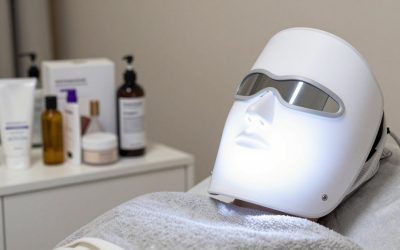
Red light masks are a crowded category, and marketing claims often run ahead of the evidence, especially when you are trying to fit a twenty-minute session into an already busy evening routine. This comparison looks at the Onisdin Red Light Therapy Mask Set and the generic Red Light Therapy Mask for Face and Neck listed as medical grade, based on their listed specs and what owners commonly report about neck coverage, battery tethering, and overall comfort.
The choice between these two devices usually comes down to a very specific dilemma on a Tuesday night: do you want a portable, budget-friendly setup with built-in power storage for casual use, or are you looking to invest in a strictly regulated, medical-grade appliance that commands a higher price tag? As we evaluate our skincare setups in 2026, understanding how these hardware specifications translate to actual skin recovery and day-to-day usability makes all the difference to your routine.
As an Amazon Associate we earn from qualifying purchases at no extra cost to you.


Quick Verdict
Budget-conscious users who want portable power storage, customizable intensity, and dedicated face and neck coverage should buy the Onisdin Red Light Therapy Mask Set. Shoppers seeking a strictly regulated, medical-grade FDA-approved device with premium positioning should buy the Red Light Therapy Mask for Face and Neck Medical Grade FDA Approved.
Onisdin Red Light Therapy Mask Set vs Red Light Therapy Mask: Specs Side by Side
| Feature | Onisdin Red Light Therapy Mask Set | Red Light Therapy Mask for Face and Neck Medical Grade FDA Approved |
|---|---|---|
| Price | Varies | Varies |
| Target Treatment Area | Face and Neck | Face and Neck |
| Brightness Adjustment | Five-Level Brightness Adjustment | not stated |
| Light Wavelengths | 630nm Infrared Light + 850nm Near-Infrared LED | not stated |
| Power Source | Portable Mask with Power Storage | not stated |
| Regulatory Status | not stated | Medical Grade FDA Approved |
| Color Finish | Black | not stated |
| Form Factor | Mask Set | Mask |
Where A Wins
- Granular Intensity Control: The inclusion of a five-level brightness adjustment allows users to customize their phototherapy sessions based on skin sensitivity.
- True Portability: Equipped with power storage, the mask lets you move around freely rather than being permanently plugged into a wall outlet during your treatment.
Where B Wins
- Regulatory Peace of Mind: Carrying a medical-grade FDA-approved status, it appeals directly to safety-conscious consumers who prioritize certified compliance.
- Streamlined Operation: It offers a straightforward, plug-and-play approach without requiring the user to manually configure brightness tiers or settings.
- Professional-Grade Positioning: Built for individuals who view their skincare devices as medical investments rather than casual lifestyle gadgets.
Real-World Use: Which One Fits You
The Busy Multi-Tasker
If you prefer to tidy up your room, catch up on messages, or handle light chores while completing your evening skincare routine, the Onisdin Red Light Therapy Mask Set is the ideal choice. Its portable design and integrated power storage mean you are never tethered to a wall socket while reaping your light therapy benefits.
The Medical-Grade Purist
If your primary skincare mandate is verified safety compliance and you feel most comfortable using appliances that have cleared strict regulatory hurdles, the Red Light Therapy Mask for Face and Neck Medical Grade FDA Approved fits your routine best. It is designed for users who want certified medical credentials above all else.
The Value-Focused Skincare Enthusiast
If you want extensive face and neck coverage, precise wavelength specifications (630nm and 850nm), and adjustable brightness settings without crossing the two-hundred-dollar threshold, the Onisdin Red Light Therapy Mask Set delivers unmatched utility for its price point.
Price and Value
For users prioritizing advanced features like a five-level brightness adjustment, built-in power storage, and specific technical disclosures like 630nm and 850nm wavelengths, the Onisdin option offers immense value.
Final Recommendation
Overall, the Onisdin Red Light Therapy Mask Set is the smarter everyday pick for most home users, thanks to its lower price point, power storage capabilities, and adjustable brightness levels. The only condition under which you should choose the Red Light Therapy Mask for Face and Neck Medical Grade FDA Approved is if your skincare philosophy strictly demands an FDA-approved, medical-grade certification regardless of the higher cost.
Step-by-Step: Setting Up a Sensible Routine With Either Mask
- Read the manual for the irradiance and wavelength figures. Reputable devices list wavelengths in nanometers (red light is commonly in the 630-660 nm range, near-infrared around 810-850 nm) and sometimes power density in mW/cm2. If a listing gives neither, you cannot calculate a dose.
- Cleanse and dry your skin. Makeup, sunscreen, and heavy creams can block or scatter light, so apply serums afterward unless the manufacturer says otherwise.
- Protect your eyes. Use the supplied goggles or built-in eye shields. Do not stare into LEDs, even if the glow looks dim.
- Fit the mask snugly. Light intensity falls quickly as distance increases, so gaps between LEDs and skin lower the effective dose.
- Start at the shortest recommended session. Many consumer masks suggest 10 to 20 minutes, a few days per week. Begin at the low end and watch how your skin reacts for the first two weeks.
- Keep a simple log. Note date, session length, and any redness or dryness. Studies on LED skin treatments commonly run for 8 to 12 weeks, so judge results over a similar window rather than after a few sessions.
- Clean the mask as directed. Wipe the inner surface with a soft, slightly damp cloth, never submerge the control box, and let it dry before storage.
Dose Chart: What Session Length Actually Delivers
Dose in joules per square centimeter equals irradiance in mW/cm2 multiplied by seconds, divided by 1000. The irradiance values below are illustrative only; they are not specifications of either mask. Use the formula with the figures printed in your own manual.
| Assumed irradiance | 10-minute session | 15-minute session | 20-minute session |
|---|---|---|---|
| 10 mW/cm2 | 6 J/cm2 | 9 J/cm2 | 12 J/cm2 |
| 20 mW/cm2 | 12 J/cm2 | 18 J/cm2 | 24 J/cm2 |
| 30 mW/cm2 | 18 J/cm2 | 27 J/cm2 | 36 J/cm2 |
The takeaway for comparison shopping: a lower-power mask used for 20 minutes can deliver the same dose as a stronger one used for 10, which makes the question of how long a device is comfortable and convenient to wear as important as its raw power. Whichever of the Onisdin Red Light Therapy Mask Set or the Red Light Therapy Mask you pick, a device you can wear comfortably for the full session is more likely to be used consistently.
Reading Marketing Claims Correctly
- “Medical grade” is not a regulated term for consumer devices, so it tells you little by itself.
- “FDA approved” is often misused. Most LED light devices are cleared through the 510(k) pathway rather than approved, so look for a clearance number and verify it in the FDA database.
- Counts of LEDs are not a measure of power. Two masks with the same number of bulbs can differ widely in output and wavelength.
Who Should Skip a Mask Altogether
A face mask is not the right tool for everyone. Anyone with active skin infections, unexplained skin changes, or a history of skin cancer should get a clinician’s view first, and people who dislike wearing a device for a quarter of an hour at a time may do better with a handheld panel. Realistic expectations help too: consumer masks are cosmetic devices and cannot replace sunscreen, a good cleanser, or medical treatment for conditions such as acne or rosacea.
Common Mistakes
- Overusing it. More minutes do not always mean better results, and some light therapy shows a diminishing response at higher doses. Stay within the manufacturer limits.
- Skipping eye protection because the light looks soft.
- Layering irritating actives such as strong exfoliating acids or retinoids right before a session if your skin is sensitive. Ask a dermatologist how to sequence them.
- Judging too early. Skin turnover takes weeks, and expecting overnight changes leads to abandoned routines.
- Ignoring health cautions. People who are pregnant, take photosensitizing medication, have a history of seizures or light sensitivity, or have a skin condition should speak with a clinician before starting.
Troubleshooting
- The mask will not power on: check that the cable is fully seated, try a different USB power source or battery pack, and confirm the controller is charged. A weak power bank can fail to meet the draw.
- Some LEDs look dim or off: compare the glow with the manual’s description and contact the seller. A partial failure means uneven dosing across the face.
- The mask feels hot: stop the session. Mild warmth can be normal, but real heat or a hot spot is not; let it cool and do not continue until it is checked.
- Skin feels dry or tight afterward: shorten sessions, cut frequency, and follow with a gentle moisturizer.
- The strap or fit is uncomfortable: adjust the band, reposition the control unit so it is not tugging the mask, or try sessions while lying down to reduce slipping.
- No visible change after 8 to 12 weeks: recheck your routine for consistency and irradiance, and consider that light therapy has modest, varying effects between individuals.
How Red and Near-Infrared Light Works on Skin
Understanding the basic mechanism makes spec sheets easier to read, and it also shows where the evidence is firm and where it is thin.
- LEDs emit a narrow band of light. The mask holds an array of diodes tuned to specific wavelengths, specified in nanometers.
- Skin absorbs part of that light. Red wavelengths are mostly taken up in the outer layers and upper dermis. Near-infrared is generally described as reaching somewhat deeper. Review articles and device makers give only rough depth figures, typically a few millimeters, and these shift with dose and device design.
- A proposed target inside cells. The leading hypothesis is that an enzyme in mitochondria, cytochrome c oxidase, absorbs these wavelengths and changes cell energy and signaling, which in turn is linked to collagen-related activity.
- Dose matters in both directions. Photobiomodulation research describes a biphasic response: moderate doses are associated with benefit, while very high doses may blunt it. More minutes is not automatically better.
Published skin studies, including a 2024 review in the International Journal of Molecular Sciences, report modest improvements in roughness, collagen density, and visible aging signs in some trials. The same review notes there is no agreement on the best wavelength, with most work using something between 630 nm and 950 nm. Consumer masks differ from clinic equipment in power and coverage, so expect gradual, individual results.
| Band | Typical wavelength | Visible to the eye? | How it is usually described |
|---|---|---|---|
| Red | About 630 to 660 nm | Yes | Surface and upper dermis; texture and tone claims |
| Near-infrared | About 810 to 850 nm | No | Deeper reach; often paired with red |
Note that 630 nm is visible red light, even though some listings loosely call it infrared. The 850 nm diodes, by contrast, are invisible, so you cannot confirm by eye that they are lit. Many phone cameras pick up near-infrared emitters, which offers a quick way to check that the full array is working.
Verifying an FDA Claim, Step by Step
Wording such as “FDA approved” or “medical grade” is easy to print on a box. A clearance record is much harder to fake and takes a few minutes to find.
- Locate a K-number. It is the letter K followed by six digits, and it may appear in the manual, on the box, or in the listing’s details. If the seller cannot supply one, the claim cannot be checked.
- Search the FDA 510(k) Premarket Notification database. Enter the K-number on the FDA website and open the record.
- Match the names. The applicant and device name should correspond to the brand on your mask. Identical hardware is sometimes sold under several brands, and a clearance belongs to the named device.
- Check the product code. Light-based over-the-counter wrinkle reduction is usually listed as OHS, and over-the-counter powered light for acne as OLP. Many LED masks appear under both.
- Read the indications for use. A clearance covers the uses it states, such as wrinkles around the eyes, not every skincare claim on the packaging.
- Keep the meaning in perspective. A 510(k) clearance means the device was found substantially equivalent to an existing one. It is not a guarantee that every user will see results.
In the comparison above, one mask lists regulatory status as not stated and the other uses general “FDA Approved” wording. Treat both as unverified until a K-number turns up in the manual or listing.
Tracking Results Without Fooling Yourself
Skin looks different depending on lighting, tan, hydration, and mood, so memory is a poor judge. A short, repeatable record is more honest.
| When | What to record | Why it helps |
|---|---|---|
| Day one | Bare-faced photos at the same window, distance, and expression; a 1 to 5 rating for your main concerns | Creates a fair baseline |
| Every week | Sessions completed, minutes per session, any redness or dryness | Shows whether you used the device consistently |
| Every four weeks | Repeat the photos and ratings, then compare side by side | Changes in texture are slow, so monthly checks beat daily mirror-gazing |
| Week twelve | Decide whether to continue, adjust frequency, or stop | Matches the 8 to 12 week window common in published work |
Change only one thing at a time. Starting a new serum, an exfoliant, and the mask in the same fortnight makes it impossible to tell which one did what. If irritation appears, pause the mask first, since it is the easiest variable to remove, and consult a dermatologist if the reaction persists.
When to Pause and Get Advice
Light devices are generally gentle, but a routine should never override what your skin is telling you. Stop sessions and speak with a dermatologist or pharmacist if any of the following show up.
| Sign | Sensible response |
|---|---|
| Redness or warmth that lingers well after the session ends | Pause for several days, then restart with a shorter session |
| Swelling, blistering, or a burning sensation | Stop and seek medical advice before using the device again |
| New dark patches or changes in a mole | Have a clinician examine the area |
| Eye discomfort or lingering spots in vision | Stop and see an eye professional; review how the eye shields fit |
| A new prescription that mentions light sensitivity | Ask the prescriber whether red-light sessions are suitable |
FAQ
Do both masks treat the neck as well as the face?
Yes, both products are explicitly designed to accommodate both the face and neck areas. This ensures comprehensive phototherapy coverage across your jawline and neck without needing separate attachments.
What is the exact price difference between the two masks?
Can I adjust the light intensity on both devices?
The Onisdin mask features a five-level brightness adjustment for customized comfort during your session. The medical-grade model does not state whether it includes adjustable brightness settings.
Are light wavelengths specified for both options?
The Onisdin device explicitly highlights its use of 630nm infrared light alongside 850nm near-infrared LED therapy. The medical-grade model does not state its specific technical wavelength measurements in its product details.
See also: our full roundup Best Full Face and Neck LED Panel Therapy Systems in 2026: Compared and Ranked.